
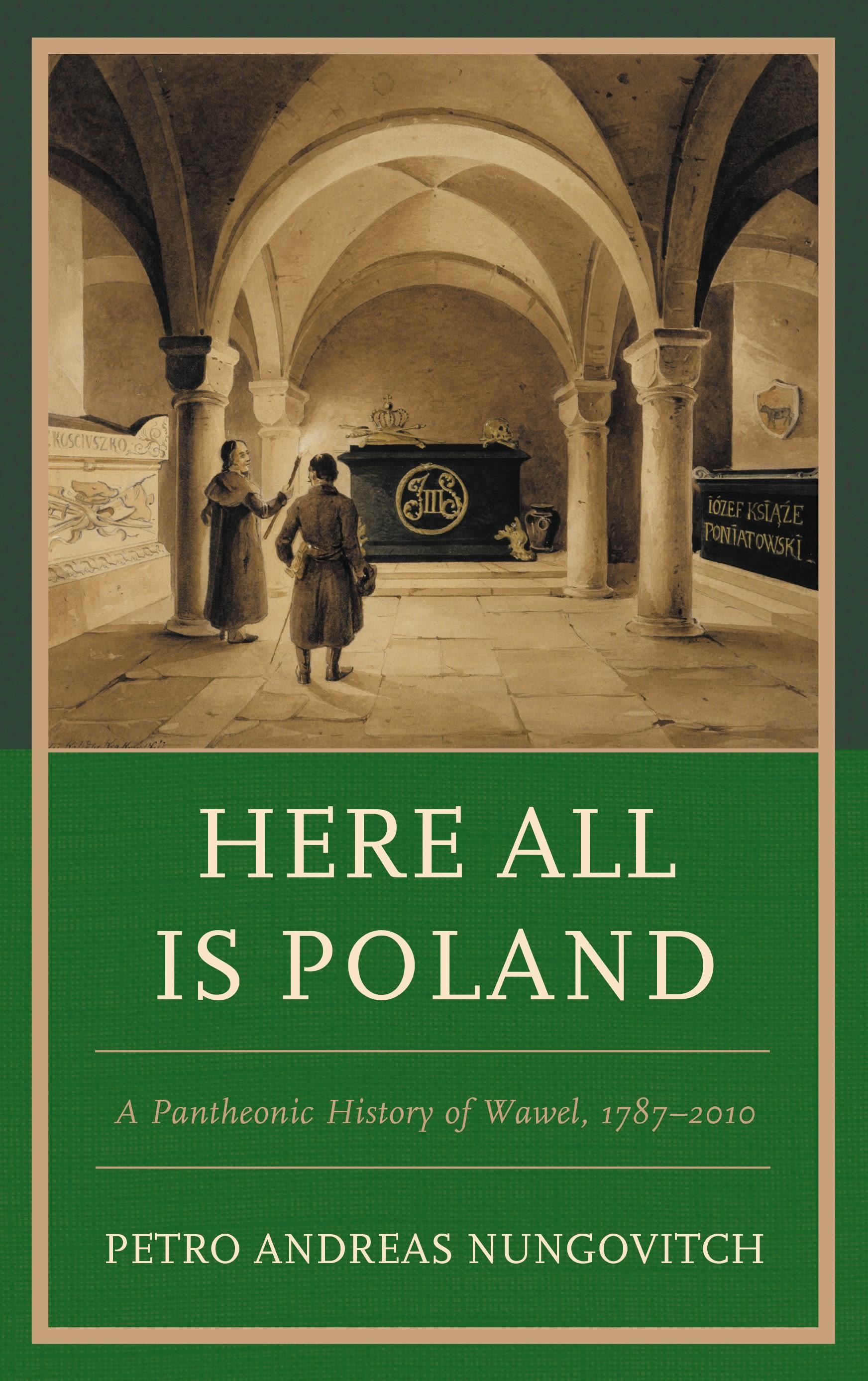
On 10 April 2010, Polish President Lech Kaczynski and First Lady Maria Kaczynska were killed in an airplane crash outside the city of Smolensk in western Russia, where they were flying to commemorate the 70th anniversary of the Soviet massacre of over twenty-one thousand Polish prisoners during the Second World War. Eight days later, the president and his wife were laid to rest beneath the Krakow Cathedral on Wawel Hill, an ancient necropolis of Polish kings and queens and the most prestigious burial site in all of Poland, where only six other meritorious, non-royal national figures have been enshrined since the demise of the Polish monarchy in the late eighteenth century.
The decision to bury Lech and Maria Kaczynski in Poland’s highest national pantheon sparked an emotional debate about its symbolic appropriateness and underscored the question of how such burial decisions are actually made. It also raised a whole host of questions about the historical significance and pantheonic function of Wawel—the “bedrock of sacred memory for the Polish nation,” as Stanislaw Staszic put it in the early nineteenth century—in modern Polish consciousness. Until now, these questions have received surprisingly little attention beyond Polish historians of Krakow. Here All Is Poland excavates and builds upon the extant scholarly discourse of Wawel to plot the evolution of a pantheonic funeral tradition over two hundred years, thus providing a context and a clue for interpreting the historical significance of the 2010 burial.
The decision to bury Lech and Maria Kaczynski in Poland’s highest national pantheon sparked an emotional debate about its symbolic appropriateness and underscored the question of how such burial decisions are actually made. It also raised a whole host of questions about the historical significance and pantheonic function of Wawel—the “bedrock of sacred memory for the Polish nation,” as Stanislaw Staszic put it in the early nineteenth century—in modern Polish consciousness. Until now, these questions have received surprisingly little attention beyond Polish historians of Krakow. Here All Is Poland excavates and builds upon the extant scholarly discourse of Wawel to plot the evolution of a pantheonic funeral tradition over two hundred years, thus providing a context and a clue for interpreting the historical significance of the 2010 burial.
Paga fácilmente con tarjeta, Klarna, Apple Pay o Google Pay. ¿No estás contento? Siempre tienes 14 días de garantía de devolución. Lee más en nuestros términos. Si tienes preguntas, escríbenos a hello@memmo.org.
Memmo hace que estudiar sea más fácil, estés donde estés. Aquí tienes tus libros de texto y herramientas de estudio inteligentes en un solo lugar: resúmenes, quizzes, podcasts y flashcards. Y también a Ted, tu compañero de estudio que responde a todo lo que te preguntes. Más de 50 000 estudiantes ya estudian aquí. Está hecho para que aprendas más rápido y te estreses menos.