
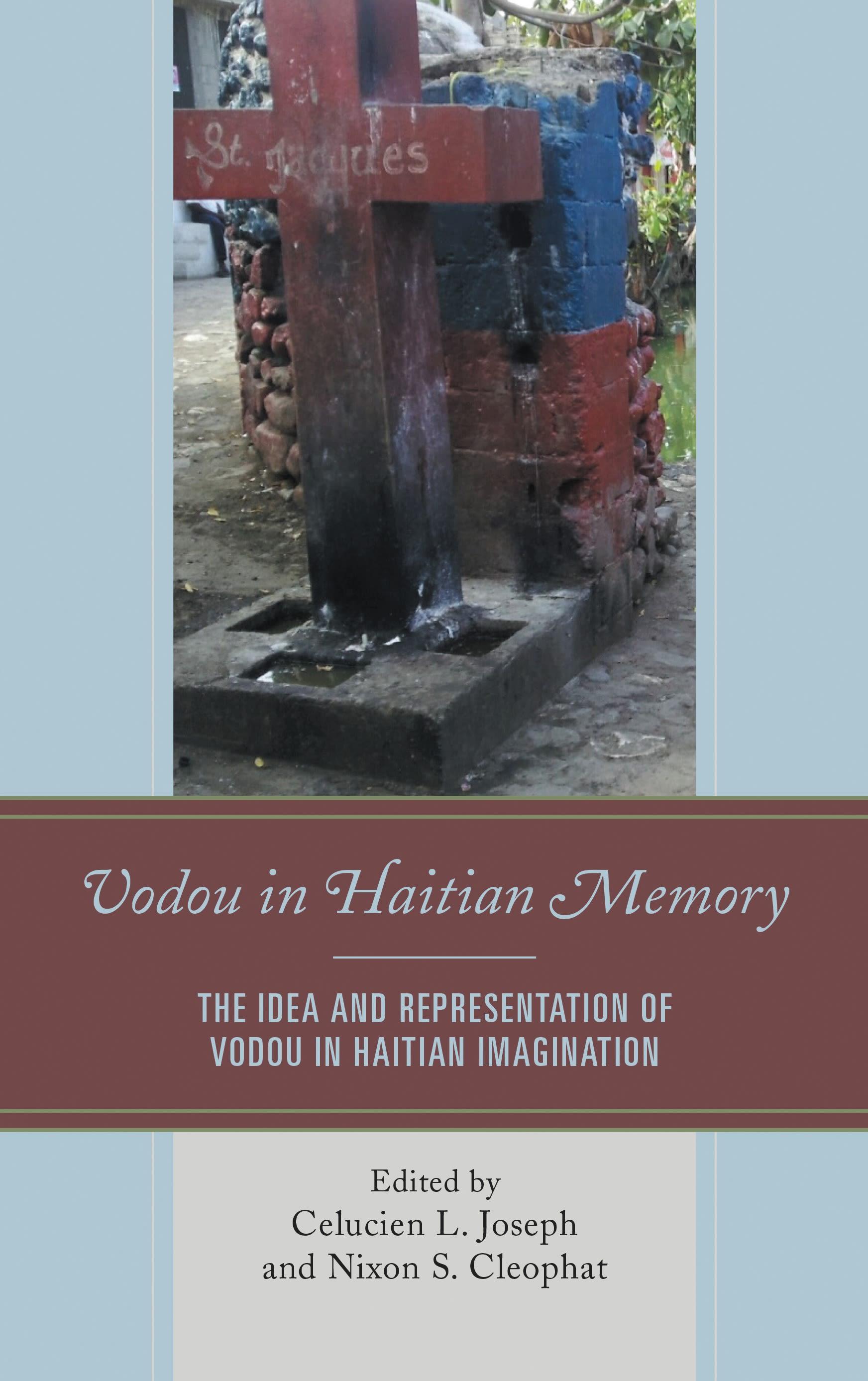
Throughout Haitian history—from 17th century colonial Saint-Domingue to 21st century postcolonial Haiti—arguably, the Afro-Haitian religion of Vodou has been represented as an “unsettling faith” and a “cultural paradox,” as expressed in various forms and modes of Haitian thought and life including literature, history, law, politics, painting, music, and art. Competing voices and conflicting ideas of Vodou have emerged from each of these cultural symbols and intellectual expressions. The Vodouist discourse has not only pervaded every aspect of the Haitian life and experience, it has defined the Haitian cosmology and worldview. Further, the Vodou faith has had a momentous impact on the evolution of Haitian intellectual, aesthetic, and literary imagination; comparatively, Vodou has shaped Haitian social ethics, sexual and gender identity, and theological discourse such as in the intellectual works and poetic imagination of Jean Price-Mars, Dantes Bellegarde, Jacques Roumain, Jacques Stephen Alexis, etc. Similarly, Vodou has shaped the discourse on the intersections of memory, trauma, history, collective redemption, and Haitian diasporic identity in Haitian women’s writings such as in the fiction of Edwidge Danticat, Myriam Chancy, etc.
The chapters in this collection tell a story about the dynamics of the Vodou faith and the rich ways Vodou has molded the Haitian narrative and psyche. The contributors of this book examine this constructed narrative from a multicultural voice that engages critically the discipline of ethnomusicology, drama, performance, art, anthropology, ethnography, economics, literature, intellectual history, philosophy, psychology, sociology, religion, and theology. Vodou is also studied from multiple theoretical approaches including queer, feminist theory, critical race theory, Marxism, postcolonial criticism, postmodernism, and psychoanalysis.
The chapters in this collection tell a story about the dynamics of the Vodou faith and the rich ways Vodou has molded the Haitian narrative and psyche. The contributors of this book examine this constructed narrative from a multicultural voice that engages critically the discipline of ethnomusicology, drama, performance, art, anthropology, ethnography, economics, literature, intellectual history, philosophy, psychology, sociology, religion, and theology. Vodou is also studied from multiple theoretical approaches including queer, feminist theory, critical race theory, Marxism, postcolonial criticism, postmodernism, and psychoanalysis.
Paga fácilmente con tarjeta, Klarna, Apple Pay o Google Pay. ¿No estás contento? Siempre tienes 14 días de garantía de devolución. Lee más en nuestros términos. Si tienes preguntas, escríbenos a hello@memmo.org.
Memmo hace que estudiar sea más fácil, estés donde estés. Aquí tienes tus libros de texto y herramientas de estudio inteligentes en un solo lugar: resúmenes, quizzes, podcasts y flashcards. Y también a Ted, tu compañero de estudio que responde a todo lo que te preguntes. Más de 50 000 estudiantes ya estudian aquí. Está hecho para que aprendas más rápido y te estreses menos.