
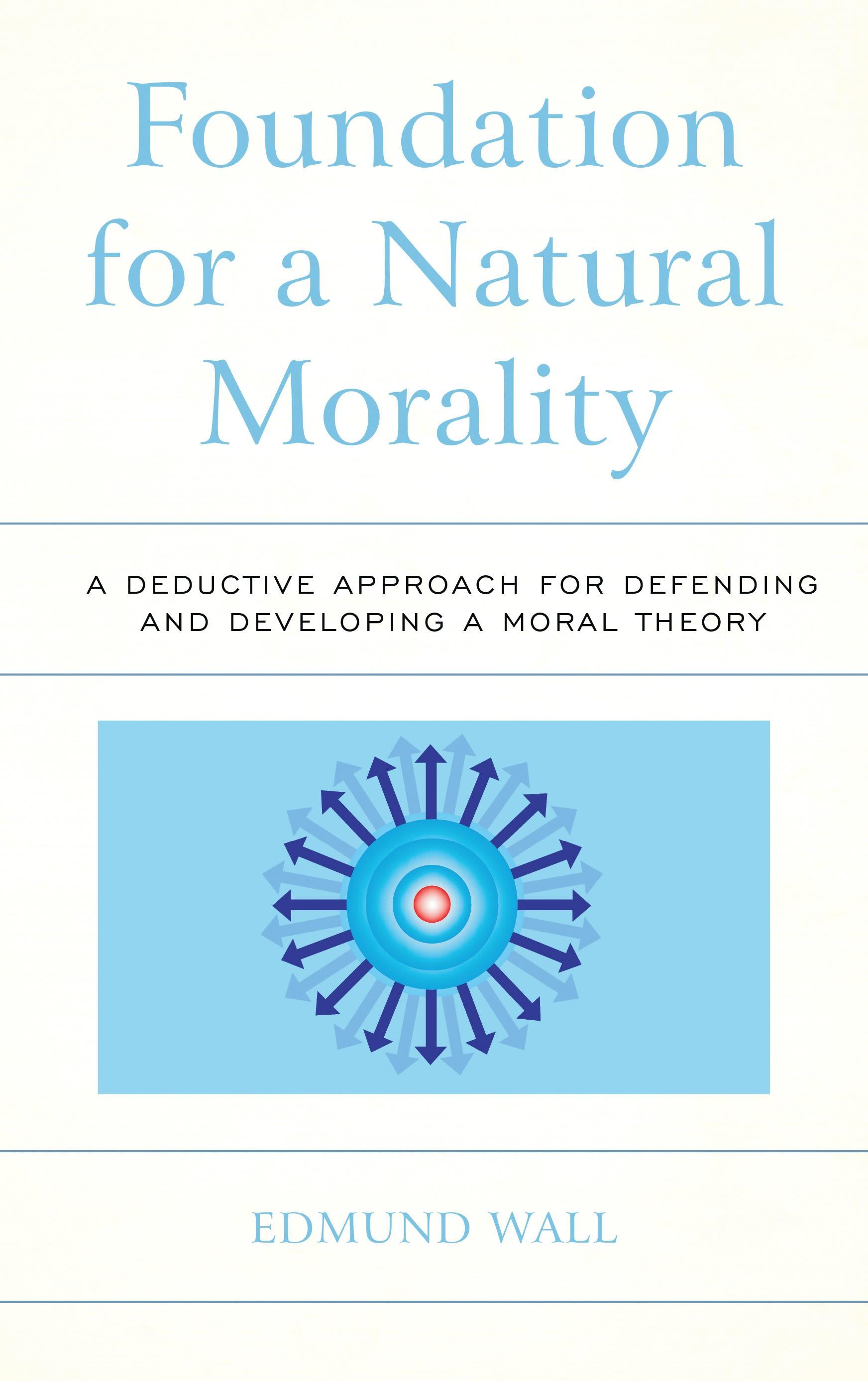
Few philosophers attempt to establish that there is an evaluative and moral realm. They make these major assumptions without argument. This plays into the hands of moral nihilists and certain other moral skeptics. A major obstacle that prevents philosophers from developing such arguments is the long-standing view that one cannot derive an “ought” from an “is,” that is, one cannot begin with purely descriptive non-evaluative propositions and deduce an evaluative or moral proposition. In this book, Edmund Wall develops arguments for evaluative and moral principles. His deductive reasoning begins with certain purely descriptive and non-evaluative propositions concerning human nature, establishing a basic moral principle of human life and a basic moral principle of knowledge. By providing such deductive arguments for basic moral principles, Wall makes considerable progress in establishing a sure foundation for morality. He further develops his case by responding to a plethora of anticipated objections against his two arguments, and by delineating the advantages of his own moral approach over a number of influential moral theories and competing accounts of moral reasoning.
Paga fácilmente con tarjeta, Klarna, Apple Pay o Google Pay. ¿No estás contento? Siempre tienes 14 días de garantía de devolución. Lee más en nuestros términos. Si tienes preguntas, escríbenos a hello@memmo.org.
Memmo hace que estudiar sea más fácil, estés donde estés. Aquí tienes tus libros de texto y herramientas de estudio inteligentes en un solo lugar: resúmenes, quizzes, podcasts y flashcards. Y también a Ted, tu compañero de estudio que responde a todo lo que te preguntes. Más de 50 000 estudiantes ya estudian aquí. Está hecho para que aprendas más rápido y te estreses menos.