
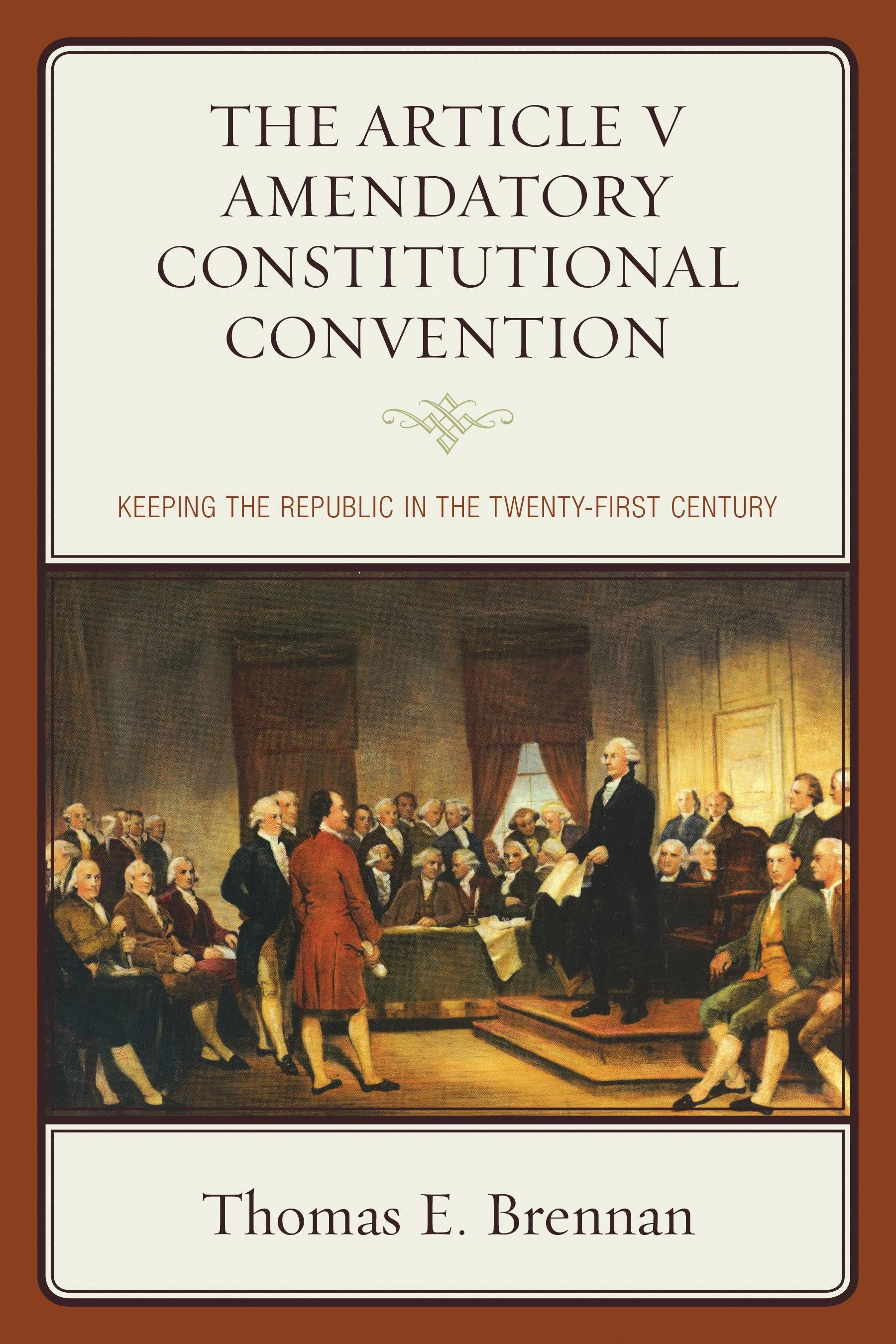
This book describes the process of amending the federal constitution as defined in Article V by means of a convention for proposing amendments. It shows that the constitution can be amended in two ways: either by ratifying an amendment proposed by the Congress or by ratifying an amendment proposed by a convention. Article V requires the Congress to call a convention whenever the legislatures of two thirds of the states request one. The federal constitution has been amended twenty-seven times. All 27 amendments were proposed by the Congress. There has never been an Article V amendatory constitutional convention in the 230 year history of the nation.
Over the years, every state in the union has asked for a convention at one time or another. Congress has never acknowledged those requests or evaluated them. The history of the 1787 constitutional convention in Philadelphia shows that the founders intended the Article V convention to be a means for the states to seek amendments which the Congress refuses to consider.
The book describes the efforts of a number of citizens groups that are trying to get an Article V convention, and it describes the weaknesses and strengths of each. It comes to several conclusions:
A. That the Congress will never voluntarily call a convention no matter how many petitions are received, because a convention might propose amendments which would decrease the powers or prerogatives of Congress.
B. That the states have the right to call an Article V convention without the concurrence of the Congress whenever two-thirds of the states wish to participate.
C. That citizens of the several states have the constitutional right to organize a convention for proposing amendments, without the call of Congress or the approval of the state legislatures.
D. That no amendment proposed by a convention, of any kind, will become a part of the federal constitution unless it is ratified by three quarters of the states, as required by Article V.
The book urges the convening of a constitutional convention by the voluntary action of citizens, and recommends a number of matters that should be on its agenda.
Over the years, every state in the union has asked for a convention at one time or another. Congress has never acknowledged those requests or evaluated them. The history of the 1787 constitutional convention in Philadelphia shows that the founders intended the Article V convention to be a means for the states to seek amendments which the Congress refuses to consider.
The book describes the efforts of a number of citizens groups that are trying to get an Article V convention, and it describes the weaknesses and strengths of each. It comes to several conclusions:
A. That the Congress will never voluntarily call a convention no matter how many petitions are received, because a convention might propose amendments which would decrease the powers or prerogatives of Congress.
B. That the states have the right to call an Article V convention without the concurrence of the Congress whenever two-thirds of the states wish to participate.
C. That citizens of the several states have the constitutional right to organize a convention for proposing amendments, without the call of Congress or the approval of the state legislatures.
D. That no amendment proposed by a convention, of any kind, will become a part of the federal constitution unless it is ratified by three quarters of the states, as required by Article V.
The book urges the convening of a constitutional convention by the voluntary action of citizens, and recommends a number of matters that should be on its agenda.
Paga fácilmente con tarjeta, Klarna, Apple Pay o Google Pay. ¿No estás contento? Siempre tienes 14 días de garantía de devolución. Lee más en nuestros términos. Si tienes preguntas, escríbenos a hello@memmo.org.
Memmo hace que estudiar sea más fácil, estés donde estés. Aquí tienes tus libros de texto y herramientas de estudio inteligentes en un solo lugar: resúmenes, quizzes, podcasts y flashcards. Y también a Ted, tu compañero de estudio que responde a todo lo que te preguntes. Más de 50 000 estudiantes ya estudian aquí. Está hecho para que aprendas más rápido y te estreses menos.