
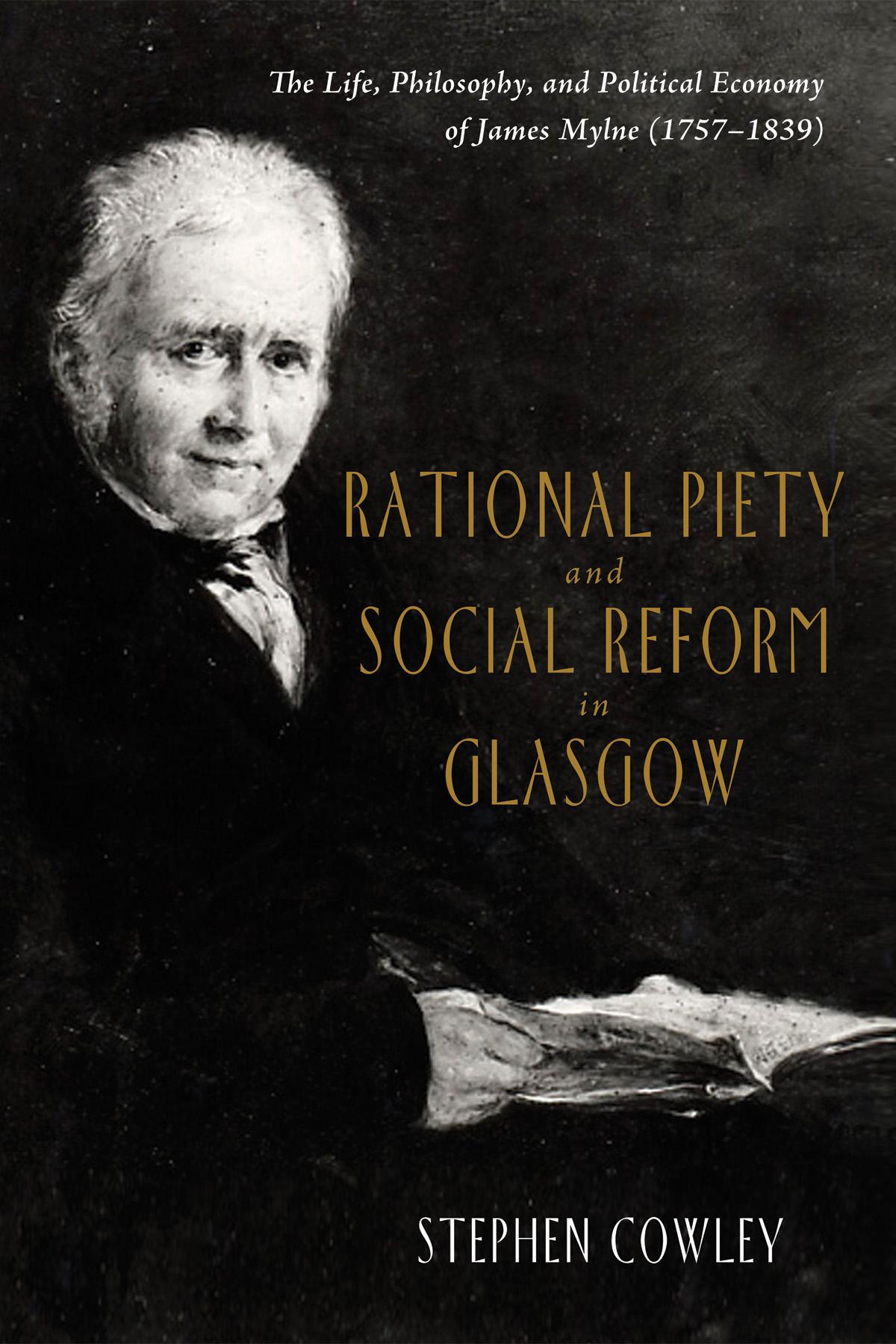
James Mylne (1757-1839) taught moral philosophy and political economy in Glasgow from 1797 to the mid-1830s. Rational Piety and Social Reform in Glasgow offers readers Mylne's biography, a summary of his lectures on moral philosophy and political economy, several interpretative essays, and a collation of his introductory lecture.
Mylne's moral philosophy lectures cover the intellectual and active powers of man and offer an account of his duties to God, neighbor, and self. He diverges from the "moral sense" and "common sense" traditions associated with Francis Hutcheson and Thomas Reid in Glasgow. He reinstates reason as the guiding principle of conscience and argues for utility as the predominant criterion of morality.
Mylne was also active among the Whig "friends of Mr. Fox" and in the Glasgow Reform Association, for his theory of the sovereignty of reason drove his view of political reform and the concept of value in his lectures on political economy. In a criticism of Adam Smith, Mylne interprets use-value as prior to exchange value, founding it in lawful desires identifiable by a merchant community. Mylne's political opinions and activity among local political reformers and literary societies exemplify the Glasgow Whig tradition.
Paga fácilmente con tarjeta, Klarna, Apple Pay o Google Pay. ¿No estás contento? Siempre tienes 14 días de garantía de devolución. Lee más en nuestros términos. Si tienes preguntas, escríbenos a hello@memmo.org.
Memmo hace que estudiar sea más fácil, estés donde estés. Aquí tienes tus libros de texto y herramientas de estudio inteligentes en un solo lugar: resúmenes, quizzes, podcasts y flashcards. Y también a Ted, tu compañero de estudio que responde a todo lo que te preguntes. Más de 50 000 estudiantes ya estudian aquí. Está hecho para que aprendas más rápido y te estreses menos.
También te podría gustar
Comprar el libro0