
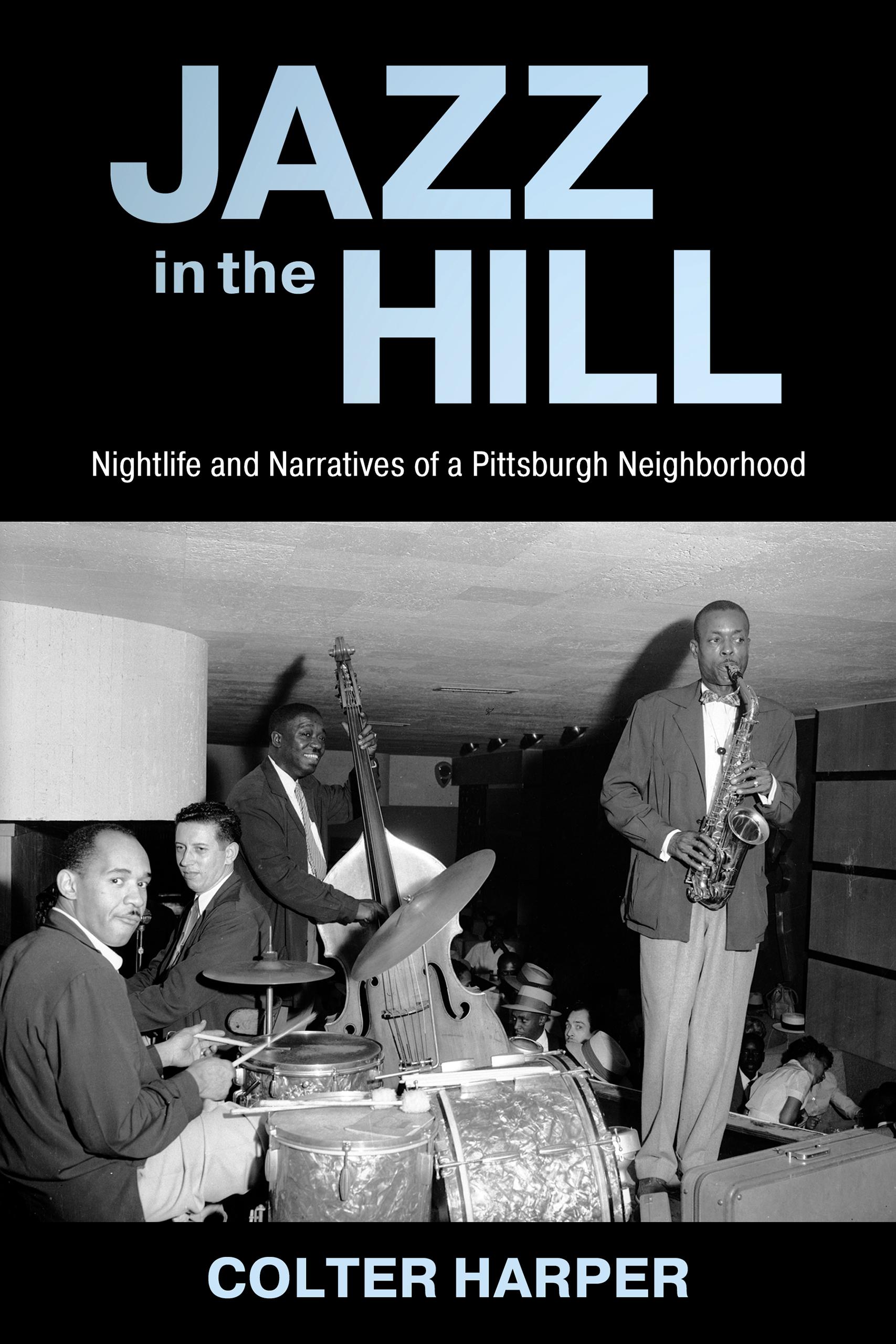
From the 1920s through the 1960s, Pittsburgh’s Hill District was the heart of the city’s Black cultural life and home to a vibrant jazz scene. In Jazz in the Hill: Nightlife and Narratives of a Pittsburgh Neighborhood, Colter Harper looks at how jazz shaped the neighborhood and created a way of life. Beyond backdrops for remarkable careers, jazz clubs sparked the development of a self-determined African American community. In delving into the history of entrepreneurialism, placemaking, labor organizing, and critical listening in the Hill District, Harper forges connections to larger political contexts, processes of urban development, and civil rights struggles.
Harper adopts a broad approach in thinking about jazz clubs, foregrounding the network of patrons, business owners, and musicians who were actively invested in community building. Jazz in the Hill provides a valuable case study detailing the intersections of music, political and cultural history, public policy, labor, and law. The book addresses distinctive eras and issues of twentieth century American urban history, including notions of “vice” during the Prohibition Era (1920–1934); “blight” during the mid-twentieth century boom in urban redevelopment (1946–1973); and workplace integration during the civil rights era (1954–1968). Throughout, Harper demonstrates how the clubs, as a nexus of music, politics, economy, labor, and social relations, supported the livelihood of residents and artists while developing cultures of listening and learning. Though the neighborhood has undergone an extensive socioeconomic transformation that has muted its nightlife, this musical legacy continues to guide current development visions for the Hill on the cusp of its remaking.
Harper adopts a broad approach in thinking about jazz clubs, foregrounding the network of patrons, business owners, and musicians who were actively invested in community building. Jazz in the Hill provides a valuable case study detailing the intersections of music, political and cultural history, public policy, labor, and law. The book addresses distinctive eras and issues of twentieth century American urban history, including notions of “vice” during the Prohibition Era (1920–1934); “blight” during the mid-twentieth century boom in urban redevelopment (1946–1973); and workplace integration during the civil rights era (1954–1968). Throughout, Harper demonstrates how the clubs, as a nexus of music, politics, economy, labor, and social relations, supported the livelihood of residents and artists while developing cultures of listening and learning. Though the neighborhood has undergone an extensive socioeconomic transformation that has muted its nightlife, this musical legacy continues to guide current development visions for the Hill on the cusp of its remaking.
Paga fácilmente con tarjeta, Klarna, Apple Pay o Google Pay. ¿No estás contento? Siempre tienes 14 días de garantía de devolución. Lee más en nuestros términos. Si tienes preguntas, escríbenos a hello@memmo.org.
Memmo hace que estudiar sea más fácil, estés donde estés. Aquí tienes tus libros de texto y herramientas de estudio inteligentes en un solo lugar: resúmenes, quizzes, podcasts y flashcards. Y también a Ted, tu compañero de estudio que responde a todo lo que te preguntes. Más de 50 000 estudiantes ya estudian aquí. Está hecho para que aprendas más rápido y te estreses menos.
También te podría gustar
Comprar el libro0