
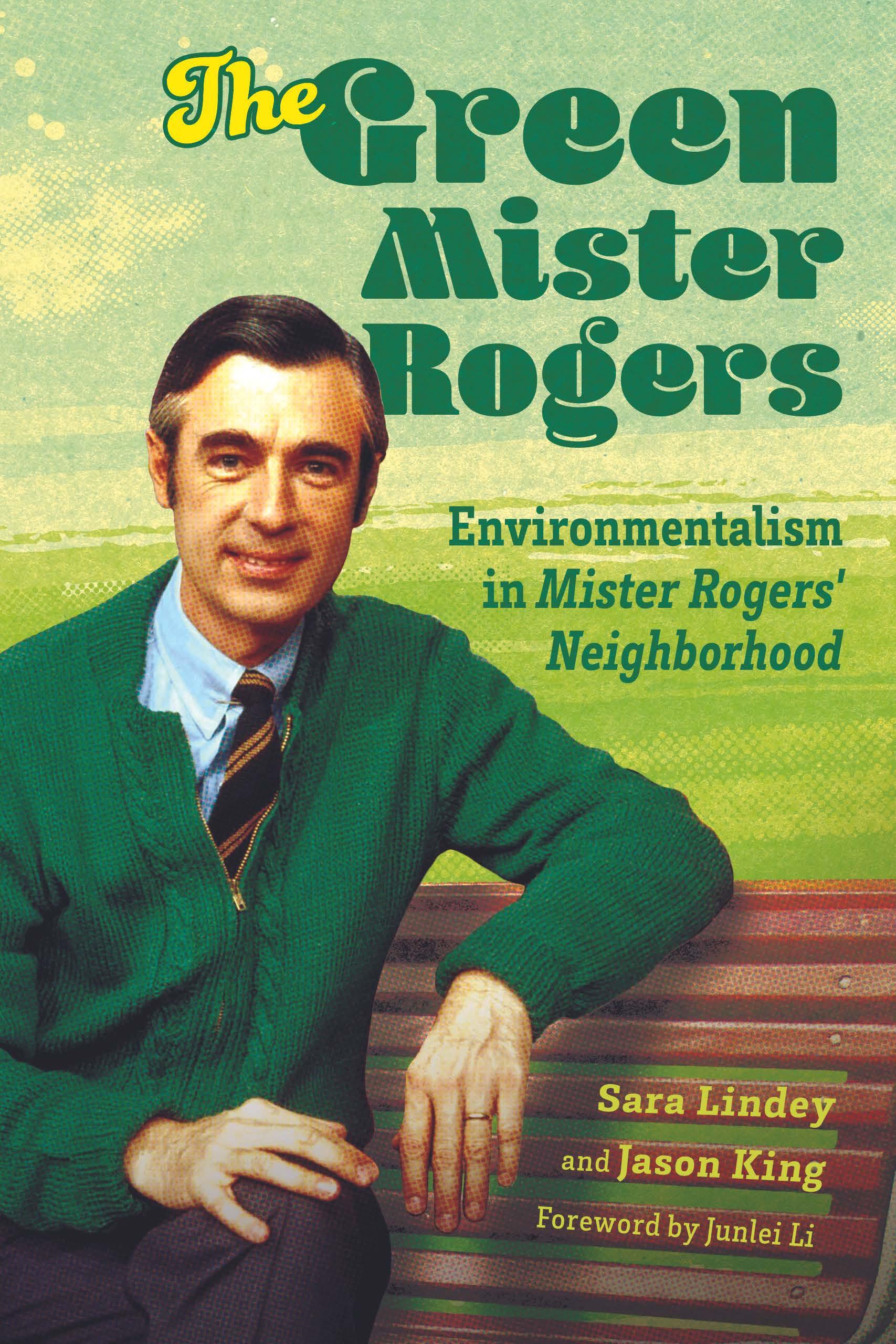
Fred Rogers was an international celebrity. He was a pioneer in children’s television, an advocate for families, and a multimedia artist and performer. He wrote the television scripts and music, performed puppetry, sang, hosted, and directed Mister Rogers’ Neighborhood for more than thirty years. In his almost nine hundred episodes, Rogers pursued dramatic topics: divorce, death, war, sibling rivalry, disabilities, racism. Rogers’ direct, slow, gentle, and empathic approach is supported by his superior emotional strength, his intellectual and creative courage, and his joyful spiritual confidence.
The Green Mister Rogers: Environmentalism in “Mister Rogers’ Neighborhood” centers on the show’s environmentalism, primarily expressed through his themed week “Caring for the Environment,” produced in 1990 in coordination with the twentieth anniversary of Earth Day. Unfolding against a trash catastrophe in the Neighborhood of Make-Believe, Rogers advances an environmentalism for children that secures children in their family homes while extending their perspective to faraway places, from the local recycling center to Florida’s coral reef. Rogers depicts animal wisdom and uses puppets to voice anxiety and hope and shows an interconnected world where each part of creation is valued, and love is circulated in networks of care. Ultimately, Rogers cultivates a practical wisdom that provides a way for children to confront the environmental crisis through action and hope and, in doing so, develop into adults who possess greater care for the environment and a capacious imagination for solving the ecological problems we face.
The Green Mister Rogers: Environmentalism in “Mister Rogers’ Neighborhood” centers on the show’s environmentalism, primarily expressed through his themed week “Caring for the Environment,” produced in 1990 in coordination with the twentieth anniversary of Earth Day. Unfolding against a trash catastrophe in the Neighborhood of Make-Believe, Rogers advances an environmentalism for children that secures children in their family homes while extending their perspective to faraway places, from the local recycling center to Florida’s coral reef. Rogers depicts animal wisdom and uses puppets to voice anxiety and hope and shows an interconnected world where each part of creation is valued, and love is circulated in networks of care. Ultimately, Rogers cultivates a practical wisdom that provides a way for children to confront the environmental crisis through action and hope and, in doing so, develop into adults who possess greater care for the environment and a capacious imagination for solving the ecological problems we face.
Páginas: 188
Categoría: Film- & Medievetenskap
e-ISBN: 9781496838681
Peso de envío: 1.2 kg
Envío en: 1-2 días
Paga fácilmente con tarjeta, Klarna, Apple Pay o Google Pay. ¿No estás contento? Siempre tienes 14 días de garantía de devolución. Lee más en nuestros términos. Si tienes preguntas, escríbenos a hello@memmo.org.
Memmo hace que estudiar sea más fácil, estés donde estés. Aquí tienes tus libros de texto y herramientas de estudio inteligentes en un solo lugar: resúmenes, quizzes, podcasts y flashcards. Y también a Ted, tu compañero de estudio que responde a todo lo que te preguntes. Más de 50 000 estudiantes ya estudian aquí. Está hecho para que aprendas más rápido y te estreses menos.
También te podría gustar
Comprar el libro0