
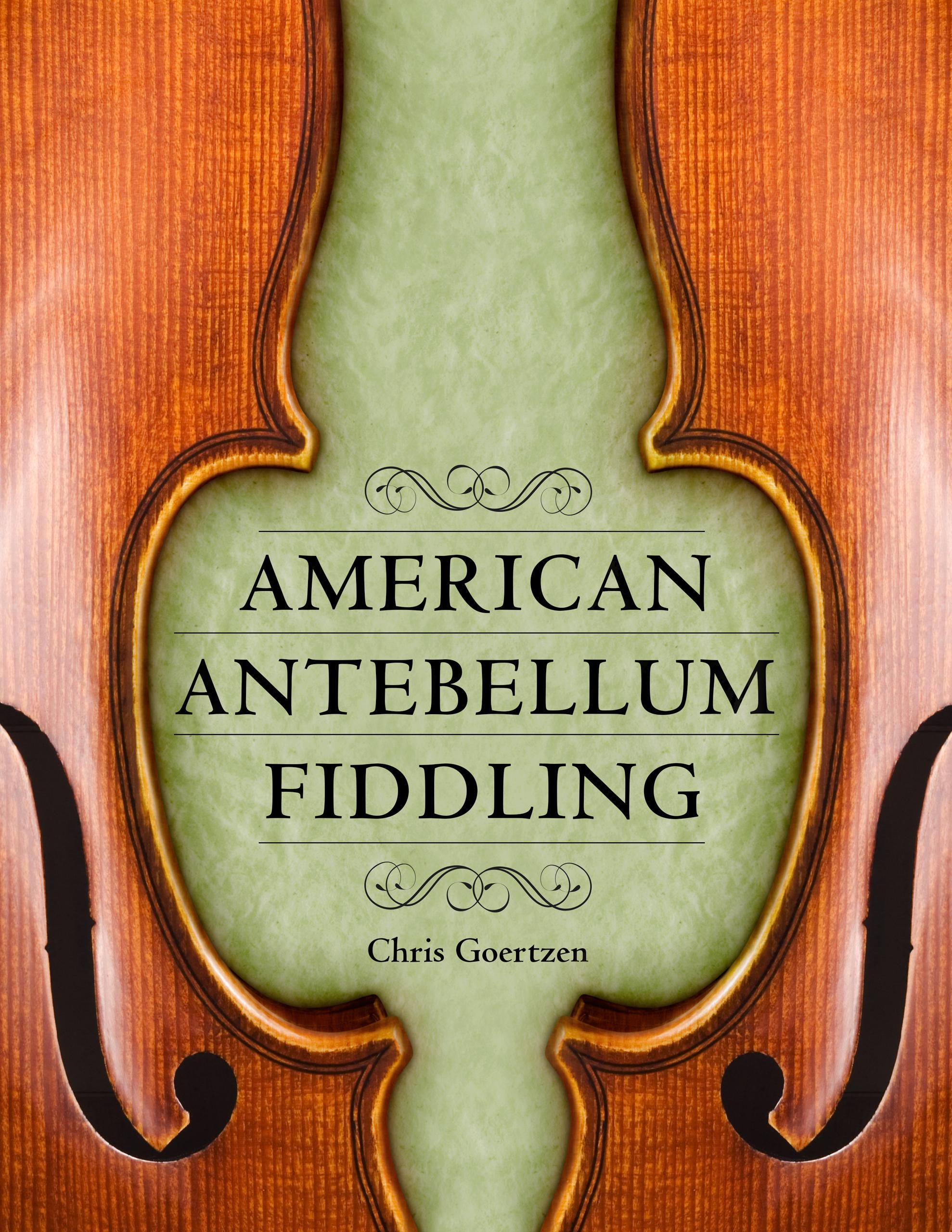
This unique volume is the only book solely about antebellum American fiddling. It includes more than 250 easy-to-read and clearly notated fiddle tunes alongside biographies of fiddlers and careful analysis of their personal tune collections. The reader learns what the tunes of the day were, what the fiddlers’ lives were like, and as much as can be discovered about how fiddling sounded then. Personal histories and tunes’ biographies offer an accessible window on a fascinating period, on decades of growth and change, and on rich cultural history made audible.
In the decades before the Civil War, American fiddling thrived mostly in oral tradition, but some fiddlers also wrote down versions of their tunes. This overlap between oral and written traditions reveals much about the sounds and social contexts of fiddling at that time. In the early 1800s, aspiring young violinists maintained manuscript collections of tunes they intended to learn. These books contained notations of oral-tradition dance tunes—many of them melodies that predated and would survive this era—plus plenty of song melodies and marches. Chris Goertzen takes us into the lives and repertoires of two such young men, Arthur McArthur and Philander Seward. Later, in the 1830s to 1850s, music publications grew in size and shrunk in cost, so fewer musicians kept personal manuscript collections. But a pair of energetic musicians did. Goertzen tells the stories of two remarkable violinist/fiddlers who wrote down many hundreds of tunes and whose notations of those tunes are wonderfully detailed, Charles M. Cobb and William Sidney Mount. Goertzen closes by examining particularly problematic collections. He takes a fresh look at George Knauff’s Virginia Reels and presents and analyzes an amateur musician’s own questionable but valuable transcriptions of his grandfather’s fiddling, which reaches back to antebellum western Virginia.
In the decades before the Civil War, American fiddling thrived mostly in oral tradition, but some fiddlers also wrote down versions of their tunes. This overlap between oral and written traditions reveals much about the sounds and social contexts of fiddling at that time. In the early 1800s, aspiring young violinists maintained manuscript collections of tunes they intended to learn. These books contained notations of oral-tradition dance tunes—many of them melodies that predated and would survive this era—plus plenty of song melodies and marches. Chris Goertzen takes us into the lives and repertoires of two such young men, Arthur McArthur and Philander Seward. Later, in the 1830s to 1850s, music publications grew in size and shrunk in cost, so fewer musicians kept personal manuscript collections. But a pair of energetic musicians did. Goertzen tells the stories of two remarkable violinist/fiddlers who wrote down many hundreds of tunes and whose notations of those tunes are wonderfully detailed, Charles M. Cobb and William Sidney Mount. Goertzen closes by examining particularly problematic collections. He takes a fresh look at George Knauff’s Virginia Reels and presents and analyzes an amateur musician’s own questionable but valuable transcriptions of his grandfather’s fiddling, which reaches back to antebellum western Virginia.
Paga fácilmente con tarjeta, Klarna, Apple Pay o Google Pay. ¿No estás contento? Siempre tienes 14 días de garantía de devolución. Lee más en nuestros términos. Si tienes preguntas, escríbenos a hello@memmo.org.
Memmo hace que estudiar sea más fácil, estés donde estés. Aquí tienes tus libros de texto y herramientas de estudio inteligentes en un solo lugar: resúmenes, quizzes, podcasts y flashcards. Y también a Ted, tu compañero de estudio que responde a todo lo que te preguntes. Más de 50 000 estudiantes ya estudian aquí. Está hecho para que aprendas más rápido y te estreses menos.
También te podría gustar
Comprar el libro0