
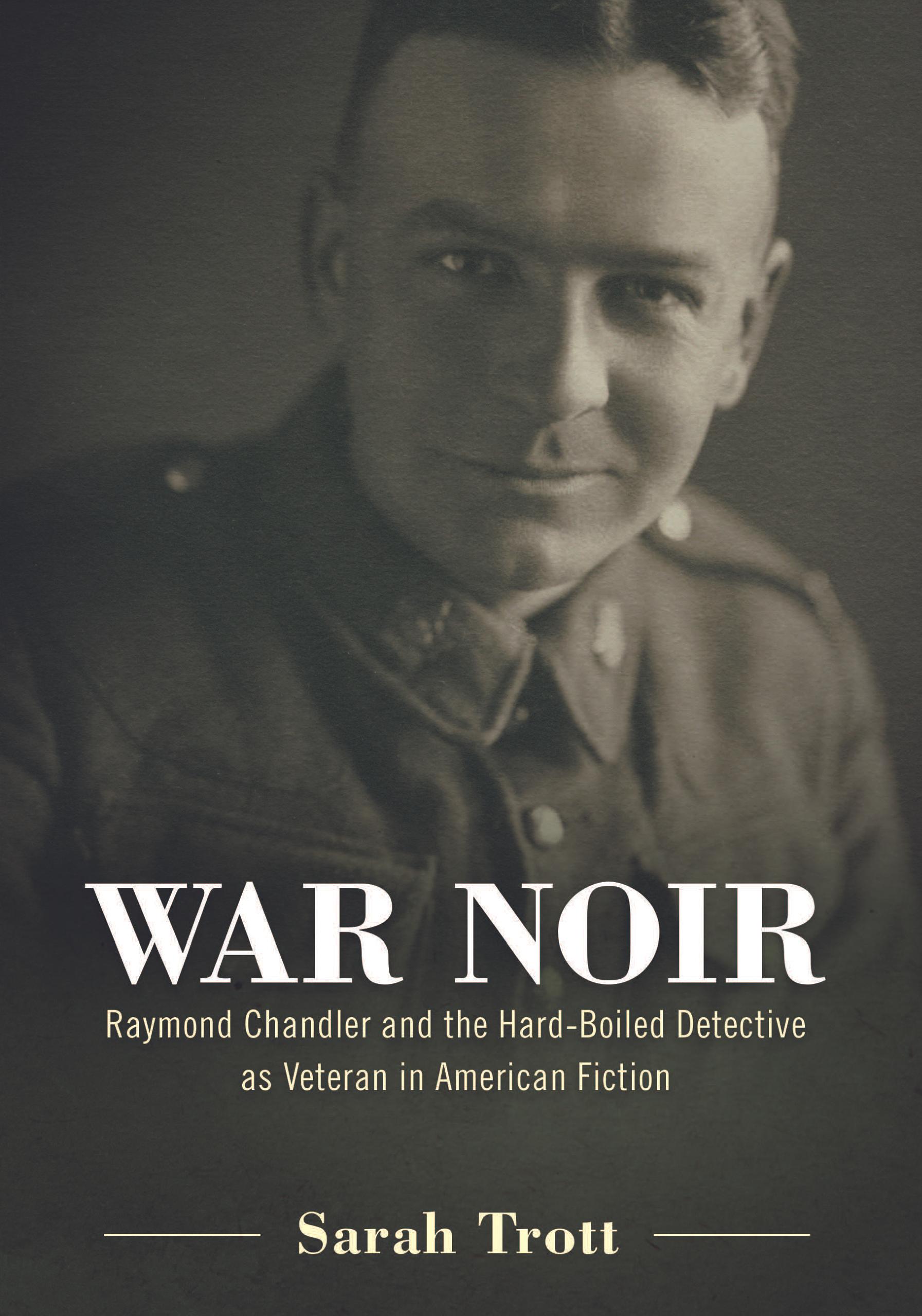
The conflation of the hard-boiled style and war experience has influenced many contemporary crime writers, particularly in the traumatic aftermath of the Vietnam War. Yet, earlier writers in the genre, such as Raymond Chandler, remain overlooked when it comes to examining how their war experience affected their writing. Sarah Trott corrects this oversight by examining Chandler alongside the World War I writers of the Lost Generation as well as highlighting a melding of very different styles in Chandler’s work.
Based on Chandler’s experience in combat, Trott explains that the writer created detective Philip Marlowe not as the idealization of heroic individualism, as is commonly perceived, but instead as an authentic individual subjected to very real psychological frailties from trauma during the First World War. Inspecting Chandler’s work and correspondence indicates that the characterization of the fictional Marlowe goes beyond the traditional chivalric readings and can instead be interpreted as a genuine representation of a traumatized veteran in American society. Substituting the horror of the trenches for the corruption of the city, Chandler formed a disillusioned protagonist in an uncaring America. Chandler did so with the sophistication necessary to straddle genre fiction and canonical literature.
The sum of this work offers a new understanding of how Chandler uses his war trauma, how that experience established the traditional archetype of detective fiction, and how this reading of his fiction enables Chandler to transcend generic limitations and be recognized as a key twentieth-century literary figure.
Based on Chandler’s experience in combat, Trott explains that the writer created detective Philip Marlowe not as the idealization of heroic individualism, as is commonly perceived, but instead as an authentic individual subjected to very real psychological frailties from trauma during the First World War. Inspecting Chandler’s work and correspondence indicates that the characterization of the fictional Marlowe goes beyond the traditional chivalric readings and can instead be interpreted as a genuine representation of a traumatized veteran in American society. Substituting the horror of the trenches for the corruption of the city, Chandler formed a disillusioned protagonist in an uncaring America. Chandler did so with the sophistication necessary to straddle genre fiction and canonical literature.
The sum of this work offers a new understanding of how Chandler uses his war trauma, how that experience established the traditional archetype of detective fiction, and how this reading of his fiction enables Chandler to transcend generic limitations and be recognized as a key twentieth-century literary figure.
Paga fácilmente con tarjeta, Klarna, Apple Pay o Google Pay. ¿No estás contento? Siempre tienes 14 días de garantía de devolución. Lee más en nuestros términos. Si tienes preguntas, escríbenos a hello@memmo.org.
Memmo hace que estudiar sea más fácil, estés donde estés. Aquí tienes tus libros de texto y herramientas de estudio inteligentes en un solo lugar: resúmenes, quizzes, podcasts y flashcards. Y también a Ted, tu compañero de estudio que responde a todo lo que te preguntes. Más de 50 000 estudiantes ya estudian aquí. Está hecho para que aprendas más rápido y te estreses menos.
También te podría gustar
Comprar el libro0