
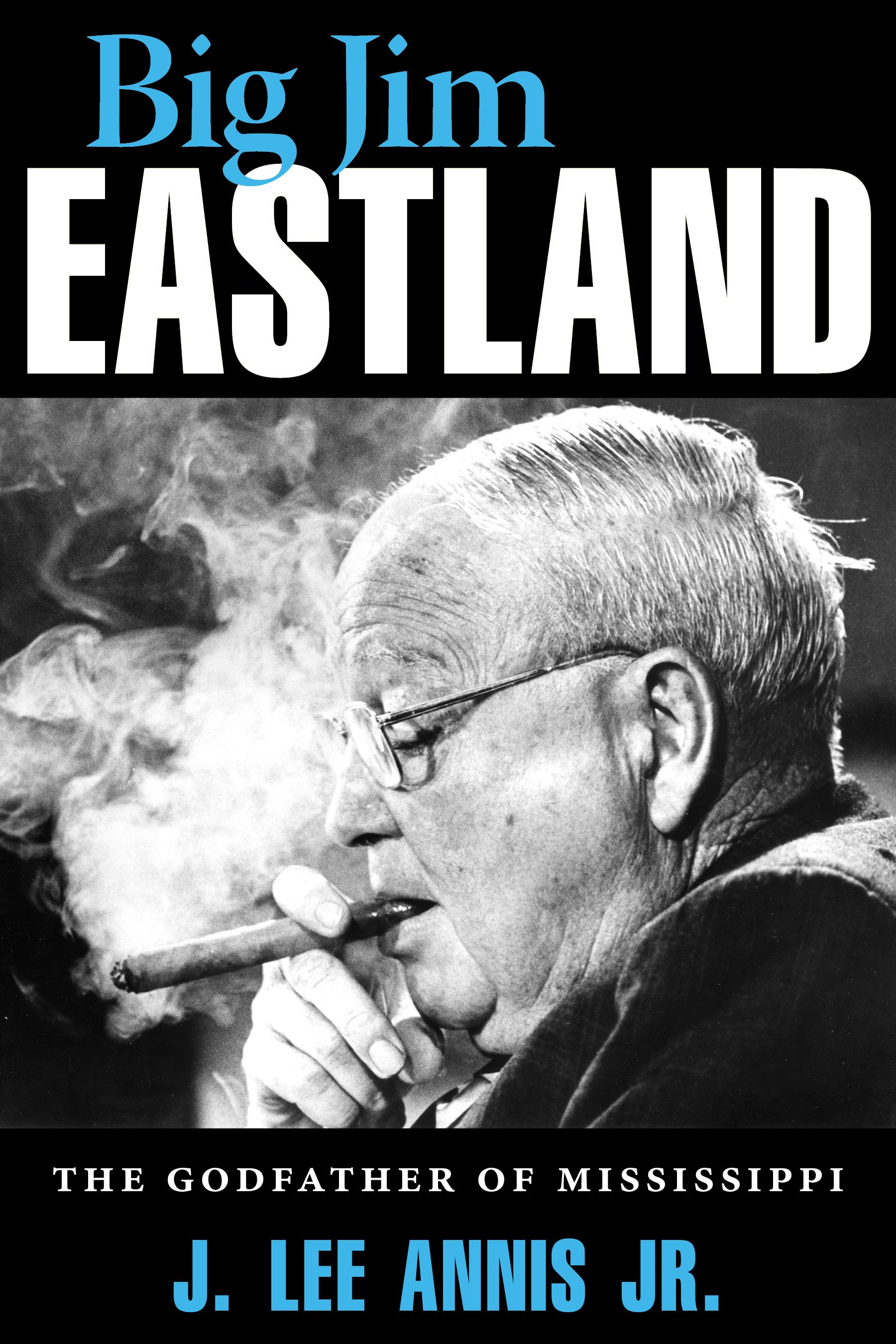
For decades after the Second World War, Senator James O. Eastland (1904–1986) was one of the more intransigent leaders of the Deep South's resistance to what he called “the Second Reconstruction.” And yet he developed, late in his life, a very real friendship with state NAACP chair Aaron Henry. Big Jim Eastland provides the life story of this savvy, unpredictable powerhouse.
From 1947 to 1978, Eastland wore that image of resistance proudly, even while recognizing from the beginning his was the losing side. Biographer J. Lee Annis Jr. chronicles such complexities extensively and also delves into many facets lesser known to the general public.
Born in the Mississippi Delta as part of the elite planter class, Eastland was appointed to the US Senate in 1941 by Democratic Governor Paul B. Johnson Sr. Eastland ran for and won the Senate seat outright in 1942 and served in the Senate from 1943 until his retirement in 1978.
A blunt man of few words but many contradictions, Eastland was an important player in Washington, from his initial stint in 1941 where he rapidly salvaged several key local projects from bungling intervention, to the 1970s when he shepherded the Supreme Court nominees of Richard Nixon and Gerald Ford to Senate confirmation. Annis paints a full picture of the man, describing the objections Eastland raised to civil rights proposals and the eventual accommodations he needed to accept after the passage of the Voting Rights Act of 1965.
From 1947 to 1978, Eastland wore that image of resistance proudly, even while recognizing from the beginning his was the losing side. Biographer J. Lee Annis Jr. chronicles such complexities extensively and also delves into many facets lesser known to the general public.
Born in the Mississippi Delta as part of the elite planter class, Eastland was appointed to the US Senate in 1941 by Democratic Governor Paul B. Johnson Sr. Eastland ran for and won the Senate seat outright in 1942 and served in the Senate from 1943 until his retirement in 1978.
A blunt man of few words but many contradictions, Eastland was an important player in Washington, from his initial stint in 1941 where he rapidly salvaged several key local projects from bungling intervention, to the 1970s when he shepherded the Supreme Court nominees of Richard Nixon and Gerald Ford to Senate confirmation. Annis paints a full picture of the man, describing the objections Eastland raised to civil rights proposals and the eventual accommodations he needed to accept after the passage of the Voting Rights Act of 1965.
Páginas: 438
Categoría: Biografi & Memoarer
e-ISBN: 9781496806154
Peso de envío: 1.2 kg
Envío en: 1-2 días
Paga fácilmente con tarjeta, Klarna, Apple Pay o Google Pay. ¿No estás contento? Siempre tienes 14 días de garantía de devolución. Lee más en nuestros términos. Si tienes preguntas, escríbenos a hello@memmo.org.
Memmo hace que estudiar sea más fácil, estés donde estés. Aquí tienes tus libros de texto y herramientas de estudio inteligentes en un solo lugar: resúmenes, quizzes, podcasts y flashcards. Y también a Ted, tu compañero de estudio que responde a todo lo que te preguntes. Más de 50 000 estudiantes ya estudian aquí. Está hecho para que aprendas más rápido y te estreses menos.
También te podría gustar
Comprar el libro0