
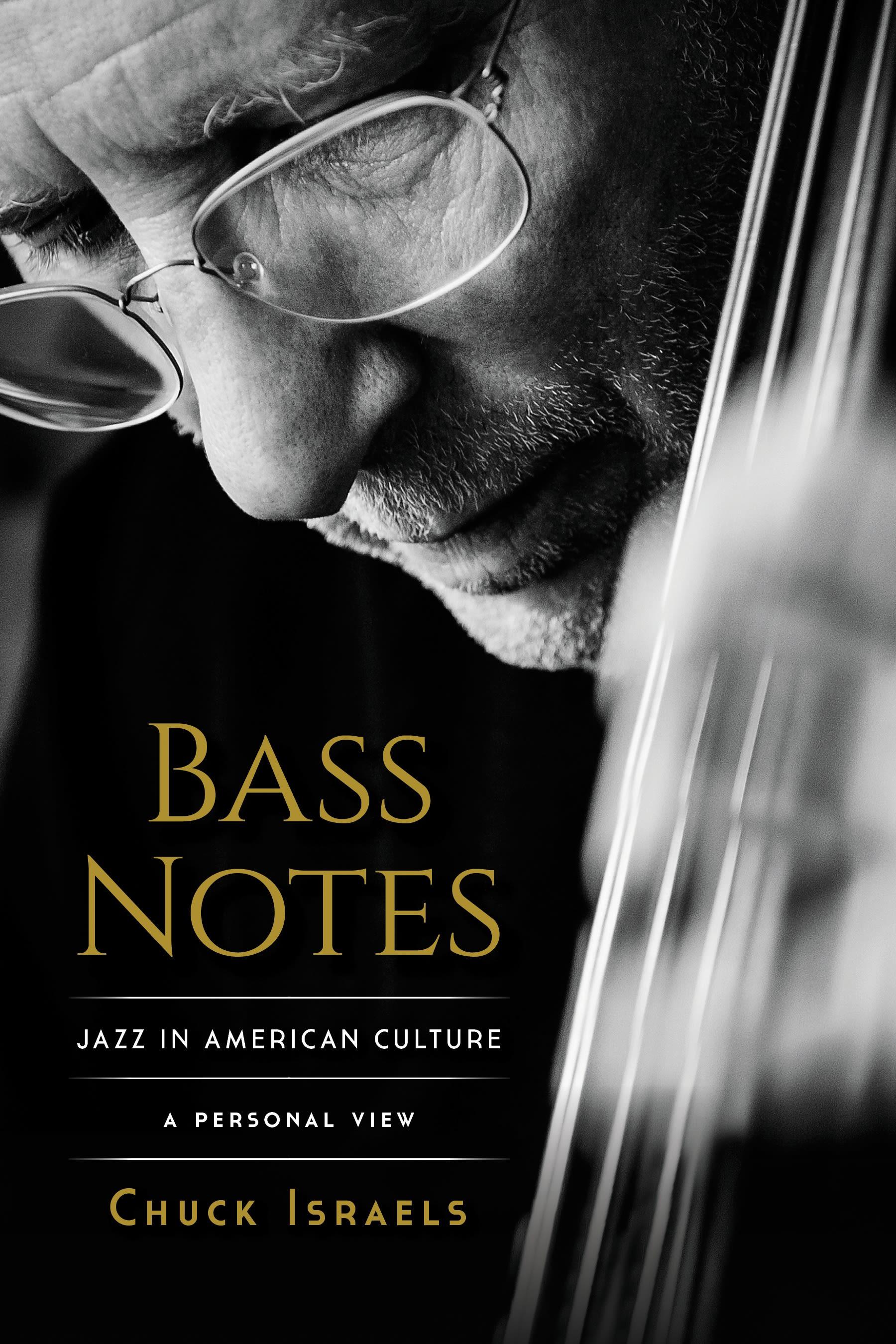
From his upbringing as a “red-diaper baby” among some of the leading lights of American music and Left politics, to his legendary work as bassist for the Bill Evans trio, to his collaborations with such figures as Charles Mingus and Billie Holiday, Chuck Israels has witnessed over a half-century of change and innovation in American jazz music. In Bass Notes, he offers up both an engaging memoir and a meditation on the history of jazz music and its prospects for the future. In addition to fascinating stories from his work with musicians like John Coltrane, Joan Baez, and Herbie Hancock, he gives an inside view into the mysterious alchemy that happens when skilled jazz improvisers get together. As he explains, the combination of disciplined collaboration and individual freedom is not just exhilarating for musicians, but an inspiring reflection of, and model for, democracy and the potential for true racial equality.
Israels recounts his decision to leave Bill Evans’s trio to deepen his musical education and develop as a composer—and his choice to not rejoin the trio in Evans’s last years. Citing such developments as the dominance of conservatory training and ill-advised crossover attempts with classical and pop, he also gives an impassioned but unsentimental account of how jazz lost its primacy in the pantheon of American music, even though it is America’s most distinctive contribution to world music. He explores the obstacles that today’s best young jazz musicians face following the giants of earlier generations and the dwindling opportunities to make a living as a musician. But despite it all, Israels argues that jazz’s enduring and rich legacy will not be lost and shows how it can be not just sustained but broadened in the years to come.
Israels recounts his decision to leave Bill Evans’s trio to deepen his musical education and develop as a composer—and his choice to not rejoin the trio in Evans’s last years. Citing such developments as the dominance of conservatory training and ill-advised crossover attempts with classical and pop, he also gives an impassioned but unsentimental account of how jazz lost its primacy in the pantheon of American music, even though it is America’s most distinctive contribution to world music. He explores the obstacles that today’s best young jazz musicians face following the giants of earlier generations and the dwindling opportunities to make a living as a musician. But despite it all, Israels argues that jazz’s enduring and rich legacy will not be lost and shows how it can be not just sustained but broadened in the years to come.
Paga fácilmente con tarjeta, Klarna, Apple Pay o Google Pay. ¿No estás contento? Siempre tienes 14 días de garantía de devolución. Lee más en nuestros términos. Si tienes preguntas, escríbenos a hello@memmo.org.
Memmo hace que estudiar sea más fácil, estés donde estés. Aquí tienes tus libros de texto y herramientas de estudio inteligentes en un solo lugar: resúmenes, quizzes, podcasts y flashcards. Y también a Ted, tu compañero de estudio que responde a todo lo que te preguntes. Más de 50 000 estudiantes ya estudian aquí. Está hecho para que aprendas más rápido y te estreses menos.