
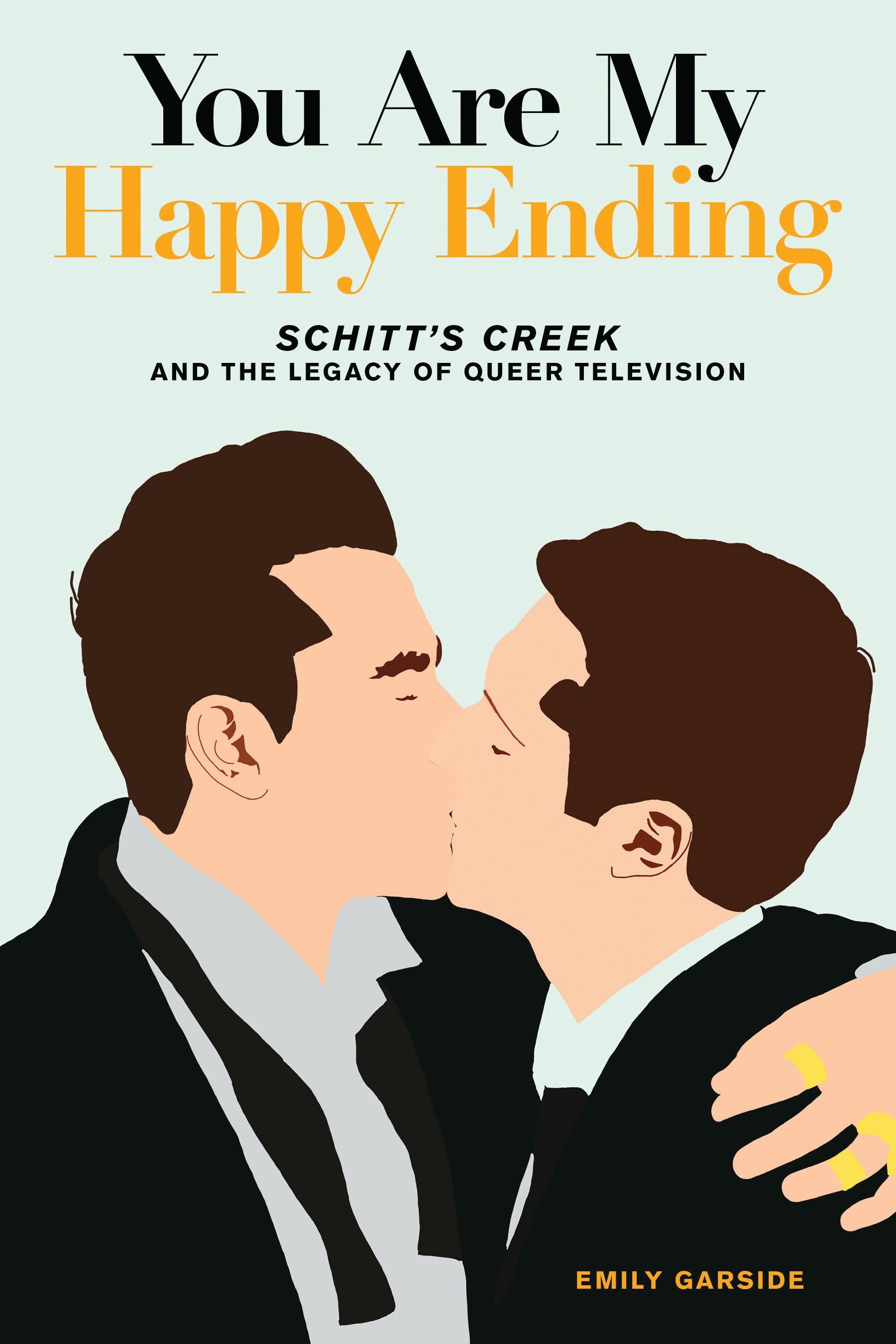
From the show's modest beginnings to its massive Emmy sweep, You Are My Happy Ending tells the story of how Schitt’s Creek became the surprise hit that changed the way we think about LGBTQ relationships.
Cultural analyst Emily Garside shows how this series fused classic romcom and sitcom tropes to create a world with a queer love story at its core, starting with Daniel Levy, the co-creator who plays David. She examines the show’s Canadian identity and its diverse incorporation of references from literature (Brideshead Revisited) to cinema (Hitchcock’s The Birds), as well as numerous romantic comedy texts. Schitt’s Creek is an homage to all these elements of the past literary and cinematic canon while also creating an important contemporary narrative of its own. Most importantly, Garside delves into the references to queer icons and culture—from Cabaret to drag.
How did this supposedly light comedy embrace an activist perspective? And how does it use (and subvert) its romantic-comedy genre in order to make that activism even more powerful? Combining a fan's affection with a scholar's insight, Garside explains how this “little show that could” is the product of a long history of queer activism, breaking down barriers and marking a turning point in future representation of LGBTQ stories.
Cultural analyst Emily Garside shows how this series fused classic romcom and sitcom tropes to create a world with a queer love story at its core, starting with Daniel Levy, the co-creator who plays David. She examines the show’s Canadian identity and its diverse incorporation of references from literature (Brideshead Revisited) to cinema (Hitchcock’s The Birds), as well as numerous romantic comedy texts. Schitt’s Creek is an homage to all these elements of the past literary and cinematic canon while also creating an important contemporary narrative of its own. Most importantly, Garside delves into the references to queer icons and culture—from Cabaret to drag.
How did this supposedly light comedy embrace an activist perspective? And how does it use (and subvert) its romantic-comedy genre in order to make that activism even more powerful? Combining a fan's affection with a scholar's insight, Garside explains how this “little show that could” is the product of a long history of queer activism, breaking down barriers and marking a turning point in future representation of LGBTQ stories.
Paga fácilmente con tarjeta, Klarna, Apple Pay o Google Pay. ¿No estás contento? Siempre tienes 14 días de garantía de devolución. Lee más en nuestros términos. Si tienes preguntas, escríbenos a hello@memmo.org.
Memmo hace que estudiar sea más fácil, estés donde estés. Aquí tienes tus libros de texto y herramientas de estudio inteligentes en un solo lugar: resúmenes, quizzes, podcasts y flashcards. Y también a Ted, tu compañero de estudio que responde a todo lo que te preguntes. Más de 50 000 estudiantes ya estudian aquí. Está hecho para que aprendas más rápido y te estreses menos.