
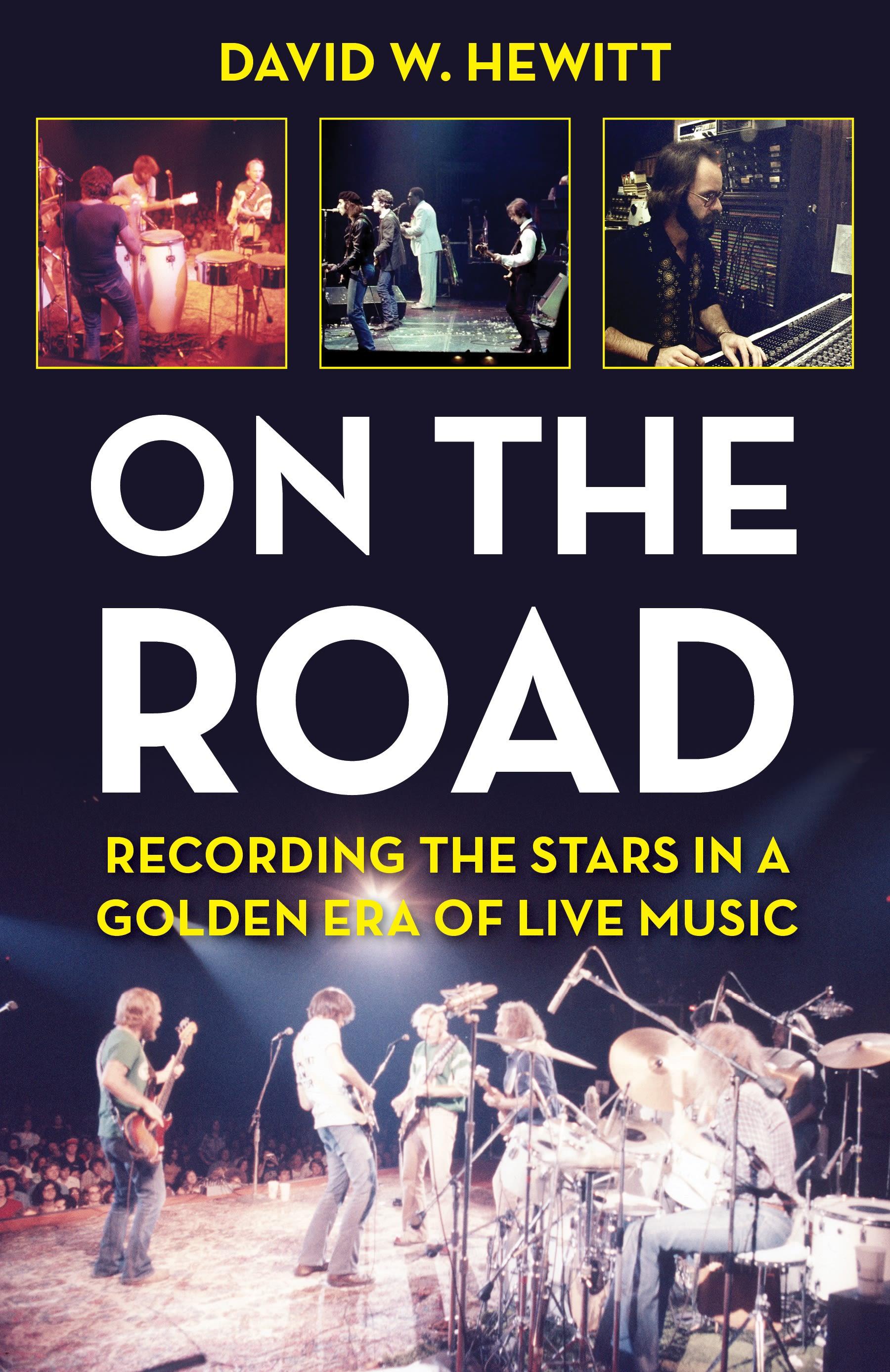
This book tells the story of a life spent on the road recording the rich diversity of music in America when it was a major part of our lives, not just digital background noise. For music fans, there was a golden era of live music, stretching from the 1960s through the 1980s, and even evolving into the 1990s, if you want to be generous.
In the pre-digital era, music fans spent a large part of their free time (and money) listening to their favorite artist’s recordings. It was an analog world so if they wanted to hear the music, they actually had to listen to the radio, buy the records, and go to the concerts. Popular artists had long performed live concerts in the major markets, but it took rock 'n' roll to make national touring a viable business.
Touring sound systems grew from scratch to keep up with larger and larger venues. Likewise, the ability to record those shows had to grow as well. The rudimentary collection of semi-professional gear grew into full-blown remote recording studios to keep up with the demand for live records, films, and broadcasts. The truly wonderful thing about the remote recording business was the author experienced so many different musical cultures. Where else could you go from recording a tour with the Rolling Stones to a TV special with Mohamed Ali at the Apollo Theater? How about the season opening of Carnegie Hall on PBS TV (with a different major orchestra every year) to Frank Zappa’s annual Halloween Show? Or maybe a Yoko Ono tour behind the 1980s Iron Curtain to the Eagles in modern Australia?
Then there are worldwide live broadcasts like the Academy Awards and the Grammy Awards to intimate jazz settings with Miles Davis or Wynton Marsalis. Compare the grandeur of the Metropolitan Opera to the irreverent comedy of Saturday Night Live.
On the Road contains the stories of recording all that music live in its natural habitat, the clubs, theaters, concert halls, and arenas. There were only a few companies that succeeded in the rough and tumble business of live recording. The author was one of the most successful live recording engineers and the constructor of remote recording studios during that era, with thousands of live shows to his credit.
In the pre-digital era, music fans spent a large part of their free time (and money) listening to their favorite artist’s recordings. It was an analog world so if they wanted to hear the music, they actually had to listen to the radio, buy the records, and go to the concerts. Popular artists had long performed live concerts in the major markets, but it took rock 'n' roll to make national touring a viable business.
Touring sound systems grew from scratch to keep up with larger and larger venues. Likewise, the ability to record those shows had to grow as well. The rudimentary collection of semi-professional gear grew into full-blown remote recording studios to keep up with the demand for live records, films, and broadcasts. The truly wonderful thing about the remote recording business was the author experienced so many different musical cultures. Where else could you go from recording a tour with the Rolling Stones to a TV special with Mohamed Ali at the Apollo Theater? How about the season opening of Carnegie Hall on PBS TV (with a different major orchestra every year) to Frank Zappa’s annual Halloween Show? Or maybe a Yoko Ono tour behind the 1980s Iron Curtain to the Eagles in modern Australia?
Then there are worldwide live broadcasts like the Academy Awards and the Grammy Awards to intimate jazz settings with Miles Davis or Wynton Marsalis. Compare the grandeur of the Metropolitan Opera to the irreverent comedy of Saturday Night Live.
On the Road contains the stories of recording all that music live in its natural habitat, the clubs, theaters, concert halls, and arenas. There were only a few companies that succeeded in the rough and tumble business of live recording. The author was one of the most successful live recording engineers and the constructor of remote recording studios during that era, with thousands of live shows to his credit.
Paga fácilmente con tarjeta, Klarna, Apple Pay o Google Pay. ¿No estás contento? Siempre tienes 14 días de garantía de devolución. Lee más en nuestros términos. Si tienes preguntas, escríbenos a hello@memmo.org.
Memmo hace que estudiar sea más fácil, estés donde estés. Aquí tienes tus libros de texto y herramientas de estudio inteligentes en un solo lugar: resúmenes, quizzes, podcasts y flashcards. Y también a Ted, tu compañero de estudio que responde a todo lo que te preguntes. Más de 50 000 estudiantes ya estudian aquí. Está hecho para que aprendas más rápido y te estreses menos.