
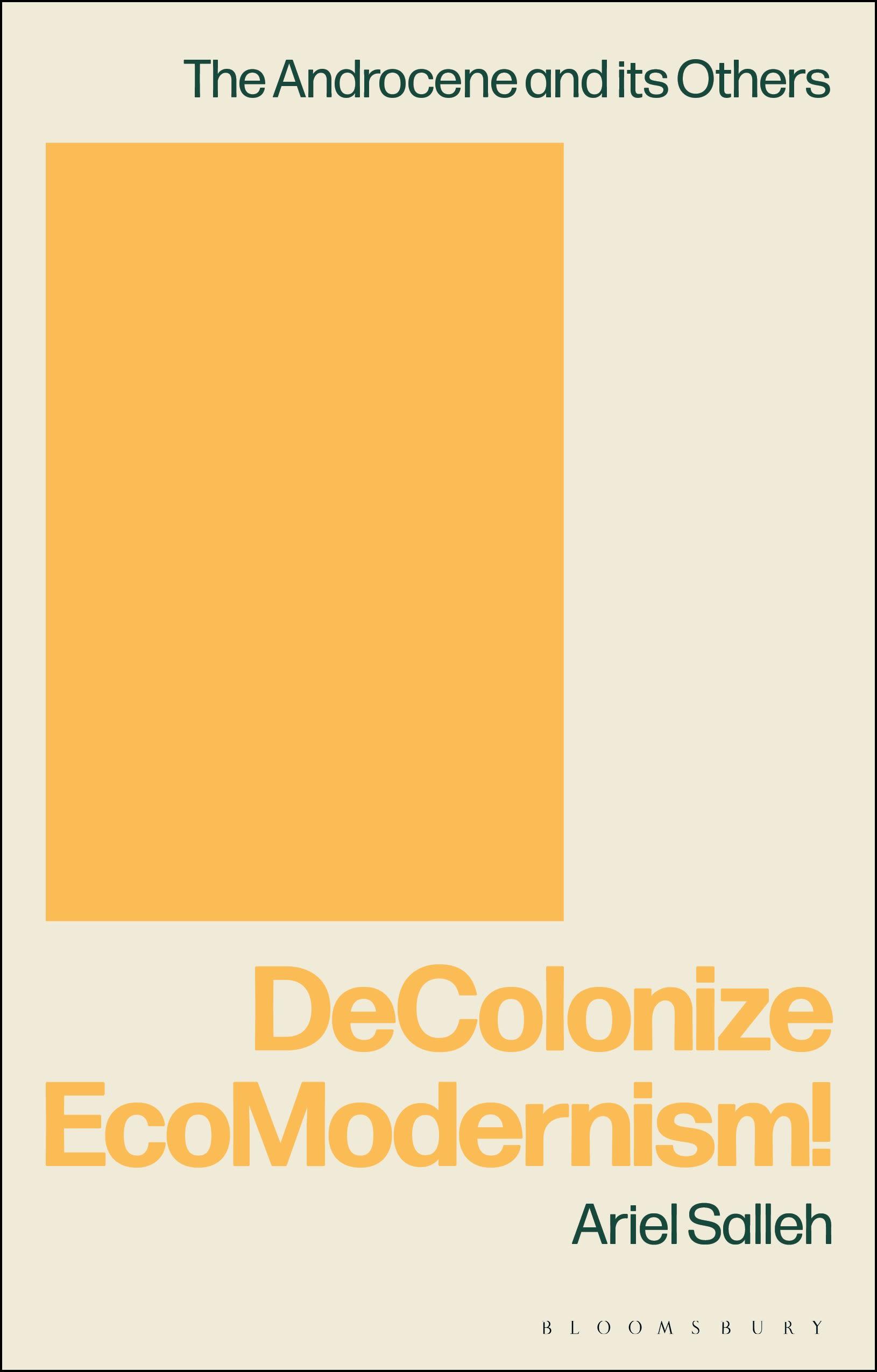
In the 21st century, the old colonial attitude of terra nullius, meaning a vacant place free for the taking, still lurks behind the global economic expropriation of peoples' lands and bodies.
Today, that theft is rationalised internationally by ecomodernist policy. This book engages with the patriarchal-colonial-capitalist mindset of the contemporary Androcene and its threats to Life-on-Earth, including global warming and nuclear risks, mining and the gene trade, the Fourth Industrial Revolution and digital coloniality.
Ariel Salleh spells out the social and ecological contradictions set in motion by neocolonialism. Inspired by decolonial thinkers from Arturo Escobar to Tyson Yunkaporta, and critics of technology like Vandana Shiva and Shoshana Zuboff, she argues that dispossession of First Nation peoples' livelihoods is not healed by consumerism in the name of 'development'. Breaking with ecomodernist policy such as 'the tech fix' of mainstream environmentalists, Salleh contests the patriarchal-colonial-capitalist imperium and its advocacy of Green New Deals, Earth Governance, Sustainable Development Goals, and Smart Futures.
Worldwide many decolonial activists see through the zero-sum imagination and its Earth Summits. Youth too, is defying the capitalist ruling class extinction trajectory, and some even challenge the fashionable post-human ideology circulating in high-tech quarters. Beyond 'exchange value', these Others of the Androcene are calling for self-governing bioregional futures, respectful of indigenous skills; they want local food sovereign economies, which meet people's needs while protecting nature's 'metabolic value'.
Spelling out the biopolitical violence of digitalization and genetic engineering, this book traces two decades of creative defiance by global peoples' movements against the contradictions of ecomodernist development and its ongoing imposition by nation states and international agencies.
Today, that theft is rationalised internationally by ecomodernist policy. This book engages with the patriarchal-colonial-capitalist mindset of the contemporary Androcene and its threats to Life-on-Earth, including global warming and nuclear risks, mining and the gene trade, the Fourth Industrial Revolution and digital coloniality.
Ariel Salleh spells out the social and ecological contradictions set in motion by neocolonialism. Inspired by decolonial thinkers from Arturo Escobar to Tyson Yunkaporta, and critics of technology like Vandana Shiva and Shoshana Zuboff, she argues that dispossession of First Nation peoples' livelihoods is not healed by consumerism in the name of 'development'. Breaking with ecomodernist policy such as 'the tech fix' of mainstream environmentalists, Salleh contests the patriarchal-colonial-capitalist imperium and its advocacy of Green New Deals, Earth Governance, Sustainable Development Goals, and Smart Futures.
Worldwide many decolonial activists see through the zero-sum imagination and its Earth Summits. Youth too, is defying the capitalist ruling class extinction trajectory, and some even challenge the fashionable post-human ideology circulating in high-tech quarters. Beyond 'exchange value', these Others of the Androcene are calling for self-governing bioregional futures, respectful of indigenous skills; they want local food sovereign economies, which meet people's needs while protecting nature's 'metabolic value'.
Spelling out the biopolitical violence of digitalization and genetic engineering, this book traces two decades of creative defiance by global peoples' movements against the contradictions of ecomodernist development and its ongoing imposition by nation states and international agencies.
Paga fácilmente con tarjeta, Klarna, Apple Pay o Google Pay. ¿No estás contento? Siempre tienes 14 días de garantía de devolución. Lee más en nuestros términos. Si tienes preguntas, escríbenos a hello@memmo.org.
Memmo hace que estudiar sea más fácil, estés donde estés. Aquí tienes tus libros de texto y herramientas de estudio inteligentes en un solo lugar: resúmenes, quizzes, podcasts y flashcards. Y también a Ted, tu compañero de estudio que responde a todo lo que te preguntes. Más de 50 000 estudiantes ya estudian aquí. Está hecho para que aprendas más rápido y te estreses menos.