
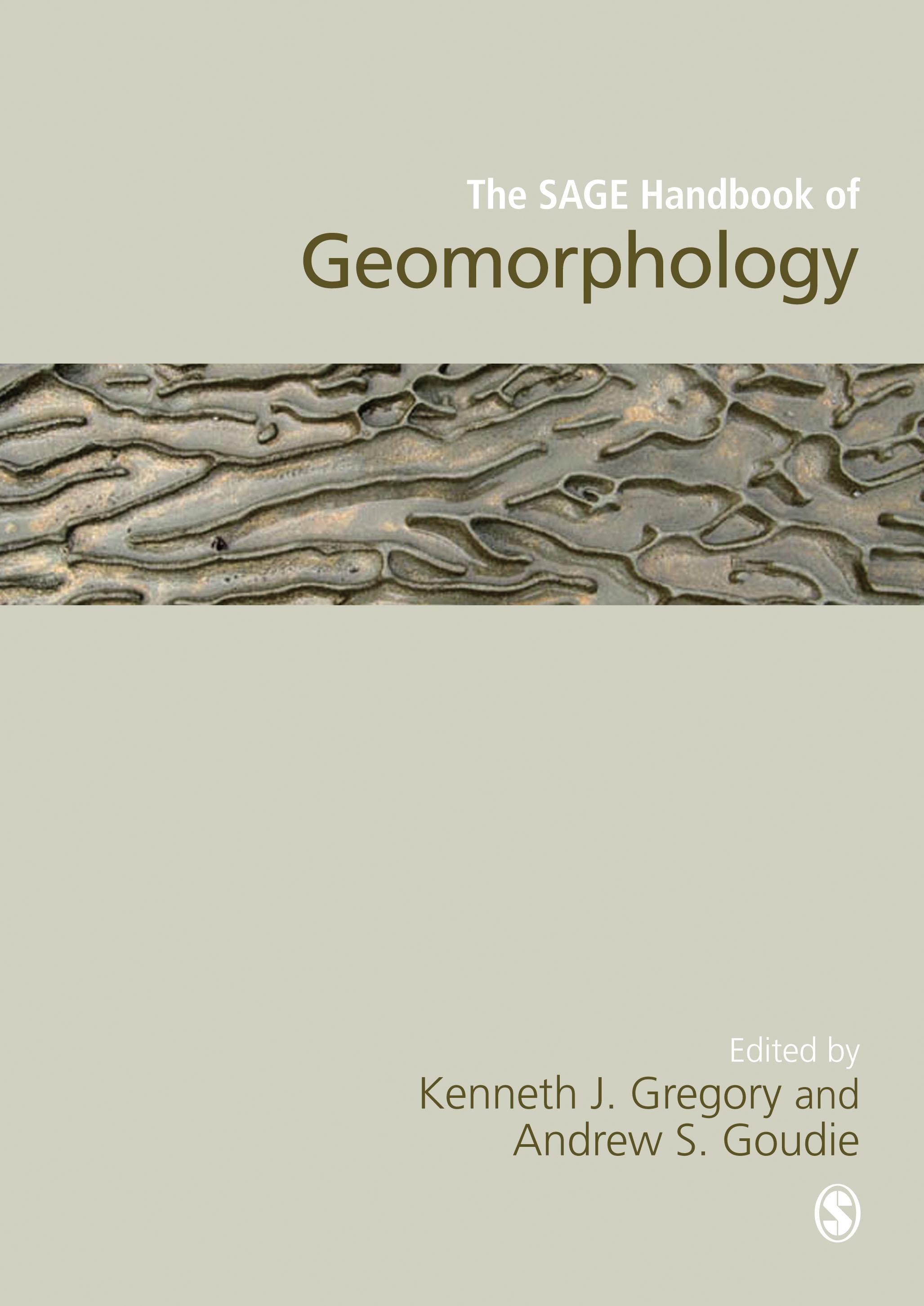
Organized into five substantive sections, the Handbook is an overview of:
• Foundations and Relevance: including the nature and scope of geomorphology; the origins and development of geomorphology; the role and character of theory in geomorphology; geomorphology and environmental management; and geomorphology and society
• Techniques and Approaches: including observations and experiments; geomorphological mapping; the significance of models; process and form; dating surfaces and sediment; remote sensing in geomorphology; GIS in geomorphology; biogeomorphology; human activity
• Process and Environment: including the evolution of regolith; weathering; fluids, flows and fluxes; sediment transport and deposition; hill slopes; riverine environments; glacial geomorphology; periglacial environments; coastal environments; aeolian environments; tropical environments; karst and karst processes
• Environmental Change: including landscape evolution and tectonics; interpreting quaternary environments; environmental change; disturbance and responses to geomorphic systems
• Conclusion: including challenges and perspectives; and a concluding review
The Handbook has contributions from 48 international authors and was initially organized by the International Association of Geomorphologists. This will be a much-used and much-cited reference for researchers in Geomorphology, Physical Geography and the Environmental Sciences.
Paga fácilmente con tarjeta, Klarna, Apple Pay o Google Pay. ¿No estás contento? Siempre tienes 14 días de garantía de devolución. Lee más en nuestros términos. Si tienes preguntas, escríbenos a hello@memmo.org.
Memmo hace que estudiar sea más fácil, estés donde estés. Aquí tienes tus libros de texto y herramientas de estudio inteligentes en un solo lugar: resúmenes, quizzes, podcasts y flashcards. Y también a Ted, tu compañero de estudio que responde a todo lo que te preguntes. Más de 50 000 estudiantes ya estudian aquí. Está hecho para que aprendas más rápido y te estreses menos.