
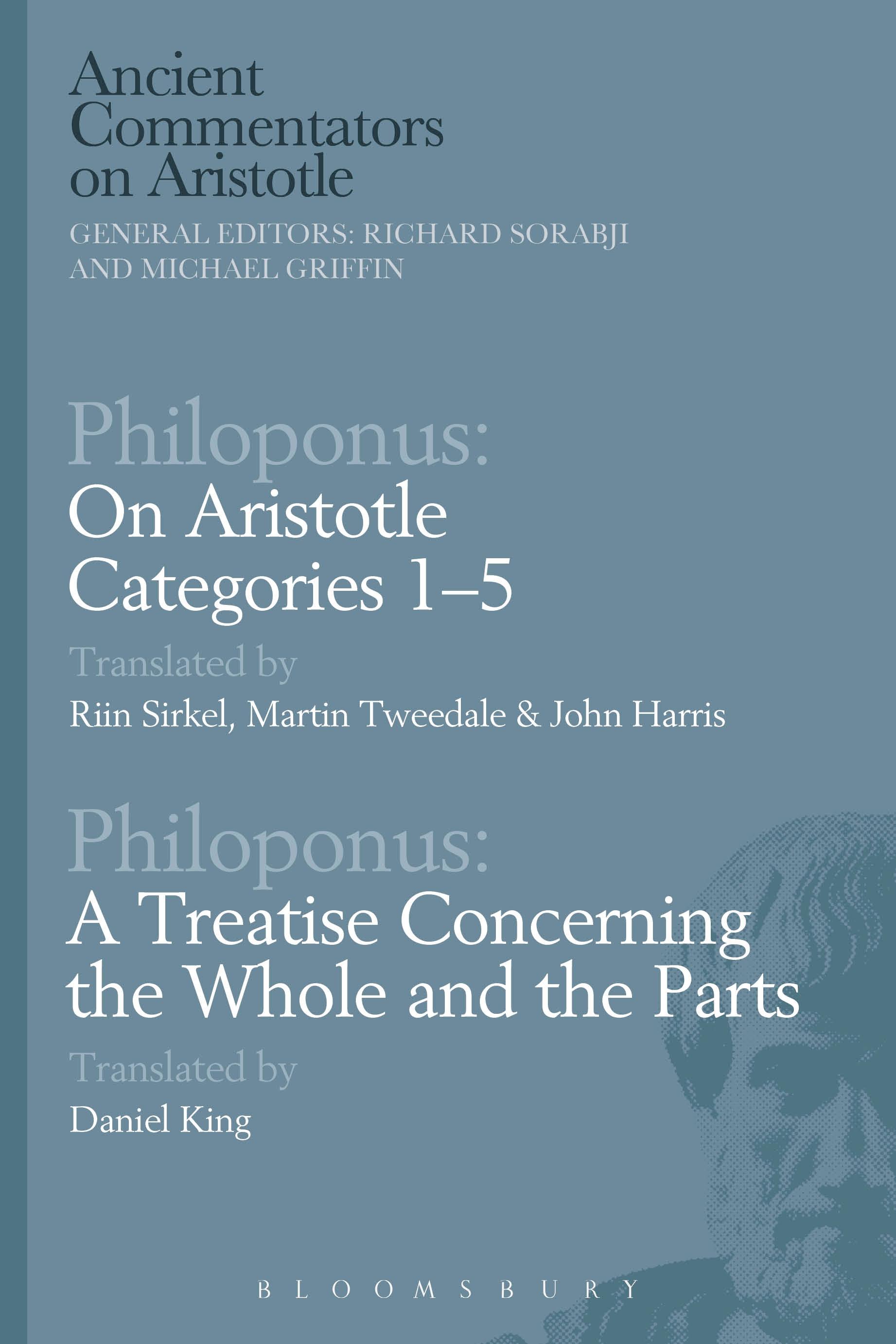
Philoponus' On Aristotle Categories 1-5 discusses the nature of universals, preserving the views of Philoponus' teacher Ammonius, as well as presenting a Neoplatonist interpretation of Aristotle's Categories. Philoponus treats universals as concepts in the human mind produced by abstracting a form or nature from the material individual in which it has its being.
The work is important for its own philosophical discussion and for the insight it sheds on its sources. For considerable portions, On Aristotle Categories 1-5 resembles the wording of an earlier commentary which declares itself to be an anonymous record taken from the seminars of Ammonius. Unlike much of Philoponus' later writing, this commentary does not disagree with either Aristotle or Ammonius, and suggests the possibility that Philoponus either had access to this earlier record or wrote it himself.
This edition explores these questions of provenance, alongside the context, meaning and implications of Philoponus' work. The English translation is accompanied by an introduction, comprehensive commentary notes, bibliography, glossary of translated terms and a subject index. The latest volume in the Ancient Commentators on Aristotle series, the edition makes this philosophical work accessible to a modern readership.
Philoponus was a Christian writing in Greek in 6th century CE Alexandria, where some students of philosophy were bilingual in Syriac as well as Greek. In this Greek treatise translated from the surviving Syriac version, Philoponus discusses the logic of parts and wholes, and he illustrates the spread of the pagan and Christian philosophy of 6th century CE Greeks to other cultures, in this case to Syria.
Philoponus, an expert on Aristotle's philosophy, had turned to theology and was applying his knowledge of Aristotle to disputes over the human and divine nature of Christ. Were there two natures and were they parts of a whole, as the Emperor Justinian proposed, or was there only one nature, as Philoponus claimed with the rebel minority, both human and divine? If there were two natures, were they parts like the ingredients in a chemical mixture? Philoponus attacks the idea. Such ingredients are not parts, because they each inter-penetrate the whole mixture. Moreover, he abandons his ingenious earlier attempts to support Aristotle's view of mixture by identifying ways in which such ingredients might be thought of as potentially preserved in a chemical mixture. Instead, Philoponus says that the ingredients are destroyed, unlike the human and divine in Christ.
This English translation of Philoponus' treatise is the latest volume in the Ancient Commentators on Aristotle series and makes this philosophical work accessible to a modern readership. The translation in each volume is accompanied by an introduction, comprehensive commentary notes, bibliography, glossary of translated terms and a subject index.
The work is important for its own philosophical discussion and for the insight it sheds on its sources. For considerable portions, On Aristotle Categories 1-5 resembles the wording of an earlier commentary which declares itself to be an anonymous record taken from the seminars of Ammonius. Unlike much of Philoponus' later writing, this commentary does not disagree with either Aristotle or Ammonius, and suggests the possibility that Philoponus either had access to this earlier record or wrote it himself.
This edition explores these questions of provenance, alongside the context, meaning and implications of Philoponus' work. The English translation is accompanied by an introduction, comprehensive commentary notes, bibliography, glossary of translated terms and a subject index. The latest volume in the Ancient Commentators on Aristotle series, the edition makes this philosophical work accessible to a modern readership.
Philoponus was a Christian writing in Greek in 6th century CE Alexandria, where some students of philosophy were bilingual in Syriac as well as Greek. In this Greek treatise translated from the surviving Syriac version, Philoponus discusses the logic of parts and wholes, and he illustrates the spread of the pagan and Christian philosophy of 6th century CE Greeks to other cultures, in this case to Syria.
Philoponus, an expert on Aristotle's philosophy, had turned to theology and was applying his knowledge of Aristotle to disputes over the human and divine nature of Christ. Were there two natures and were they parts of a whole, as the Emperor Justinian proposed, or was there only one nature, as Philoponus claimed with the rebel minority, both human and divine? If there were two natures, were they parts like the ingredients in a chemical mixture? Philoponus attacks the idea. Such ingredients are not parts, because they each inter-penetrate the whole mixture. Moreover, he abandons his ingenious earlier attempts to support Aristotle's view of mixture by identifying ways in which such ingredients might be thought of as potentially preserved in a chemical mixture. Instead, Philoponus says that the ingredients are destroyed, unlike the human and divine in Christ.
This English translation of Philoponus' treatise is the latest volume in the Ancient Commentators on Aristotle series and makes this philosophical work accessible to a modern readership. The translation in each volume is accompanied by an introduction, comprehensive commentary notes, bibliography, glossary of translated terms and a subject index.
Paga fácilmente con tarjeta, Klarna, Apple Pay o Google Pay. ¿No estás contento? Siempre tienes 14 días de garantía de devolución. Lee más en nuestros términos. Si tienes preguntas, escríbenos a hello@memmo.org.
Memmo hace que estudiar sea más fácil, estés donde estés. Aquí tienes tus libros de texto y herramientas de estudio inteligentes en un solo lugar: resúmenes, quizzes, podcasts y flashcards. Y también a Ted, tu compañero de estudio que responde a todo lo que te preguntes. Más de 50 000 estudiantes ya estudian aquí. Está hecho para que aprendas más rápido y te estreses menos.