
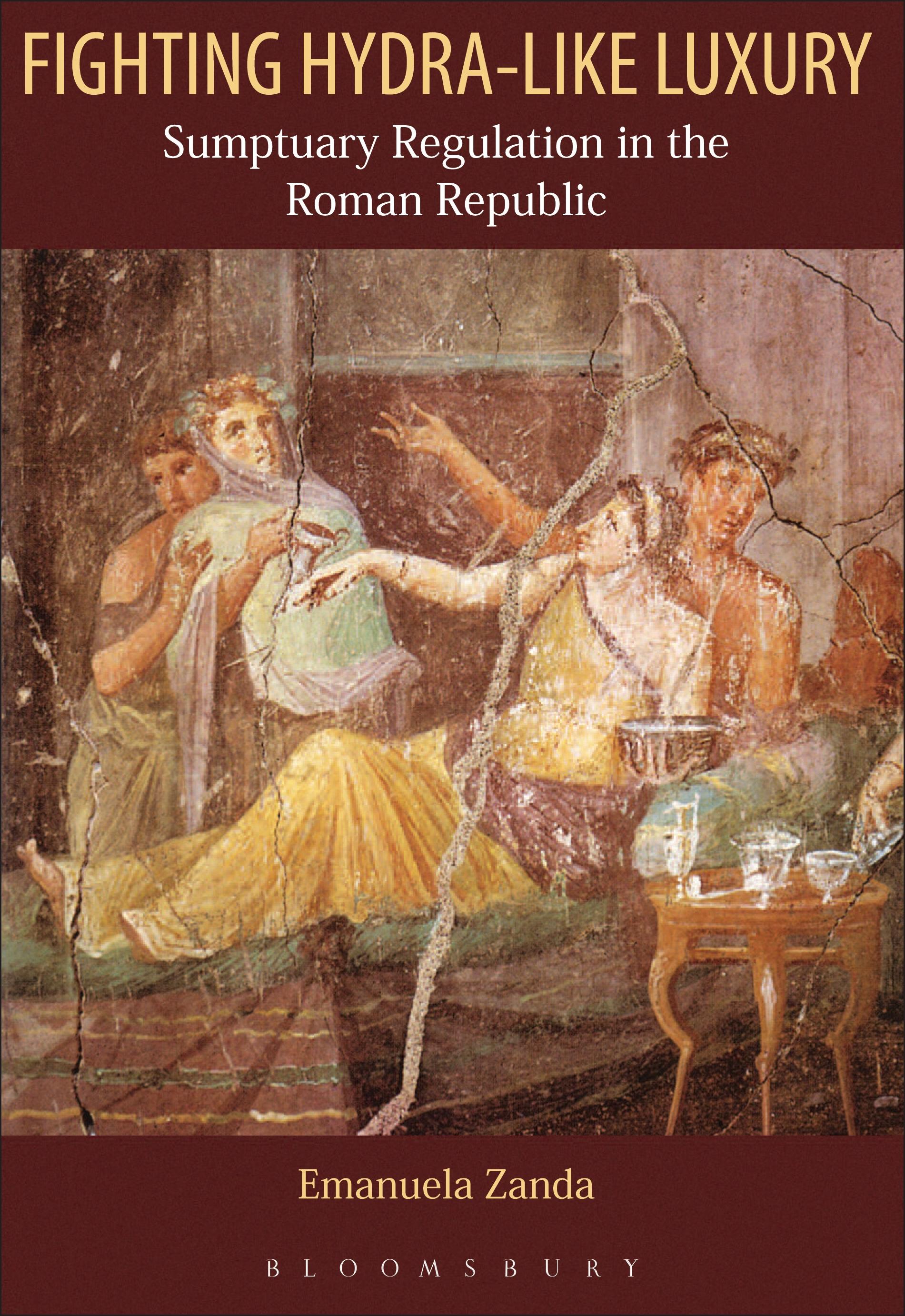
From the Old Testament to Elizabethan England, luxury has been morally condemned. In Rome, sumptuary laws (laws controlling consumption) seemed the only weapon to defeat 'hydra-like luxury', the terrible monster that was weakening even the strongest citizens.
The first Roman sumptuary law, the Lex Appia, declared that no woman could possess more than a half ounce of gold, wear a dress of different colours, or ride in a carriage in any city unless for a public ceremony. Laws listed how many different colours could be worn by members of different social classes: peasants could wear one colour, soldiers in the army could wear two, army officers could wear three, and members of the royal family could wear seven. A law passed by Emperor Aurelian stated that men couldn't wear shoes that were red, yellow, green, or white, and that only the emperor and his sons could wear red or purple shoes. A variety of other laws limited how much people could spend on parties and how many people they could invite.
In this book, Emanuela Zanda explores the purposes behind the enactment of such legislation in Rome during the Republic. She engages with the historical-literary polemic against luxury and focuses on government intervention in matters of extravagance by taking into consideration not only sumptuary laws but also other measures that dealt with self-indulgence. She addresses and answers a number of questions about what exactly the ruling class was trying to achieve, about its real motivations, and about the significance of the ideological discourse surrounding the enactment of these laws.
The first Roman sumptuary law, the Lex Appia, declared that no woman could possess more than a half ounce of gold, wear a dress of different colours, or ride in a carriage in any city unless for a public ceremony. Laws listed how many different colours could be worn by members of different social classes: peasants could wear one colour, soldiers in the army could wear two, army officers could wear three, and members of the royal family could wear seven. A law passed by Emperor Aurelian stated that men couldn't wear shoes that were red, yellow, green, or white, and that only the emperor and his sons could wear red or purple shoes. A variety of other laws limited how much people could spend on parties and how many people they could invite.
In this book, Emanuela Zanda explores the purposes behind the enactment of such legislation in Rome during the Republic. She engages with the historical-literary polemic against luxury and focuses on government intervention in matters of extravagance by taking into consideration not only sumptuary laws but also other measures that dealt with self-indulgence. She addresses and answers a number of questions about what exactly the ruling class was trying to achieve, about its real motivations, and about the significance of the ideological discourse surrounding the enactment of these laws.
Paga fácilmente con tarjeta, Klarna, Apple Pay o Google Pay. ¿No estás contento? Siempre tienes 14 días de garantía de devolución. Lee más en nuestros términos. Si tienes preguntas, escríbenos a hello@memmo.org.
Memmo hace que estudiar sea más fácil, estés donde estés. Aquí tienes tus libros de texto y herramientas de estudio inteligentes en un solo lugar: resúmenes, quizzes, podcasts y flashcards. Y también a Ted, tu compañero de estudio que responde a todo lo que te preguntes. Más de 50 000 estudiantes ya estudian aquí. Está hecho para que aprendas más rápido y te estreses menos.