
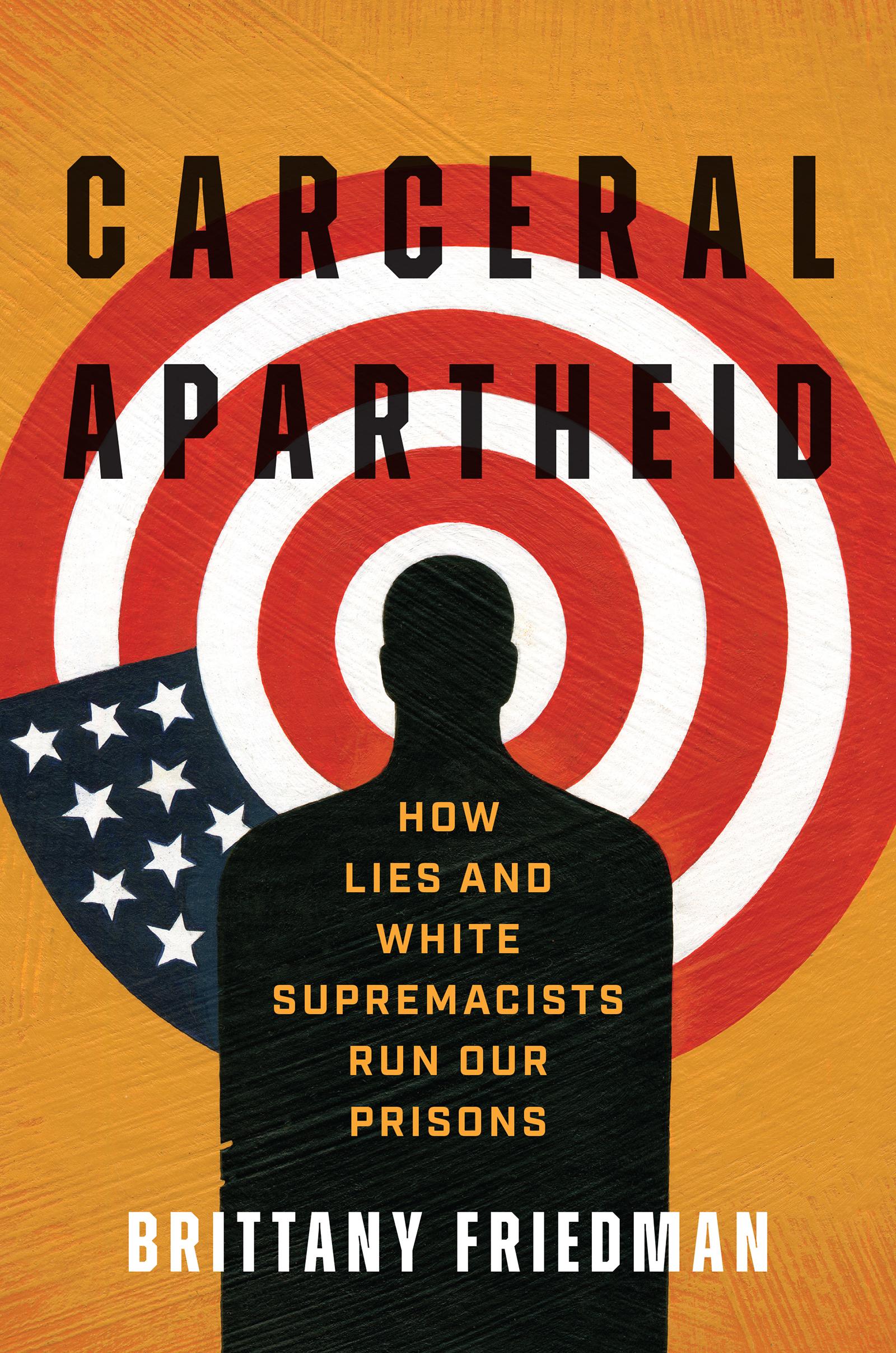
It is impossible to deny the impact of lies and white supremacy on the institutional conditions in US prisons. There is a particular power dynamic of racist intent in the prison system that culminates in what Brittany Friedman terms carceral apartheid. Prisons are a microcosm of how carceral apartheid operates as a larger governing strategy to decimate political targets and foster deceit, disinformation, and division in society.
Among many shocking discoveries, Friedman shows that, beginning in the 1950s, California prison officials declared war on imprisoned Black people and sought to identify Black militants as a key problem, creating a strategy for the management, segregation, and elimination of these individuals from the prison population that continues into the present day. Carceral Apartheid delves into how the California Department of Corrections deployed various official, clandestine, and at times extralegal control techniques—including officer alliances with imprisoned white supremacists—to suppress Black political movements, revealing the broader themes of deception, empire, corruption, and white supremacy in American mass incarceration. Drawing from original interviews with founders of Black political movements such as the Black Guerilla Family, white supremacists, and a swath of little-known archival data, Friedman uncovers how the US domestic war against imprisoned Black people models and perpetuates genocide, imprisonment, and torture abroad.
Among many shocking discoveries, Friedman shows that, beginning in the 1950s, California prison officials declared war on imprisoned Black people and sought to identify Black militants as a key problem, creating a strategy for the management, segregation, and elimination of these individuals from the prison population that continues into the present day. Carceral Apartheid delves into how the California Department of Corrections deployed various official, clandestine, and at times extralegal control techniques—including officer alliances with imprisoned white supremacists—to suppress Black political movements, revealing the broader themes of deception, empire, corruption, and white supremacy in American mass incarceration. Drawing from original interviews with founders of Black political movements such as the Black Guerilla Family, white supremacists, and a swath of little-known archival data, Friedman uncovers how the US domestic war against imprisoned Black people models and perpetuates genocide, imprisonment, and torture abroad.
Paga fácilmente con tarjeta, Klarna, Apple Pay o Google Pay. ¿No estás contento? Siempre tienes 14 días de garantía de devolución. Lee más en nuestros términos. Si tienes preguntas, escríbenos a hello@memmo.org.
Memmo hace que estudiar sea más fácil, estés donde estés. Aquí tienes tus libros de texto y herramientas de estudio inteligentes en un solo lugar: resúmenes, quizzes, podcasts y flashcards. Y también a Ted, tu compañero de estudio que responde a todo lo que te preguntes. Más de 50 000 estudiantes ya estudian aquí. Está hecho para que aprendas más rápido y te estreses menos.
También te podría gustar
Comprar el libro0