
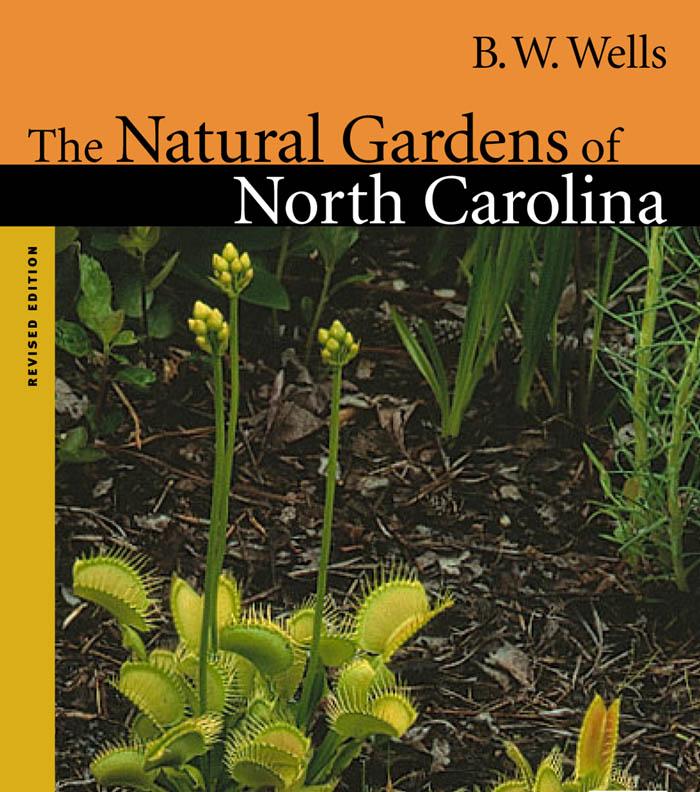
For seventy years, The Natural Gardens of North Carolina has been a must-read volume for anyone interested in wildflowers, native plants, ecology, or conservation in the state. This handsome revised edition features new line drawings and color photographs, an appendix that updates the botanical nomenclature, an introduction that focuses on B. W. Wells and his passion for the state’s landscape, and an afterword that discusses the continuing relevance of Wells’s ideas.
One of the first scientists to write and lecture about ecology, Wells introduced North Carolinians to the extraordinary tapestry of “natural gardens,” or plant communities, within the state’s borders back in 1932. His purpose was to help readers understand a plant within its community — a pioneering concept at the time — and to promote conservation. Moving from the Atlantic coast westward, Wells identifies eleven major natural gardens: the sand dune community, salt marsh, freshwater marsh, swamp forest, aquatic vegetation, evergreen shrub bog (or pocosin), grass-sedge bog (or savanna), sandhill, old-field community, upland forest, and high mountain spruce-fir forest. He devotes the first part of his book to a general account of the vegetation and habitats of each community and then identifies and describes the wildflowers found there.
One of the first scientists to write and lecture about ecology, Wells introduced North Carolinians to the extraordinary tapestry of “natural gardens,” or plant communities, within the state’s borders back in 1932. His purpose was to help readers understand a plant within its community — a pioneering concept at the time — and to promote conservation. Moving from the Atlantic coast westward, Wells identifies eleven major natural gardens: the sand dune community, salt marsh, freshwater marsh, swamp forest, aquatic vegetation, evergreen shrub bog (or pocosin), grass-sedge bog (or savanna), sandhill, old-field community, upland forest, and high mountain spruce-fir forest. He devotes the first part of his book to a general account of the vegetation and habitats of each community and then identifies and describes the wildflowers found there.
Paga fácilmente con tarjeta, Klarna, Apple Pay o Google Pay. ¿No estás contento? Siempre tienes 14 días de garantía de devolución. Lee más en nuestros términos. Si tienes preguntas, escríbenos a hello@memmo.org.
Memmo hace que estudiar sea más fácil, estés donde estés. Aquí tienes tus libros de texto y herramientas de estudio inteligentes en un solo lugar: resúmenes, quizzes, podcasts y flashcards. Y también a Ted, tu compañero de estudio que responde a todo lo que te preguntes. Más de 50 000 estudiantes ya estudian aquí. Está hecho para que aprendas más rápido y te estreses menos.
También te podría gustar
Comprar el libro0