
When it began, modern Spanish cinema was under strict censorship, forced to conform to the ideological demands of the Nationalist regime. In 1950, the New Spanish Cinema was born as a protest over General Francisco Franco's policies: a new series of directors and films began to move away from the conformist line to offer a bold brand of Spanish realism. In the 1950s and early 1960s, filmmakers such as Juan Antonio Bardem, Luis García Berlanga, and Luis Buñuel expressed a liberal image of Spain to the world in such films as Muerte de un ciclista (Death of a Cyclist), Bienvenido Señor Marshall (Welcome Mr. Marshall), and Viridiana. The emergence of new directors continued into the sixties and seventies with Carlos Saura, José Luis Borau, Víctor Erice, and others. After Franco's death in 1975, censorship was abolished and films openly explored such formerly taboo subjects as sexuality, drugs, the church, the army, and the Civil War. The Spanish cinema was no longer escapist and entertaining but, at long last, mirrored the society it depicted.
While established directors like Saura, Bardem, and Berlanga continued to produce distinguished work, the "new wave" of Spanish cinema included brilliant films by the likes of Montxo Armendáriz (Tasio), Fernando Trueba (First Work), Imanol Uribe (The Death of Mikel), and Pedro Almodóvar (Women on the Verge of a Nervous Breakdown). In the last couple of decades, exciting works by established filmmakers and newcomers alike continue to be produced, including Alejandro Amenábar's Thesis, José Luis Garcí's The Grandfather, and Almodóvar's Talk to Her and Volver.
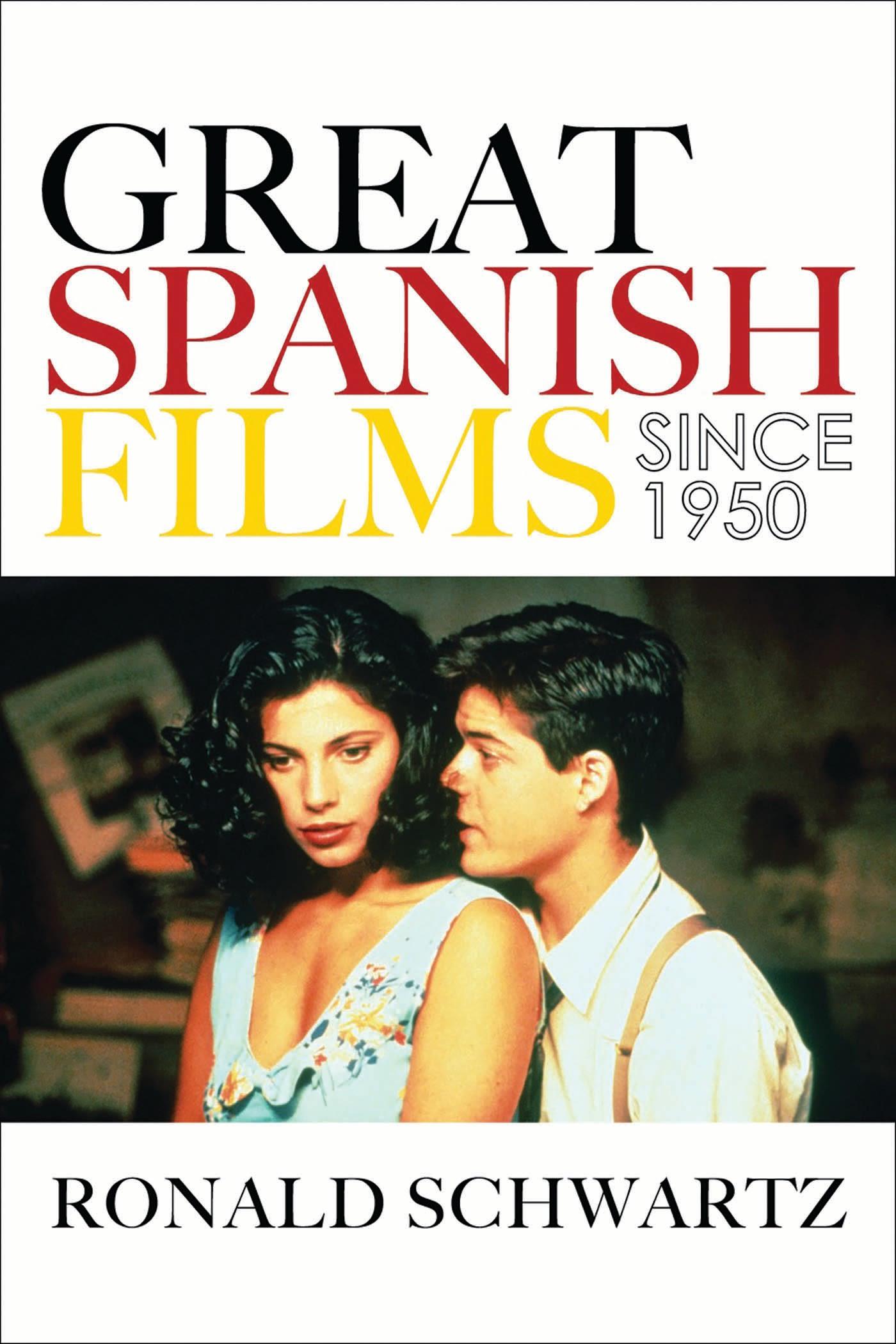
In Great Spanish Films Since 1950, Ronald Schwartz presents a compendium of outstanding Spanish films from the pre-Francoist era through the Spanish New Wave of the 80's and 90's and into the present day. Schwartz provides background, plot, and commentaries of key films from six decades of Spanish cinema. In addition to identifying
While established directors like Saura, Bardem, and Berlanga continued to produce distinguished work, the "new wave" of Spanish cinema included brilliant films by the likes of Montxo Armendáriz (Tasio), Fernando Trueba (First Work), Imanol Uribe (The Death of Mikel), and Pedro Almodóvar (Women on the Verge of a Nervous Breakdown). In the last couple of decades, exciting works by established filmmakers and newcomers alike continue to be produced, including Alejandro Amenábar's Thesis, José Luis Garcí's The Grandfather, and Almodóvar's Talk to Her and Volver.
In Great Spanish Films Since 1950, Ronald Schwartz presents a compendium of outstanding Spanish films from the pre-Francoist era through the Spanish New Wave of the 80's and 90's and into the present day. Schwartz provides background, plot, and commentaries of key films from six decades of Spanish cinema. In addition to identifying
Páginas: 464
Categoría: Film- & Medievetenskap
e-ISBN: 9781461696612
Peso de envío: 1.2 kg
Envío en: 1-2 días
Paga fácilmente con tarjeta, Klarna, Apple Pay o Google Pay. ¿No estás contento? Siempre tienes 14 días de garantía de devolución. Lee más en nuestros términos. Si tienes preguntas, escríbenos a hello@memmo.org.
Memmo hace que estudiar sea más fácil, estés donde estés. Aquí tienes tus libros de texto y herramientas de estudio inteligentes en un solo lugar: resúmenes, quizzes, podcasts y flashcards. Y también a Ted, tu compañero de estudio que responde a todo lo que te preguntes. Más de 50 000 estudiantes ya estudian aquí. Está hecho para que aprendas más rápido y te estreses menos.