
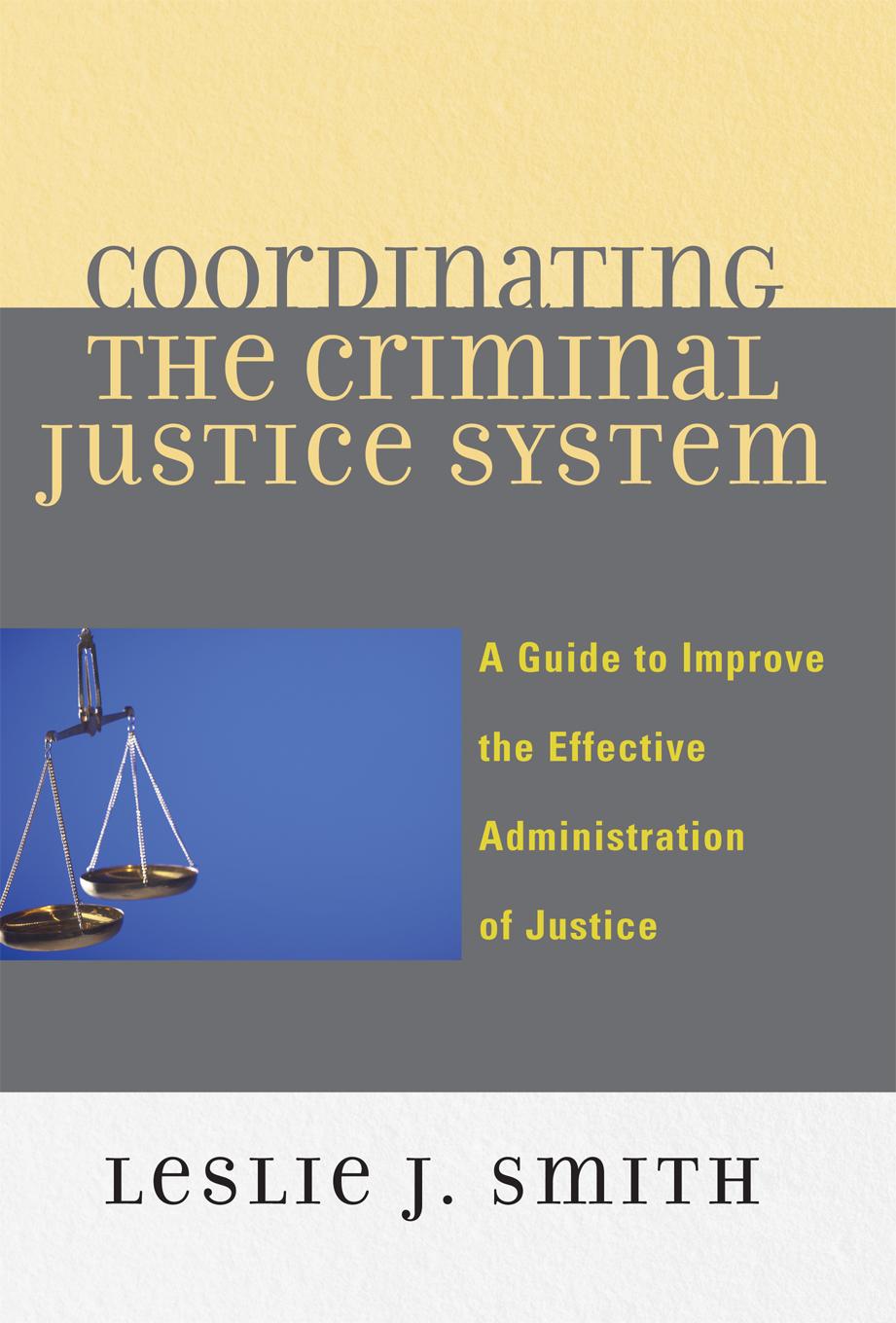
This guide was developed to assist students, professors, executives of local criminal justice systems, and appointed and elected officials of general government to have a better understanding on how the criminal justice system should function. It may also be of special interest to citizens and public officials who sense that more collaboration and coordination is needed to enhance criminal justice decision making which, in turn, will have a positive impact on local criminal justice systems.
Leslie J. Smith advocates that the performance of the criminal justice system should be measured in terms of achieving the goals and objectives of each component collectively. Although the legislative, judicial, and executive branches of the U.S. government are constitutionally independent and not required to engage in any coordinated planning activities, these requirements should not lead to poor performance. It is essential to promote positive government through increased collaboration by identifying philosophical principles that will promote the participation of citizens, law enforcement, judiciary, prosecution, corrections, victims, treatment providers, and educators in the development of strategies to prevent, reduce and control crime. There are approximately twenty states throughout the United States that have fostered criminal justice collaborations of this type. The key to accomplishing this objective is effective leadership. This approach is growing in popularity and this book will assist in the further development of this strategy.
This guide provides a step-by-step strategy that simplifies the aforementioned issues. It will be especially advantageous for newly appointed criminal coordinators, planners, and others that are charged with creating a hands-on approach to coordinating their local criminal justice processes. Above all, as criminal justice presses forward to the future, the guide will assist in "bridging the gap" between traditional and contemporary approaches to criminal justice plann
Leslie J. Smith advocates that the performance of the criminal justice system should be measured in terms of achieving the goals and objectives of each component collectively. Although the legislative, judicial, and executive branches of the U.S. government are constitutionally independent and not required to engage in any coordinated planning activities, these requirements should not lead to poor performance. It is essential to promote positive government through increased collaboration by identifying philosophical principles that will promote the participation of citizens, law enforcement, judiciary, prosecution, corrections, victims, treatment providers, and educators in the development of strategies to prevent, reduce and control crime. There are approximately twenty states throughout the United States that have fostered criminal justice collaborations of this type. The key to accomplishing this objective is effective leadership. This approach is growing in popularity and this book will assist in the further development of this strategy.
This guide provides a step-by-step strategy that simplifies the aforementioned issues. It will be especially advantageous for newly appointed criminal coordinators, planners, and others that are charged with creating a hands-on approach to coordinating their local criminal justice processes. Above all, as criminal justice presses forward to the future, the guide will assist in "bridging the gap" between traditional and contemporary approaches to criminal justice plann
Paga fácilmente con tarjeta, Klarna, Apple Pay o Google Pay. ¿No estás contento? Siempre tienes 14 días de garantía de devolución. Lee más en nuestros términos. Si tienes preguntas, escríbenos a hello@memmo.org.
Memmo hace que estudiar sea más fácil, estés donde estés. Aquí tienes tus libros de texto y herramientas de estudio inteligentes en un solo lugar: resúmenes, quizzes, podcasts y flashcards. Y también a Ted, tu compañero de estudio que responde a todo lo que te preguntes. Más de 50 000 estudiantes ya estudian aquí. Está hecho para que aprendas más rápido y te estreses menos.