
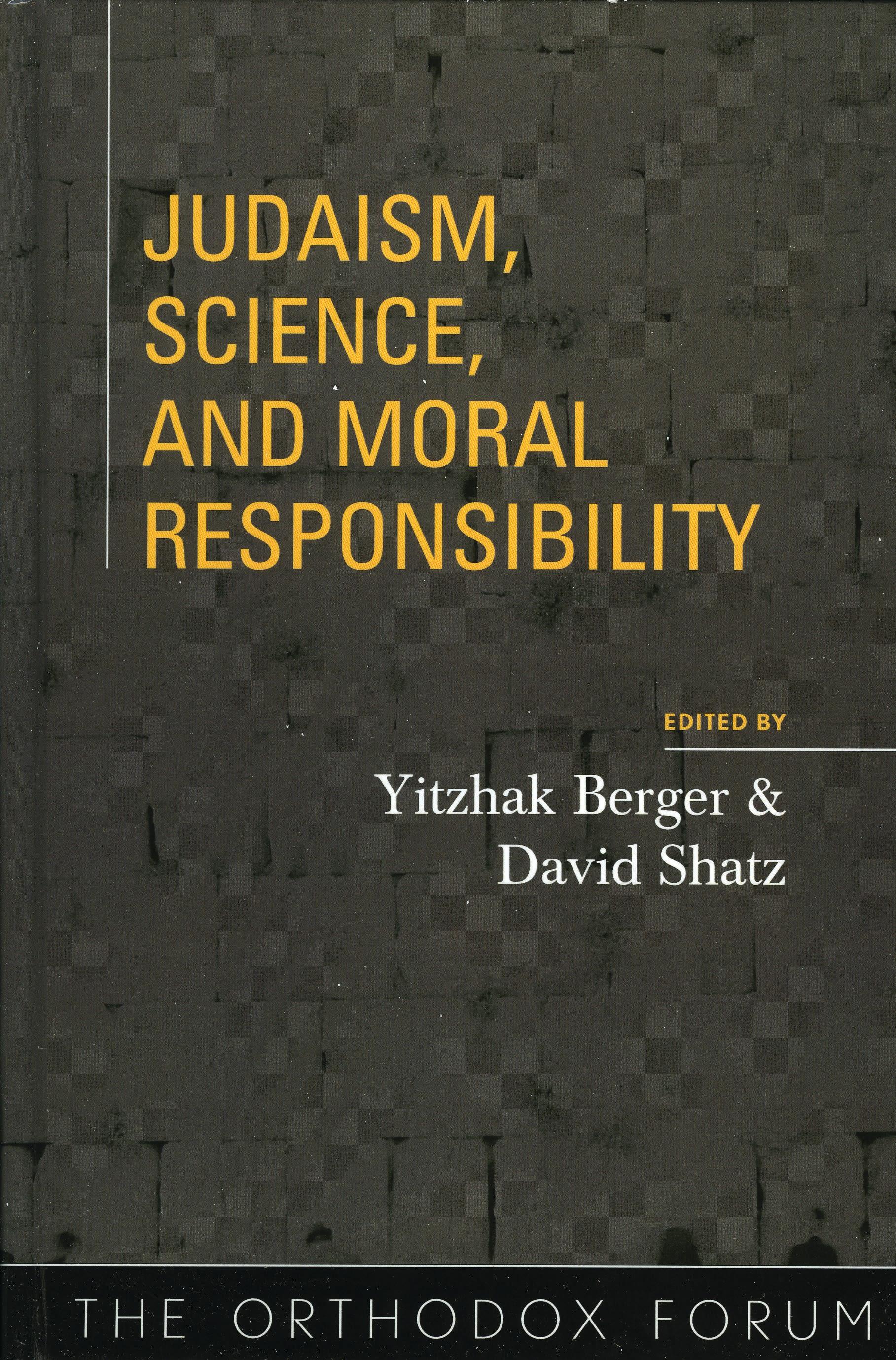
Do human beings have free will? Are they genuinely responsible for their actions? These questions have persisted all through the history of philosophy, but in the 21st century they have become defined more sharply and clearly than ever. Indeed, a vivid and mighty tension underlies today's intellectual struggles over free will. On the one hand, the rapid advances of several empirical disciplines, notably neuropsychology and genetics, threaten our instinctive affirmation that free will and moral responsibility exist. On the other hand, the depth and force of our instincts-our powerful intuition that there is free will, that there is moral responsibility-present, for most people, an almost impenetrable barrier against the sweeping denial of free will suggested by empirical research. The papers in this volume address this tension from a dual vantage point. While drawing heavily upon traditional Jewish texts and teachings, they also offer a blend of scientific, philosophical, psychological, and social insights into this most mystifying of topics. In addition, they illuminate the concept of repentance, a transformation of character that ranks in much of Jewish literature as the highest expression of free will.
Paga fácilmente con tarjeta, Klarna, Apple Pay o Google Pay. ¿No estás contento? Siempre tienes 14 días de garantía de devolución. Lee más en nuestros términos. Si tienes preguntas, escríbenos a hello@memmo.org.
Memmo hace que estudiar sea más fácil, estés donde estés. Aquí tienes tus libros de texto y herramientas de estudio inteligentes en un solo lugar: resúmenes, quizzes, podcasts y flashcards. Y también a Ted, tu compañero de estudio que responde a todo lo que te preguntes. Más de 50 000 estudiantes ya estudian aquí. Está hecho para que aprendas más rápido y te estreses menos.