
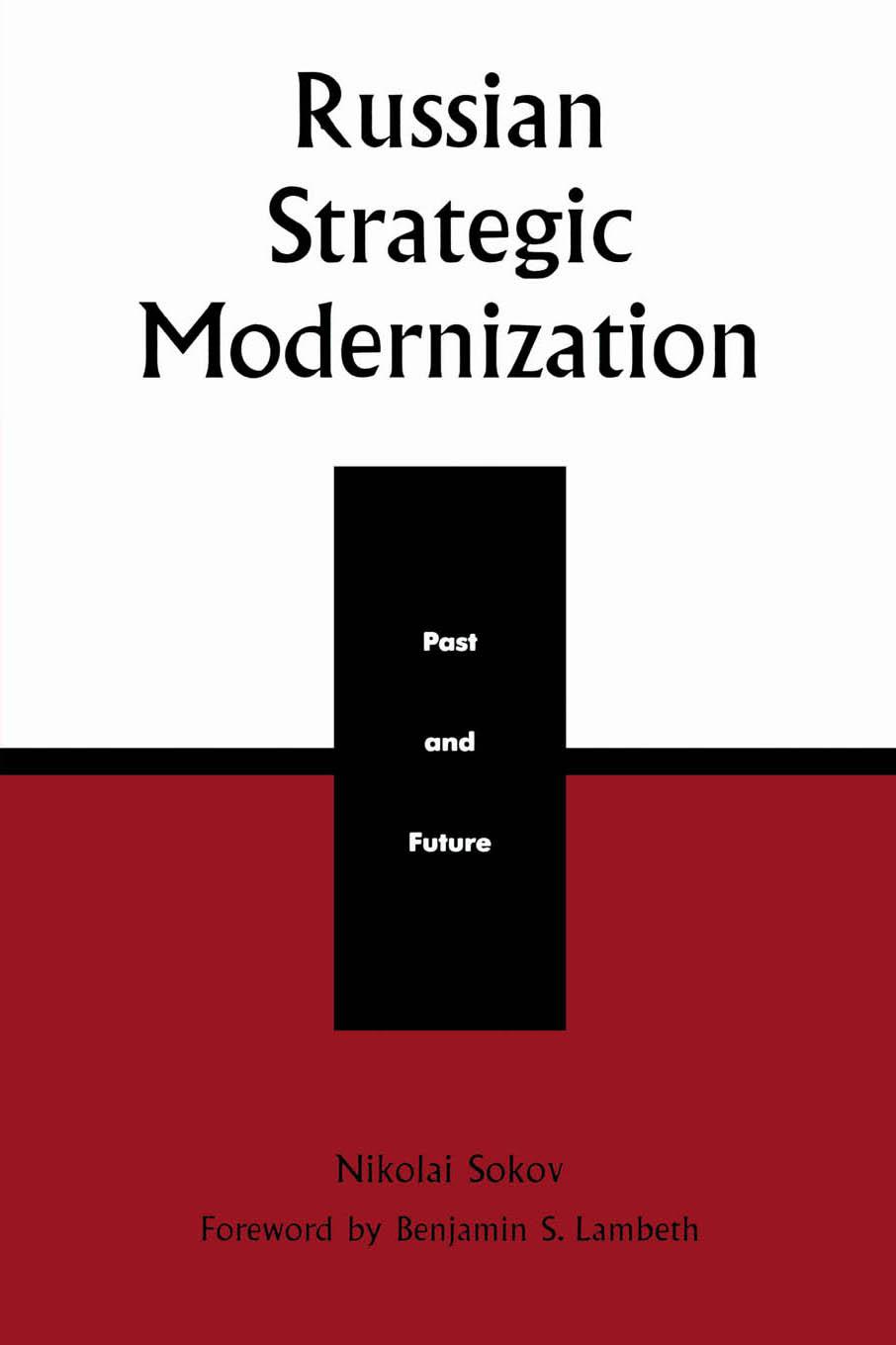
This invaluable study provides a unique insider's view of the history of Soviet and Russian policy on nuclear weapons modernization and charts the future evolution of the Russian strategic arsenal. Using information that has only recently become available and introducing new, previously unknown data, Sokov concludes that the most important force behind the evolution of the Soviet and Russian strategic arsenal was the military itself, which sought to increase strategic stability by enhancing the survivability of weapons systems. The highly destabilizing posture of the 1970s and 1980s was, he argues, in a sense "accidental," resulting from the failure of several R&D programs and specific features of the Soviet decisionmaking mechanism.
The author demonstrates that the role of such factors as the economic crisis, U.S. modernization programs, and general Russian foreign policy goals has been exaggerated by Western analysts. No matter how hard-pressed, Russia will hold to its current plans, Sokov argues. At the same time, the military will be unlikely to engage in a new arms buildup even if the economic situation improves or a nationalist government comes to power. Instead, stability will be sought through better quality of weapons at progressively lower levels.
Introducing a wealth of new information on Soviet and Russian national security policymaking, the author explores in meticulous detail such key issues as decisions on weapons development, arms-control negotiations, and the handling of the Soviet nuclear arsenal after the breakup of the Soviet Union. The reader will be able to follow the debates and intrigues between military planners, diplomats, and weapons designers as they clashed over the choice of acquisition programs and negotiating positions. With its combination of informed analysis and use of new documentation, this work will be invaluable for all concerned with U.S.-Russian strategic relations.
The author demonstrates that the role of such factors as the economic crisis, U.S. modernization programs, and general Russian foreign policy goals has been exaggerated by Western analysts. No matter how hard-pressed, Russia will hold to its current plans, Sokov argues. At the same time, the military will be unlikely to engage in a new arms buildup even if the economic situation improves or a nationalist government comes to power. Instead, stability will be sought through better quality of weapons at progressively lower levels.
Introducing a wealth of new information on Soviet and Russian national security policymaking, the author explores in meticulous detail such key issues as decisions on weapons development, arms-control negotiations, and the handling of the Soviet nuclear arsenal after the breakup of the Soviet Union. The reader will be able to follow the debates and intrigues between military planners, diplomats, and weapons designers as they clashed over the choice of acquisition programs and negotiating positions. With its combination of informed analysis and use of new documentation, this work will be invaluable for all concerned with U.S.-Russian strategic relations.
Paga fácilmente con tarjeta, Klarna, Apple Pay o Google Pay. ¿No estás contento? Siempre tienes 14 días de garantía de devolución. Lee más en nuestros términos. Si tienes preguntas, escríbenos a hello@memmo.org.
Memmo hace que estudiar sea más fácil, estés donde estés. Aquí tienes tus libros de texto y herramientas de estudio inteligentes en un solo lugar: resúmenes, quizzes, podcasts y flashcards. Y también a Ted, tu compañero de estudio que responde a todo lo que te preguntes. Más de 50 000 estudiantes ya estudian aquí. Está hecho para que aprendas más rápido y te estreses menos.