
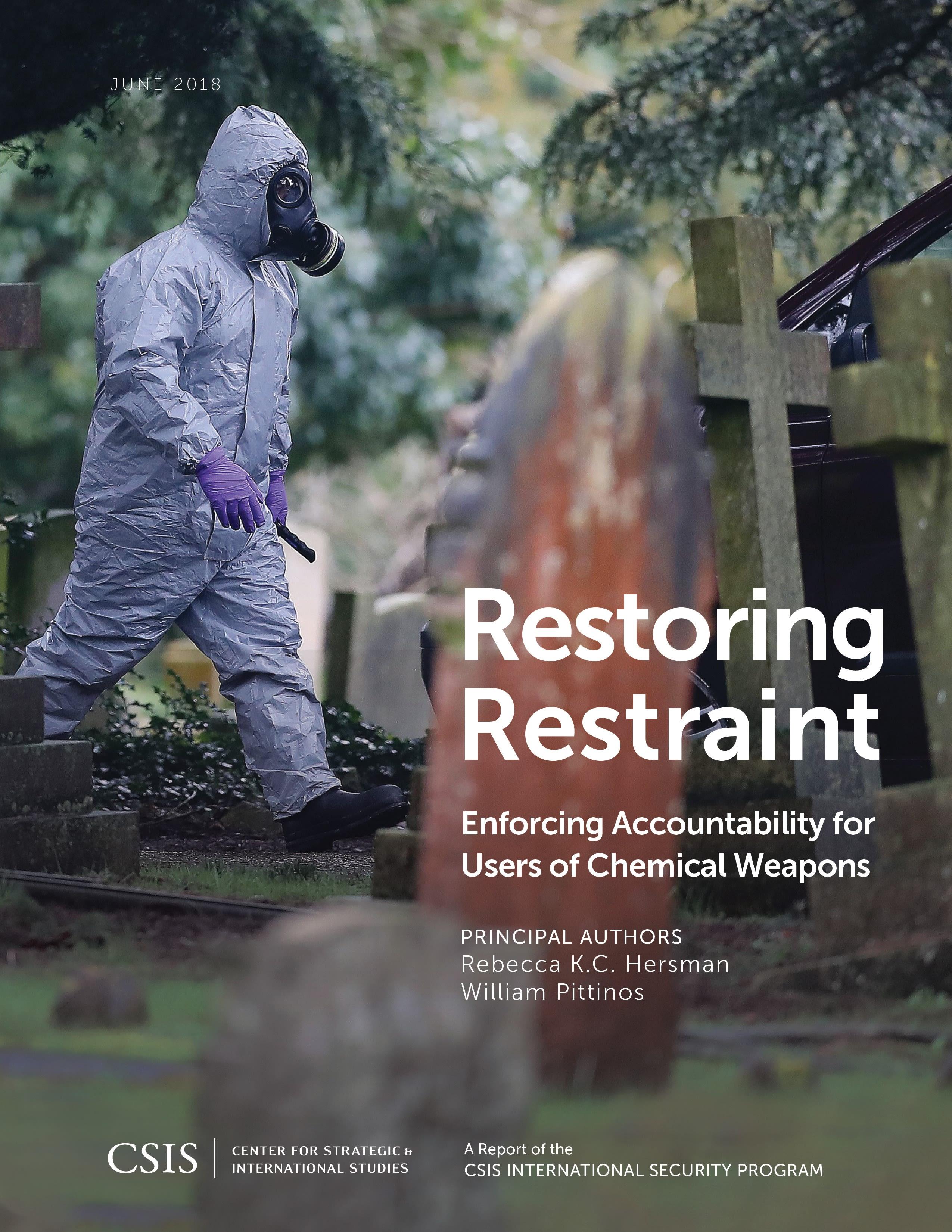
In 2012, a 20-year moratorium on state employment of chemical weapons use was broken. Since then, there have been more than 200 uses, against civilians, military targets, and political enemies. These attacks have broken norms against the use of weapons of mass destruction and create a gap in the nonproliferation fabric—despite the robust international architecture of laws, treaties, agreements, and norms designed to restrain the proliferation and use of these weapons. Accountability for these recent attacks has been limited or nonexistent, which threatens the credibility of the nonproliferation regime and only encourages further use. Leaders must find the political and moral strength to use a full spectrum of tools to reestablish this system of restraint. By understanding the system—built on taboos, norms, deterrence, and a lack of benefits—and corresponding accountability approaches—military, legal, political, diplomatic, economic, and educational—leaders can utilize a menu of potential actions for building more diverse, flexible, scalable, and implementable options to hold accountable users of chemical weapons.
Paga fácilmente con tarjeta, Klarna, Apple Pay o Google Pay. ¿No estás contento? Siempre tienes 14 días de garantía de devolución. Lee más en nuestros términos. Si tienes preguntas, escríbenos a hello@memmo.org.
Memmo hace que estudiar sea más fácil, estés donde estés. Aquí tienes tus libros de texto y herramientas de estudio inteligentes en un solo lugar: resúmenes, quizzes, podcasts y flashcards. Y también a Ted, tu compañero de estudio que responde a todo lo que te preguntes. Más de 50 000 estudiantes ya estudian aquí. Está hecho para que aprendas más rápido y te estreses menos.