
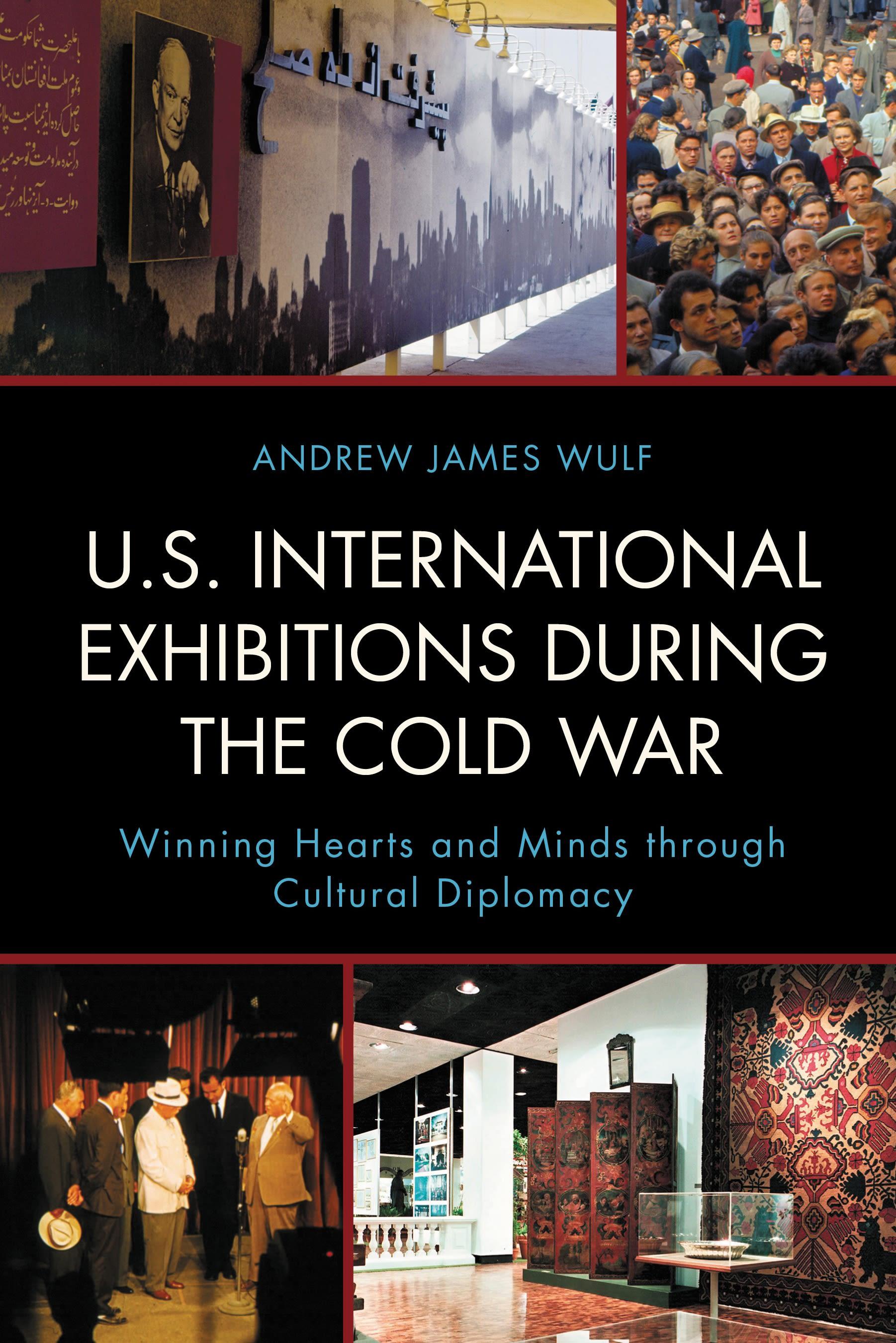
Although cultural diplomacy has become an increasingly fashionable term embraced by academics, foreign-service personnel, and private sector commercial and cultural interests, the very practice of this idea remains conspicuously challenging to define. This book takes on this problem, advancing a new understanding of cultural diplomacy that results from a historical investigation of a single area of government and private sector partnership, and what became in the mid-twentieth century the most prominent manifestation of this alliance—the cultural exhibitions sent abroad to “tell America’s story” with the goal of “winning hearts and minds.”
To illustrate this point, selected exhibitions and the intentions of the policymakers who proposed them are interrogated for the first time beside archival documentation, writings from the history of design, advertising, science, as well as art historical and museum studies theories that address various aspects of the history of collecting and display, all of which explore the reality of how these exhibitions were conceived and prepared for foreign audiences. Most importantly, personal interviews with the designers and government representatives responsible for the ultimate appearance of these events upturn preconceived notions of how these events came to be. Seventy-five photographs from the exhibits make this history come alive.
Through this discussion these questions are answered: What was America showing of itself through these exhibitions? And, more urgently, what do these exhibitions tell us about U.S. interest in verisimilitude?
This investigation spans the crucial years of American exhibitions abroad (1955-1975), beginning with the formation of an official system of exhibiting American commercial wares and political ideas at trade fairs, through official exchanges with the U.S.S.R., to pavilions at world's fairs, and finally to museum exhibitions that signaled a return to the display of founding American values. They are thus complex ideological symbols in which concepts of national identity, globalization, technology, consumerism, design, and image management both coincided and clashed. The investigation of these exhibitions enhances the understanding of a significant chapter of U.S. cultural diplomacy at the height of the Cold War and how America constantly reimagined itself.
To illustrate this point, selected exhibitions and the intentions of the policymakers who proposed them are interrogated for the first time beside archival documentation, writings from the history of design, advertising, science, as well as art historical and museum studies theories that address various aspects of the history of collecting and display, all of which explore the reality of how these exhibitions were conceived and prepared for foreign audiences. Most importantly, personal interviews with the designers and government representatives responsible for the ultimate appearance of these events upturn preconceived notions of how these events came to be. Seventy-five photographs from the exhibits make this history come alive.
Through this discussion these questions are answered: What was America showing of itself through these exhibitions? And, more urgently, what do these exhibitions tell us about U.S. interest in verisimilitude?
This investigation spans the crucial years of American exhibitions abroad (1955-1975), beginning with the formation of an official system of exhibiting American commercial wares and political ideas at trade fairs, through official exchanges with the U.S.S.R., to pavilions at world's fairs, and finally to museum exhibitions that signaled a return to the display of founding American values. They are thus complex ideological symbols in which concepts of national identity, globalization, technology, consumerism, design, and image management both coincided and clashed. The investigation of these exhibitions enhances the understanding of a significant chapter of U.S. cultural diplomacy at the height of the Cold War and how America constantly reimagined itself.
Paga fácilmente con tarjeta, Klarna, Apple Pay o Google Pay. ¿No estás contento? Siempre tienes 14 días de garantía de devolución. Lee más en nuestros términos. Si tienes preguntas, escríbenos a hello@memmo.org.
Memmo hace que estudiar sea más fácil, estés donde estés. Aquí tienes tus libros de texto y herramientas de estudio inteligentes en un solo lugar: resúmenes, quizzes, podcasts y flashcards. Y también a Ted, tu compañero de estudio que responde a todo lo que te preguntes. Más de 50 000 estudiantes ya estudian aquí. Está hecho para que aprendas más rápido y te estreses menos.