
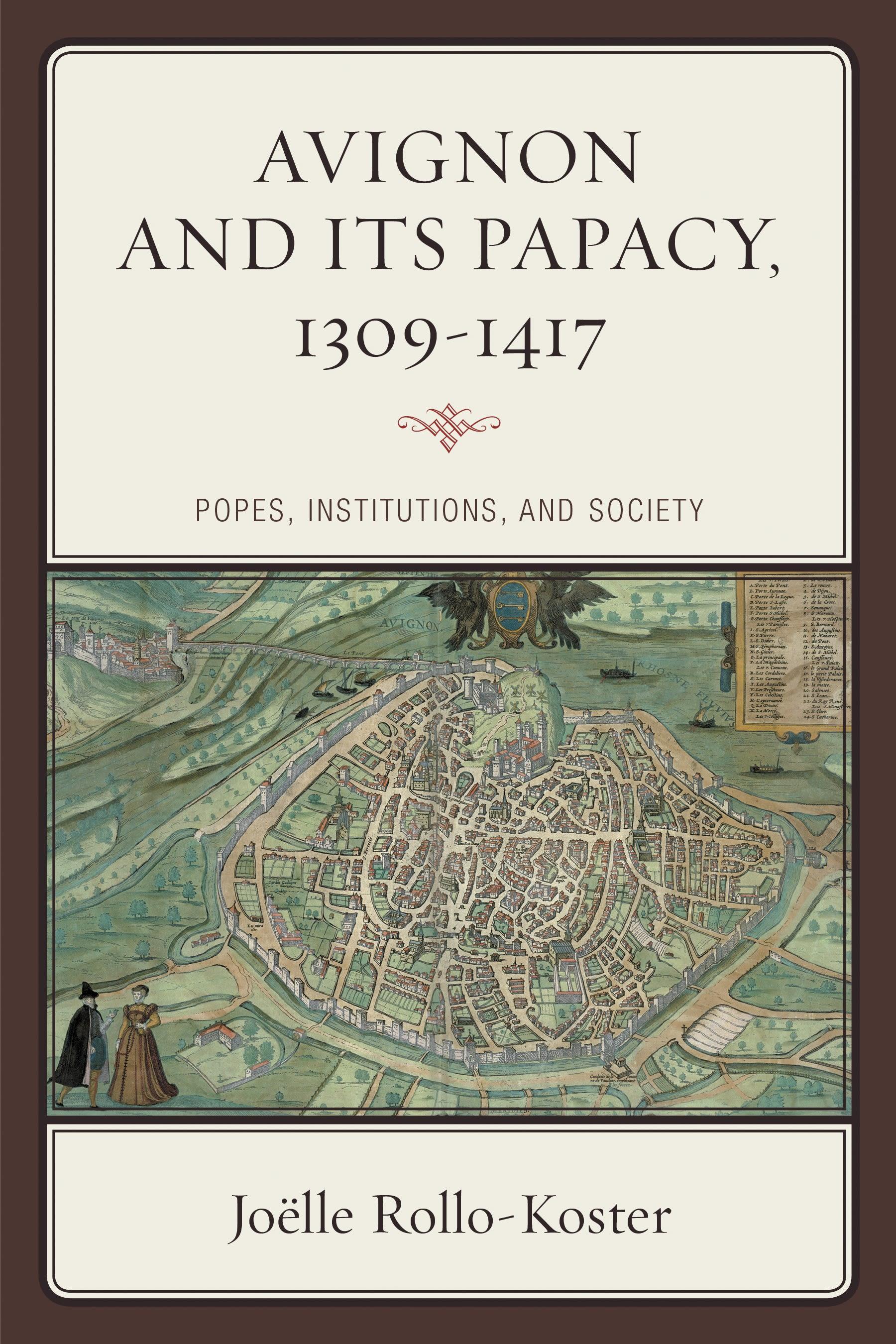
With the arrival of Clement V in 1309, seven popes ruled the Western Church from Avignon until 1378. Joëlle Rollo-Koster traces the compelling story of the transplanted papacy in Avignon, the city the popes transformed into their capital. Through an engaging blend of political and social history, she argues that we should think more positively about the Avignon papacy, with its effective governance, intellectual creativity, and dynamism. It is a remarkable tale of an institution growing and defending its prerogatives, of people both high and low who produced and served its needs, and of the city they built together.
As the author reconsiders the Avignon papacy (1309–1378) and the Great Western Schism (1378–1417) within the social setting of late medieval Avignon, she also recovers the city’s urban texture, the stamp of its streets, the noise of its crowds and celebrations, and its people’s joys and pains. Each chapter focuses on the popes, their rules, the crises they faced, and their administration but also on the history of the city, considering the recent historiography to link the life of the administration with that of the city and its people. The story of Avignon and its inhabitants is crucial for our understanding of the institutional history of the papacy in the later Middle Ages. The author argues that the Avignon papacy and the Schism encouraged fundamental institutional changes in the governance of early modern Europe—effective centralization linked to fiscal policy, efficient bureaucratic governance, court society (société de cour), and conciliarism. This fascinating history of a misunderstood era will bring to life what it was like to live in the fourteenth-century capital of Christianity.
As the author reconsiders the Avignon papacy (1309–1378) and the Great Western Schism (1378–1417) within the social setting of late medieval Avignon, she also recovers the city’s urban texture, the stamp of its streets, the noise of its crowds and celebrations, and its people’s joys and pains. Each chapter focuses on the popes, their rules, the crises they faced, and their administration but also on the history of the city, considering the recent historiography to link the life of the administration with that of the city and its people. The story of Avignon and its inhabitants is crucial for our understanding of the institutional history of the papacy in the later Middle Ages. The author argues that the Avignon papacy and the Schism encouraged fundamental institutional changes in the governance of early modern Europe—effective centralization linked to fiscal policy, efficient bureaucratic governance, court society (société de cour), and conciliarism. This fascinating history of a misunderstood era will bring to life what it was like to live in the fourteenth-century capital of Christianity.
Paga fácilmente con tarjeta, Klarna, Apple Pay o Google Pay. ¿No estás contento? Siempre tienes 14 días de garantía de devolución. Lee más en nuestros términos. Si tienes preguntas, escríbenos a hello@memmo.org.
Memmo hace que estudiar sea más fácil, estés donde estés. Aquí tienes tus libros de texto y herramientas de estudio inteligentes en un solo lugar: resúmenes, quizzes, podcasts y flashcards. Y también a Ted, tu compañero de estudio que responde a todo lo que te preguntes. Más de 50 000 estudiantes ya estudian aquí. Está hecho para que aprendas más rápido y te estreses menos.