
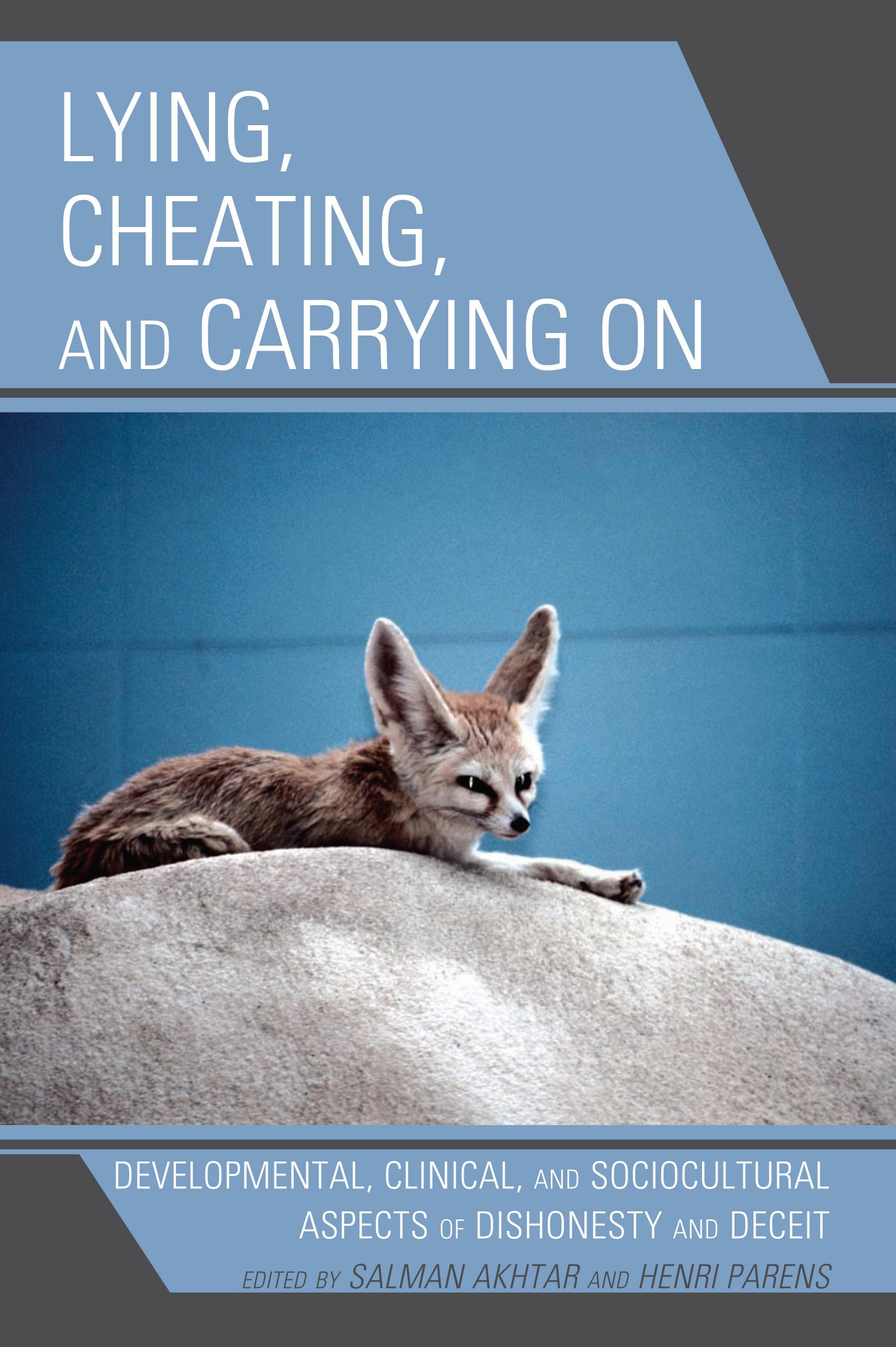
What constitutes a lie? What are the different types of lies? Why do people lie? Is dishonesty ubiquitous in human experience? And what should be done with individuals who seek pschotherapeutic help and yet can not reveal important aspects of their lives and even fabricate histories, associations, and dreams? Such questions form the backbone of this exceptional book. Starting with the emergence of the capacity to lie in childhood and the formative influence of the family in children's moral development, the discourse goes on to include the variety of adulthood lies, including social lies, existential lies, pathological lies, narcissistic lies, and sociopathic lies. Contributions from distinguished psychoanalysts like Salman Akhtar, Harold Blum, Ruth Fischer, Lucy LaFarge, Henri Parens, and Michael Stone, along with others, explore the impact of dishonesty on the internal and external realities of an individual. Malignant forms of lies involving serious character pathology and criminality, as well as their detection, are also discussed. The book's aim is to help therapists enhance their empathy with patients who are compelled to lie and to provide them with better therapeutic strategies to deal with the clinical dilemmas that arise in working with such children and adults.
Paga fácilmente con tarjeta, Klarna, Apple Pay o Google Pay. ¿No estás contento? Siempre tienes 14 días de garantía de devolución. Lee más en nuestros términos. Si tienes preguntas, escríbenos a hello@memmo.org.
Memmo hace que estudiar sea más fácil, estés donde estés. Aquí tienes tus libros de texto y herramientas de estudio inteligentes en un solo lugar: resúmenes, quizzes, podcasts y flashcards. Y también a Ted, tu compañero de estudio que responde a todo lo que te preguntes. Más de 50 000 estudiantes ya estudian aquí. Está hecho para que aprendas más rápido y te estreses menos.