
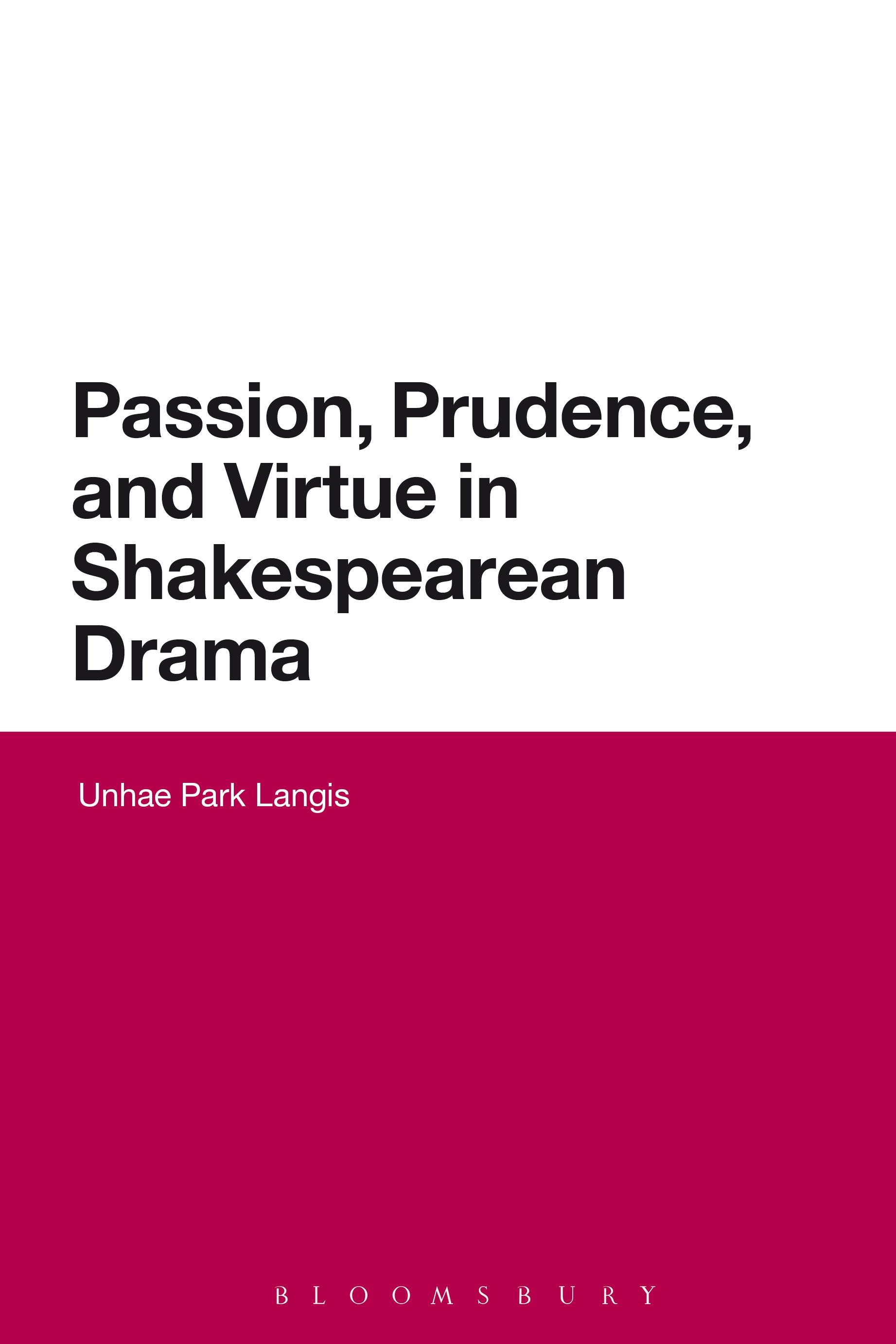
Virtue, as a Renaissance ideal, was largely conceived as a rational governing of unruly passions. Revising this early modern commonplace, this study shows how Shakespeare dramatizes a discerning Aristotelian conception of virtue as a touchstone of excellence: executing just action at the best time, in the best way, and for the best end within the contingent world. Not only situational, Aristotelian virtue is, moreover, integrative, harmonizing passion and reason, will and understanding, towards personal and civil good. Yet as a surprising backfire on the misogynist streak in Aristotle, the resistant female characters in Shakespeare emerge as the exemplars of ethical action, appropriating traditionally male-inflected virtue. At the junction of ethical, psycho-physiological, cultural and gender studies, this approach of prudential psychology bridges an apparent but needless divergence of critical focus between affect and cognition, ethics and prudential action. Firmly situated in new historicist practices, prudential psychology goes beyond narrow discourses of power into the all-encompassing arena of virtue as the complete life, which recommends an interdisciplinary approach for a fuller understanding of Shakespeare's works.
Páginas: 192
Categoría: Drama, Teater & Scenkonst
e-ISBN: 9781441187451
Peso de envío: 1.2 kg
Envío en: 1-2 días
Paga fácilmente con tarjeta, Klarna, Apple Pay o Google Pay. ¿No estás contento? Siempre tienes 14 días de garantía de devolución. Lee más en nuestros términos. Si tienes preguntas, escríbenos a hello@memmo.org.
Memmo hace que estudiar sea más fácil, estés donde estés. Aquí tienes tus libros de texto y herramientas de estudio inteligentes en un solo lugar: resúmenes, quizzes, podcasts y flashcards. Y también a Ted, tu compañero de estudio que responde a todo lo que te preguntes. Más de 50 000 estudiantes ya estudian aquí. Está hecho para que aprendas más rápido y te estreses menos.