
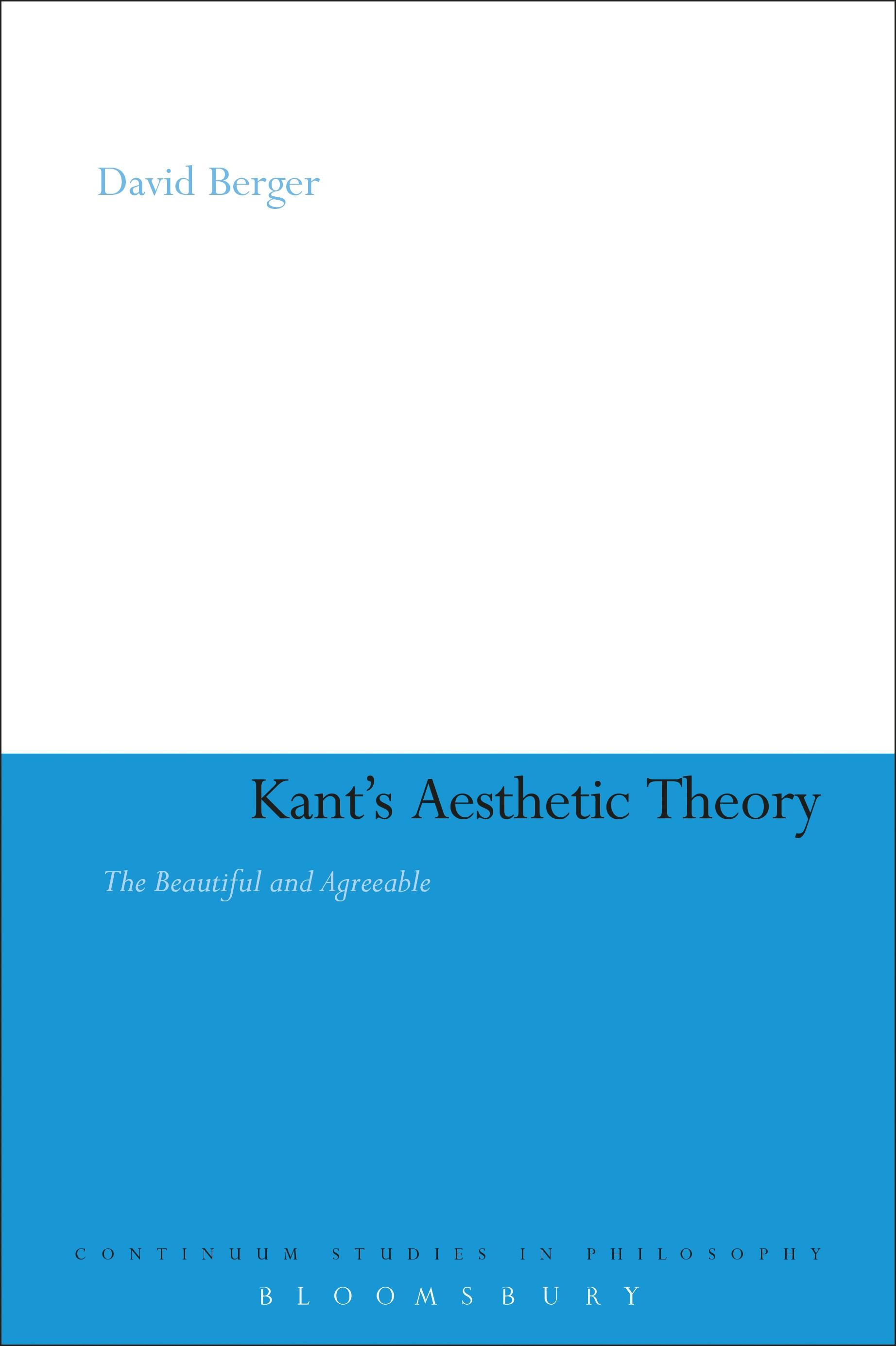
Taste is ordinarily thought of in terms of two very different idioms - a normative idiom of taste as a standard of appraisal and a non-normative idiom of taste as a purely personal matter. Kant attempts to capture this twofold conception of taste within the terms of his mature critical philosophy by distinguishing between the beautiful and the agreeable. Scholars have largely taken Kant's distinction for granted, but David Berger argues that it is both far richer and far more problematic than it may appear. Berger examines in detail Kant's various attempts to distinguish beauty from agreeableness. This approach reveals the complex interplay between Kant's substantive aesthetic theory and his broader views on metaphysics and epistemology. Indeed, Berger argues that the real interest of Kant's distinction between beauty and agreeableness is ultimately epistemological.
His interpretation brings Kant's aesthetic theory into dialogue with questions at the heart of contemporary analytic philosophy and shows how philosophical aesthetics can offer fresh insights into contemporary philosophical debates.
His interpretation brings Kant's aesthetic theory into dialogue with questions at the heart of contemporary analytic philosophy and shows how philosophical aesthetics can offer fresh insights into contemporary philosophical debates.
Paga fácilmente con tarjeta, Klarna, Apple Pay o Google Pay. ¿No estás contento? Siempre tienes 14 días de garantía de devolución. Lee más en nuestros términos. Si tienes preguntas, escríbenos a hello@memmo.org.
Memmo hace que estudiar sea más fácil, estés donde estés. Aquí tienes tus libros de texto y herramientas de estudio inteligentes en un solo lugar: resúmenes, quizzes, podcasts y flashcards. Y también a Ted, tu compañero de estudio que responde a todo lo que te preguntes. Más de 50 000 estudiantes ya estudian aquí. Está hecho para que aprendas más rápido y te estreses menos.