
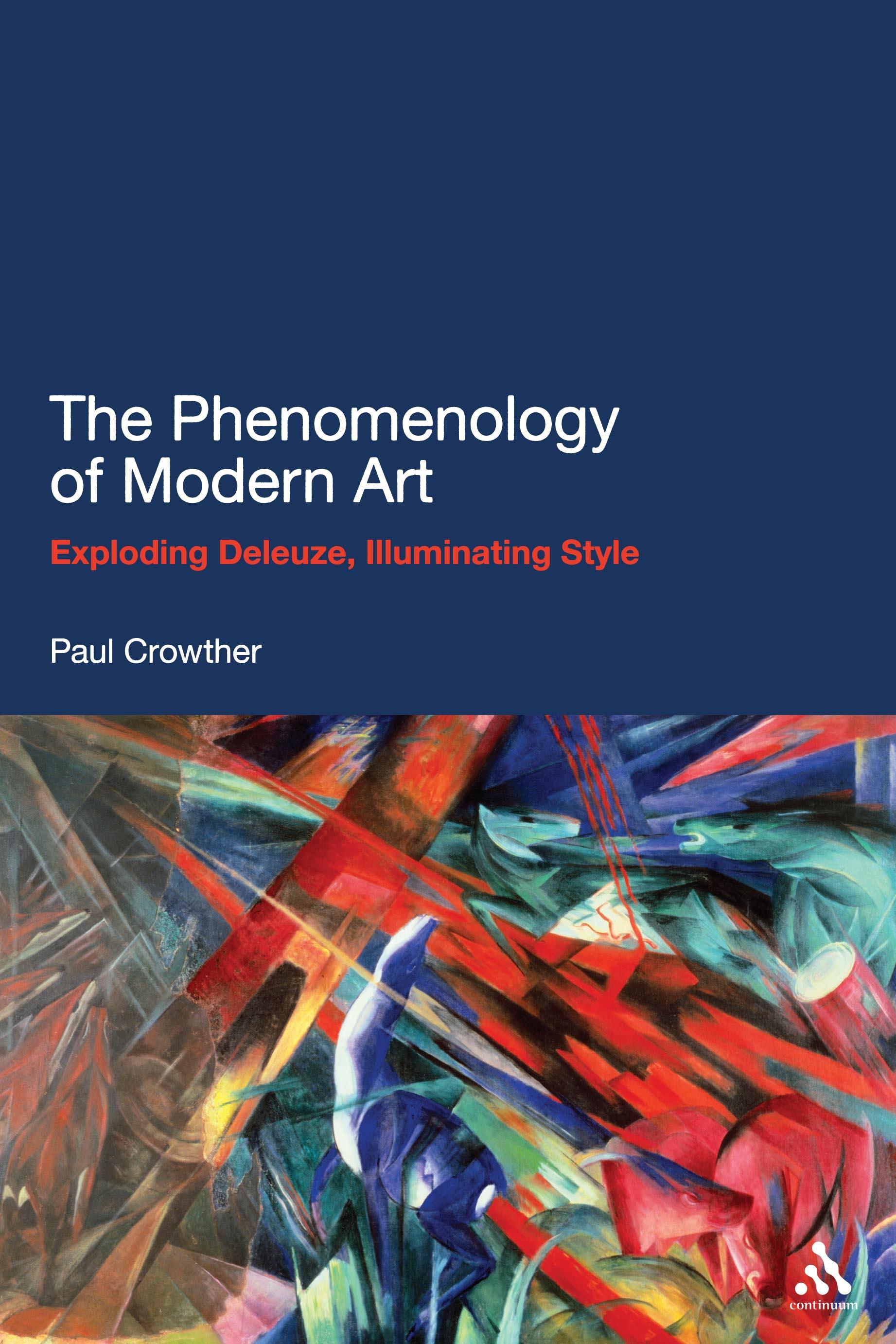
As a philosophical approach, phenomenology is concerned with structure in how phenomena are experienced. The Phenomenology of Modern Art uses phenomenological insights to explain the significance of style in modern art, most notably in Impressionism, Expressionism, Cezanne and Cubism, Duchampian conceptualism and abstract art.
Paul Crowther explores this thematic approach in a new way, addressing specific visual artworks and tendencies in detail and introduces a new methodology - post-analytic phenomenology. It is this more critical, post-analytic orientation that allows the book to utilise some unexpected phenomenological resources. Gilles Deleuze, rarely associated with phenomenology, in fact employs an overriding phenomenological orientation in his focus on modern art. Crowther uses Deleuze's important phenomenological insights as a starting point and goes on to develop arguments found in two other thinkers, Nietzsche and Merleau-Ponty, as well as addressing those figures and tendencies in relation to whom twentieth-century critical appropriations of Kant have been most influential. Accompanied by illustrations, the book offers the first sustained phenomenological approach to modern art.
Paul Crowther explores this thematic approach in a new way, addressing specific visual artworks and tendencies in detail and introduces a new methodology - post-analytic phenomenology. It is this more critical, post-analytic orientation that allows the book to utilise some unexpected phenomenological resources. Gilles Deleuze, rarely associated with phenomenology, in fact employs an overriding phenomenological orientation in his focus on modern art. Crowther uses Deleuze's important phenomenological insights as a starting point and goes on to develop arguments found in two other thinkers, Nietzsche and Merleau-Ponty, as well as addressing those figures and tendencies in relation to whom twentieth-century critical appropriations of Kant have been most influential. Accompanied by illustrations, the book offers the first sustained phenomenological approach to modern art.
Paga fácilmente con tarjeta, Klarna, Apple Pay o Google Pay. ¿No estás contento? Siempre tienes 14 días de garantía de devolución. Lee más en nuestros términos. Si tienes preguntas, escríbenos a hello@memmo.org.
Memmo hace que estudiar sea más fácil, estés donde estés. Aquí tienes tus libros de texto y herramientas de estudio inteligentes en un solo lugar: resúmenes, quizzes, podcasts y flashcards. Y también a Ted, tu compañero de estudio que responde a todo lo que te preguntes. Más de 50 000 estudiantes ya estudian aquí. Está hecho para que aprendas más rápido y te estreses menos.