
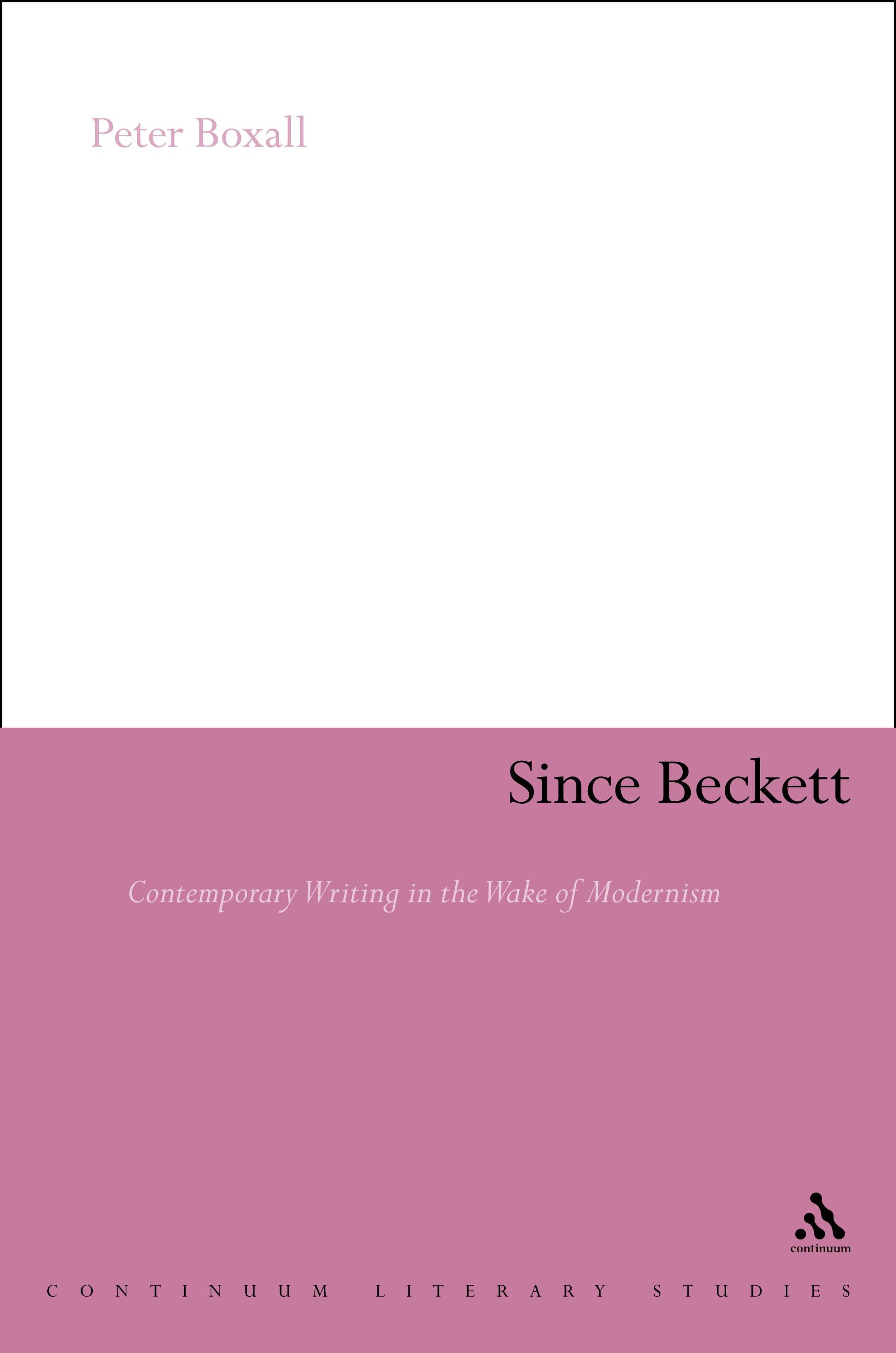
Samuel Beckett is widely regarded as 'the last modernist', the writer in whose work the aesthetic principles which drove the modernist project dwindled and were finally exhausted. And yet despite this, it is striking that many of the most important contemporary writers, across the world, see their work as emerging from a Beckettian legacy. So whilst Beckett belongs, in one sense, to the end of the modernist period, in another sense he is the well spring from which the contemporary, in a wide array of guises, can be seen to emerge.
Since Beckett looks at a number of writers, in different national and political contexts, tracing the way in which Beckett's writing inhabits the contemporary, while at the same time reading back through Beckett to the modernist and proto-modernist forms he inherited. In reading Beckett against the contemporary in this way, Peter Boxall offers both a compelling re-reading of Beckett, and a powerful new analysis of contemporary culture.
Since Beckett looks at a number of writers, in different national and political contexts, tracing the way in which Beckett's writing inhabits the contemporary, while at the same time reading back through Beckett to the modernist and proto-modernist forms he inherited. In reading Beckett against the contemporary in this way, Peter Boxall offers both a compelling re-reading of Beckett, and a powerful new analysis of contemporary culture.
Paga fácilmente con tarjeta, Klarna, Apple Pay o Google Pay. ¿No estás contento? Siempre tienes 14 días de garantía de devolución. Lee más en nuestros términos. Si tienes preguntas, escríbenos a hello@memmo.org.
Memmo hace que estudiar sea más fácil, estés donde estés. Aquí tienes tus libros de texto y herramientas de estudio inteligentes en un solo lugar: resúmenes, quizzes, podcasts y flashcards. Y también a Ted, tu compañero de estudio que responde a todo lo que te preguntes. Más de 50 000 estudiantes ya estudian aquí. Está hecho para que aprendas más rápido y te estreses menos.