
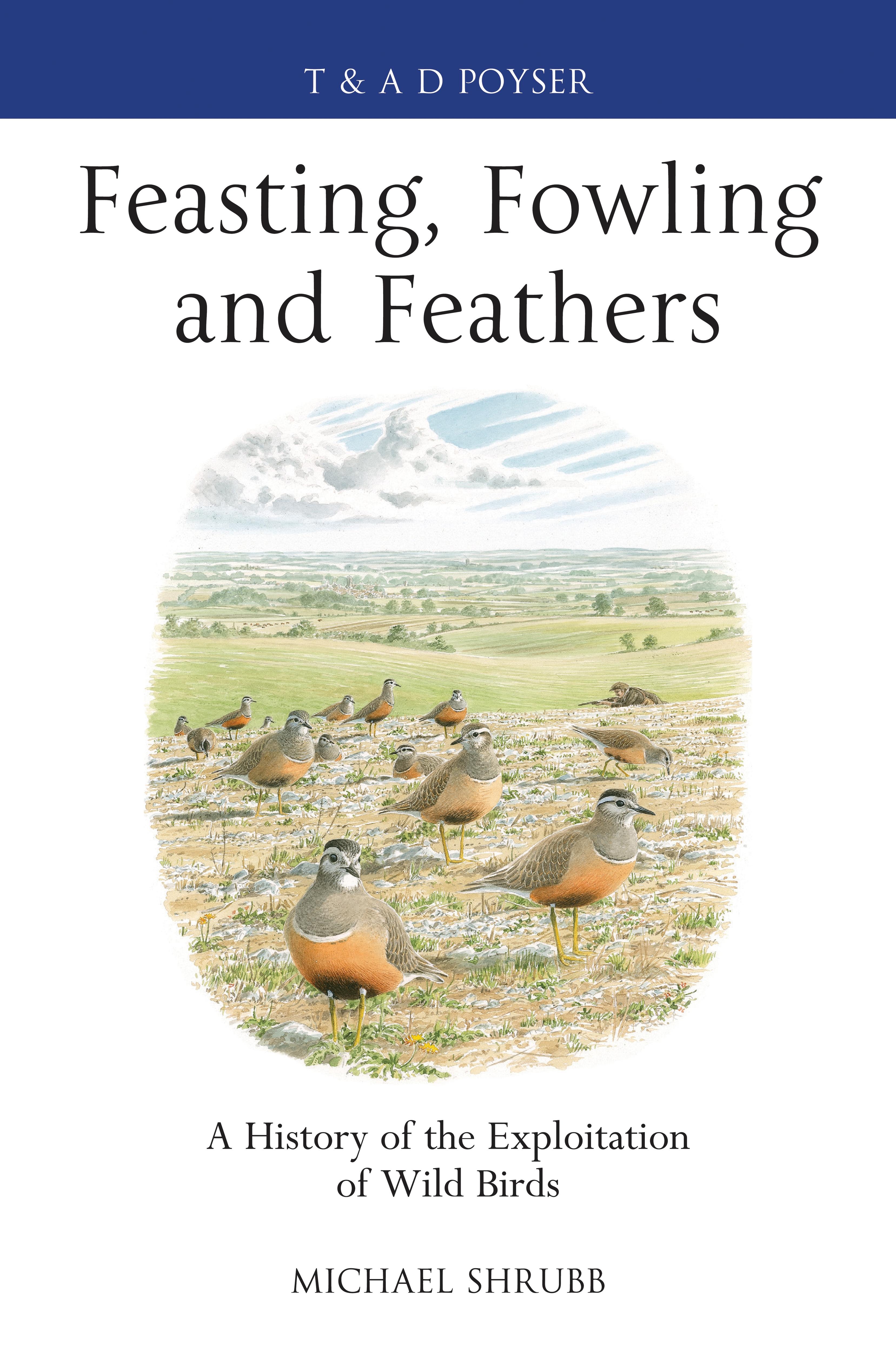
A highly readable review of some 700 years of avian exploitation.
The way wild birds have been exploited over the centuries forms the focus of this remarkable new book by Michael Shrubb. It looks at the use of birds as food, for feathers and skins, for eggs, as cage birds, as specimens and for hunting, focusing on Britain, northern Europe and the North Atlantic. Never before has a book brought the huge amount of information on these topics in the academic literature together under one cover.
Introductory chapters on what was taken, when, why and its impact are followed by a number of sections looking in detail at important bird groups. Along with discussions of broader themes of exploitation, the book is packed with amazing facts. For example, we learn:
- why Grey Herons were so important in medieval falconry
- why the Black Death was good news for bustards
- why Napoleon is to blame for the scarcity of Quail in Britain today
- when tame plover stew was all the rage
The book concludes with discussions of the cage bird and plumage trades, both now consigned to the annals of history, in Britain at any rate. As well as summarising and condensing the material into a readable and entertaining account, Shrubb goes back to the original sources. This has allowed him to shed new and surprising light on the biogeography of a number of British birds.
The way wild birds have been exploited over the centuries forms the focus of this remarkable new book by Michael Shrubb. It looks at the use of birds as food, for feathers and skins, for eggs, as cage birds, as specimens and for hunting, focusing on Britain, northern Europe and the North Atlantic. Never before has a book brought the huge amount of information on these topics in the academic literature together under one cover.
Introductory chapters on what was taken, when, why and its impact are followed by a number of sections looking in detail at important bird groups. Along with discussions of broader themes of exploitation, the book is packed with amazing facts. For example, we learn:
- why Grey Herons were so important in medieval falconry
- why the Black Death was good news for bustards
- why Napoleon is to blame for the scarcity of Quail in Britain today
- when tame plover stew was all the rage
The book concludes with discussions of the cage bird and plumage trades, both now consigned to the annals of history, in Britain at any rate. As well as summarising and condensing the material into a readable and entertaining account, Shrubb goes back to the original sources. This has allowed him to shed new and surprising light on the biogeography of a number of British birds.
Paga fácilmente con tarjeta, Klarna, Apple Pay o Google Pay. ¿No estás contento? Siempre tienes 14 días de garantía de devolución. Lee más en nuestros términos. Si tienes preguntas, escríbenos a hello@memmo.org.
Memmo hace que estudiar sea más fácil, estés donde estés. Aquí tienes tus libros de texto y herramientas de estudio inteligentes en un solo lugar: resúmenes, quizzes, podcasts y flashcards. Y también a Ted, tu compañero de estudio que responde a todo lo que te preguntes. Más de 50 000 estudiantes ya estudian aquí. Está hecho para que aprendas más rápido y te estreses menos.