
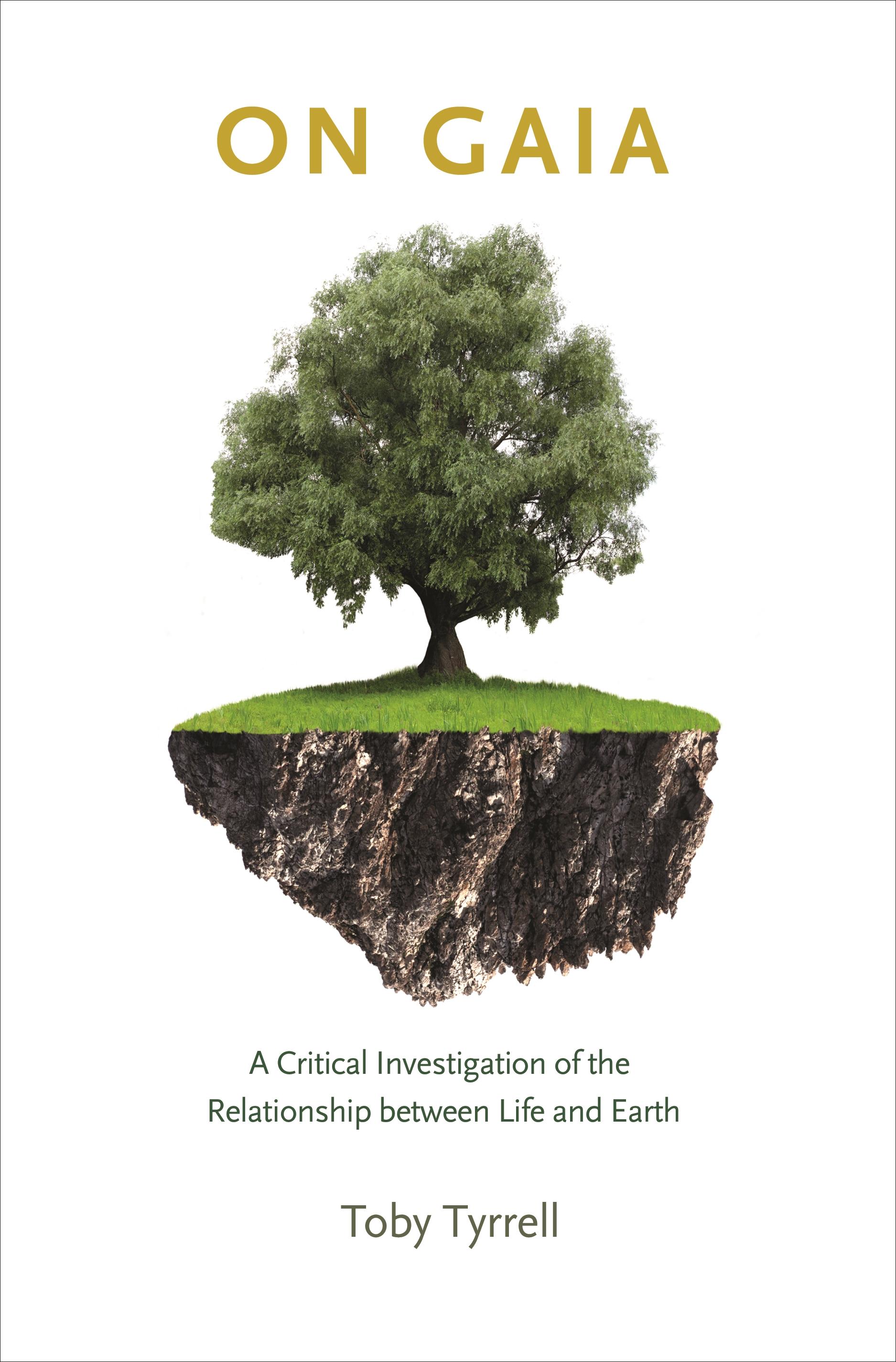
A critical examination of James Lovelock's controversial Gaia hypothesis
One of the enduring questions about our planet is how it has remained continuously habitable over vast stretches of geological time despite the fact that its atmosphere and climate are potentially unstable. James Lovelock's Gaia hypothesis posits that life itself has intervened in the regulation of the planetary environment in order to keep it stable and favorable for life. First proposed in the 1970s, Lovelock's hypothesis remains highly controversial and continues to provoke fierce debate. On Gaia undertakes the first in-depth investigation of the arguments put forward by Lovelock and others—and concludes that the evidence doesn't stack up in support of Gaia.
Toby Tyrrell draws on the latest findings in fields as diverse as climate science, oceanography, atmospheric science, geology, ecology, and evolutionary biology. He takes readers to obscure corners of the natural world, from southern Africa where ancient rocks reveal that icebergs were once present near the equator, to mimics of cleaner fish on Indonesian reefs, to blind fish deep in Mexican caves. Tyrrell weaves these and many other intriguing observations into a comprehensive analysis of the major assertions and lines of argument underpinning Gaia, and finds that it is not a credible picture of how life and Earth interact.
On Gaia reflects on the scientific evidence indicating that life and environment mutually affect each other, and proposes that feedbacks on Earth do not provide robust protection against the environment becoming uninhabitable—or against poor stewardship by us.
Paga fácilmente con tarjeta, Klarna, Apple Pay o Google Pay. ¿No estás contento? Siempre tienes 14 días de garantía de devolución. Lee más en nuestros términos. Si tienes preguntas, escríbenos a hello@memmo.org.
Memmo hace que estudiar sea más fácil, estés donde estés. Aquí tienes tus libros de texto y herramientas de estudio inteligentes en un solo lugar: resúmenes, quizzes, podcasts y flashcards. Y también a Ted, tu compañero de estudio que responde a todo lo que te preguntes. Más de 50 000 estudiantes ya estudian aquí. Está hecho para que aprendas más rápido y te estreses menos.