
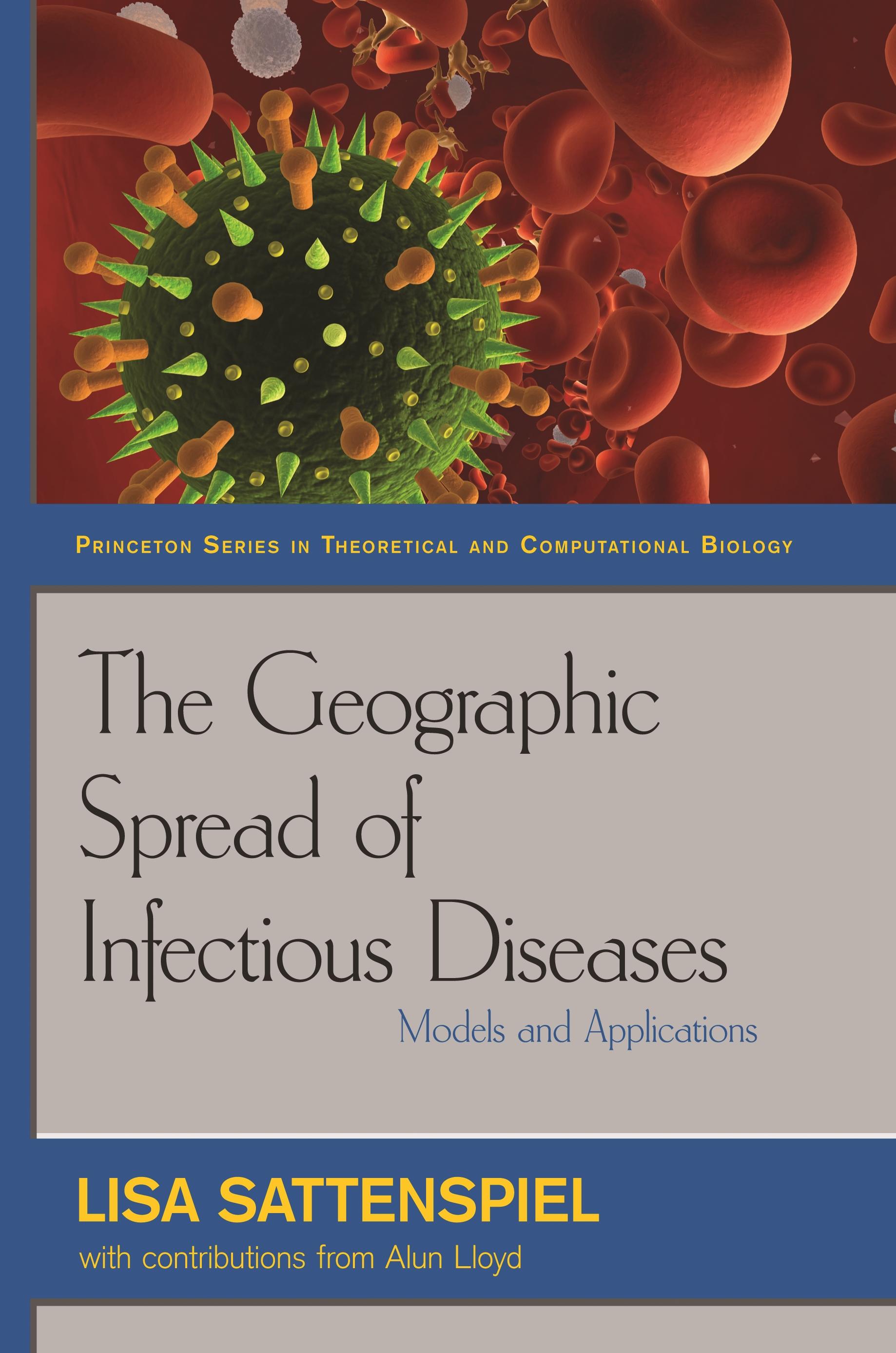
The 1918-19 influenza epidemic killed more than fifty million people worldwide. The SARS epidemic of 2002-3, by comparison, killed fewer than a thousand. The success in containing the spread of SARS was due largely to the rapid global response of public health authorities, which was aided by insights resulting from mathematical models. Models enabled authorities to better understand how the disease spread and to assess the relative effectiveness of different control strategies. In this book, Lisa Sattenspiel and Alun Lloyd provide a comprehensive introduction to mathematical models in epidemiology and show how they can be used to predict and control the geographic spread of major infectious diseases.
Key concepts in infectious disease modeling are explained, readers are guided from simple mathematical models to more complex ones, and the strengths and weaknesses of these models are explored. The book highlights the breadth of techniques available to modelers today, such as population-based and individual-based models, and covers specific applications as well. Sattenspiel and Lloyd examine the powerful mathematical models that health authorities have developed to understand the spatial distribution and geographic spread of influenza, measles, foot-and-mouth disease, and SARS. Analytic methods geographers use to study human infectious diseases and the dynamics of epidemics are also discussed. A must-read for students, researchers, and practitioners, no other book provides such an accessible introduction to this exciting and fast-evolving field.
Paga fácilmente con tarjeta, Klarna, Apple Pay o Google Pay. ¿No estás contento? Siempre tienes 14 días de garantía de devolución. Lee más en nuestros términos. Si tienes preguntas, escríbenos a hello@memmo.org.
Memmo hace que estudiar sea más fácil, estés donde estés. Aquí tienes tus libros de texto y herramientas de estudio inteligentes en un solo lugar: resúmenes, quizzes, podcasts y flashcards. Y también a Ted, tu compañero de estudio que responde a todo lo que te preguntes. Más de 50 000 estudiantes ya estudian aquí. Está hecho para que aprendas más rápido y te estreses menos.