
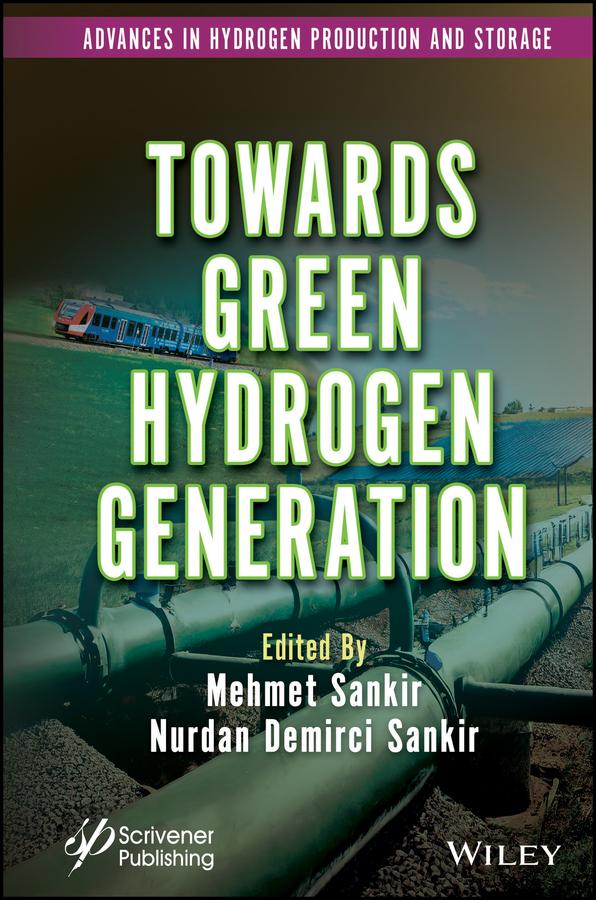
Readers will find a multidisciplinary approach elucidating all the important features of green hydrogen so that science researchers and energy engineers as well as those in economics, political science and international relations, will also find value.
Energy sources and generation is the foremost concern of all governments, NGOs, and activist groups. With Green New Deals and reduced or net zero emission goals being implemented on a global scale, the quest for economic, scalable, efficient, and sustainable energy systems has reached a fever pitch. No one energy source ticks all the boxes and new energy technologies are being developed all the time as potential disruptors. Enter green hydrogen with zero emissions. Hydrogen is a rare gas in nature and is often found together with natural gas. While hydrogen is the most abundant element in the known universe, molecular hydrogen is very rare in nature and needs to be produced—and produced in large quantities, if we are serious about the Green Deal.
This book has been organized into three parts to introduce and discuss these crucial topics. Part I discusses the Green Deal and the current state and challenges encountered in the industrialization of green hydrogen production, as well as related politics. Chapters in this section include how to decarbonize the energy industry with green hydrogen, and one that describes a gradual shift in the approach of hydrogen production technologies from non-renewable to renewable. Part II is devoted to carbon capturing and hydrogen. Chapters on biomass mass waste-to-hydrogen conversion and related efficient and sustainable hydrogen storage pathways, life cycle assessment for eco-design of biohydrogen factory by microalgae, and metal oxide-based carbon capture technologies are all addressed in this section. The third and final part of the book was designed to present all features of green hydrogen generation. Chapters include PEM water electrolysis and other electrolyzers, wind-driven hydrogen production, and bifunctional electrocatalysts-driven hybrid water splitting, are introduced and thoroughly discussed.
Audience
This book is directed to researchers and industry professionals in energy engineering, chemistry, physics, materials science, and chemical engineering, as well as energy policymakers, energy economists, and others in the social sciences.
Paga fácilmente con tarjeta, Klarna, Apple Pay o Google Pay. ¿No estás contento? Siempre tienes 14 días de garantía de devolución. Lee más en nuestros términos. Si tienes preguntas, escríbenos a hello@memmo.org.
Memmo hace que estudiar sea más fácil, estés donde estés. Aquí tienes tus libros de texto y herramientas de estudio inteligentes en un solo lugar: resúmenes, quizzes, podcasts y flashcards. Y también a Ted, tu compañero de estudio que responde a todo lo que te preguntes. Más de 50 000 estudiantes ya estudian aquí. Está hecho para que aprendas más rápido y te estreses menos.