
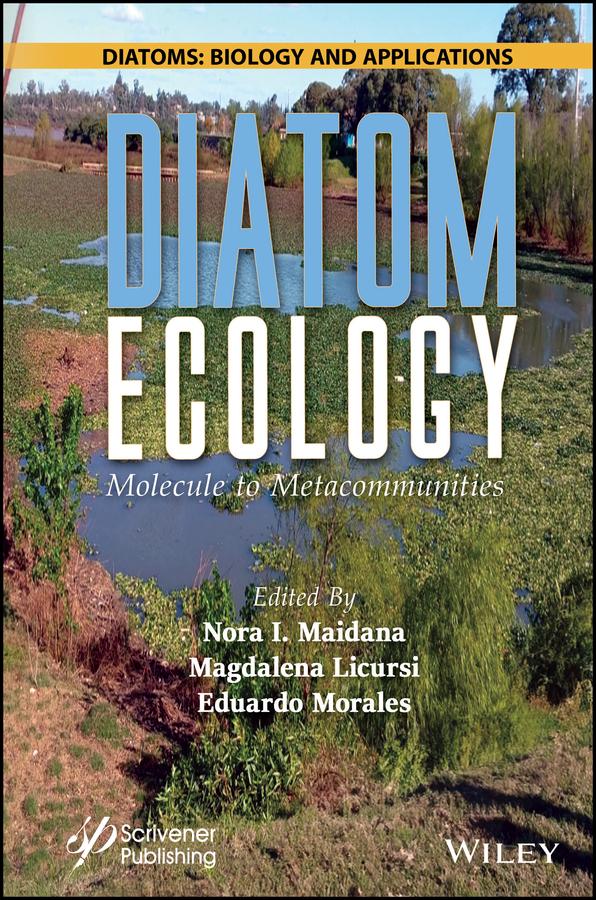
This book offers a comprehensive, unique and up-to-date exploration of diatom ecology spanning from fundamental molecular aspects to the intricate dynamics of metacommunities.
In recent years there has been a considerable increase in the amount of research devoted to diatom ecology, with a wide spectrum of approaches. This large amount of information, published in many different journals and books, makes it very difficult to keep up to date, both for the trained researcher and for students. Eduardo A. Morales (d. May 2023) had the original idea to assemble chapters on various subjects within diatom ecology. The questions he posed to potential contributors framed the current book consisting of 12 chapters.
- Are diatoms suitable tools for ecological restoration?
- What would be the features that make them reliable in this context?
- What makes diatoms ecologically successful?
- In an ecological sense, why is there such variability in diatom reproductive strategies and why are they worth considering?
- What do new approaches in ecological synthesis provide to diatom ecology, biogeography and metacommunities?
- Are all diatoms widely spread and each species uniquely characterized by its own, unaltered phenotype?
- Can we really make any ecological consideration without knowing (with a high degree of certainty) the identity of taxa?
- Are urban ecosystems important repositories of biodiversity?
- What are the benefits and the progress in diatom ecology made by the diatom guild perspective?
- Why, how and when are soil diatoms used in bioindication and what are the benefits of such an approach?
- Are diatoms bona fide indicators of climate change?
- Are diatom communities in temporary rivers important for these lotic ecosystems as they are subjected to the effects of climate change?
- Do diatoms in peatlands behave differently from their terrestrial and aquatic (rivers, lakes, others) counterparts?
Audience
The book is intended primarily for professionals in the fields of diatom research, algal research (phycology), organismal, population and community ecology, limnology, microbiology, organismal biology, paleoecology and paleolimnology. The book will also serve as a reference for graduate students seeking guidance on terminology, techniques, and current methods in diatom research.
Paga fácilmente con tarjeta, Klarna, Apple Pay o Google Pay. ¿No estás contento? Siempre tienes 14 días de garantía de devolución. Lee más en nuestros términos. Si tienes preguntas, escríbenos a hello@memmo.org.
Memmo hace que estudiar sea más fácil, estés donde estés. Aquí tienes tus libros de texto y herramientas de estudio inteligentes en un solo lugar: resúmenes, quizzes, podcasts y flashcards. Y también a Ted, tu compañero de estudio que responde a todo lo que te preguntes. Más de 50 000 estudiantes ya estudian aquí. Está hecho para que aprendas más rápido y te estreses menos.