
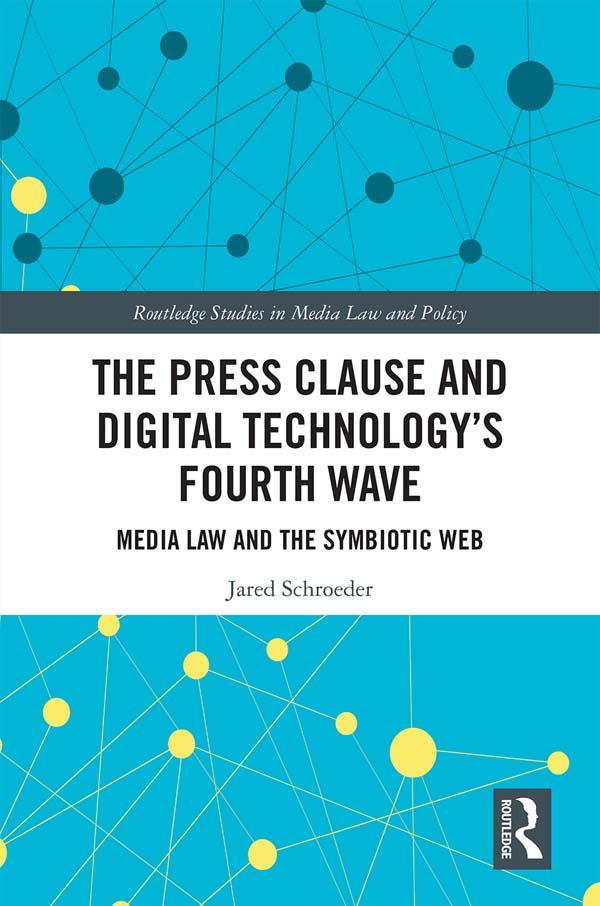
During the first part of the twenty-first century, bloggers, citizen journalists, social media users, Yelp reviewers, and a myriad of other communicators have found themselves facing defamation, privacy, campaign finance, and other lawsuits as a result of the messages they have communicated. In many ways, these communicators are facing legal questions that are similar to what traditional journalists have faced for centuries regarding their rights to gather and publish information. This book examines how the press clause, a First Amendment freedom with no agreed-upon definition, can be understood in order to help guide the courts and twenty-first-century publishers regarding protecting expression as we move into the fourth wave of networked communication, an era that will be defined by increasingly complex relationships between humans and artificially intelligent communicators. To do so, the book draws upon the discourse theory of communication in democratic society, the legal and foundational history of the press clause, lower-court cases that involve citizen publishers who have claimed protections that have historically been associated with traditional journalism, and established legal and scholarly examinations of artificial intelligence to ultimately construct a framework for how the press clause can be reimagined to protect older and newer generations of publishers.
Paga fácilmente con tarjeta, Klarna, Apple Pay o Google Pay. ¿No estás contento? Siempre tienes 14 días de garantía de devolución. Lee más en nuestros términos. Si tienes preguntas, escríbenos a hello@memmo.org.
Memmo hace que estudiar sea más fácil, estés donde estés. Aquí tienes tus libros de texto y herramientas de estudio inteligentes en un solo lugar: resúmenes, quizzes, podcasts y flashcards. Y también a Ted, tu compañero de estudio que responde a todo lo que te preguntes. Más de 50 000 estudiantes ya estudian aquí. Está hecho para que aprendas más rápido y te estreses menos.