
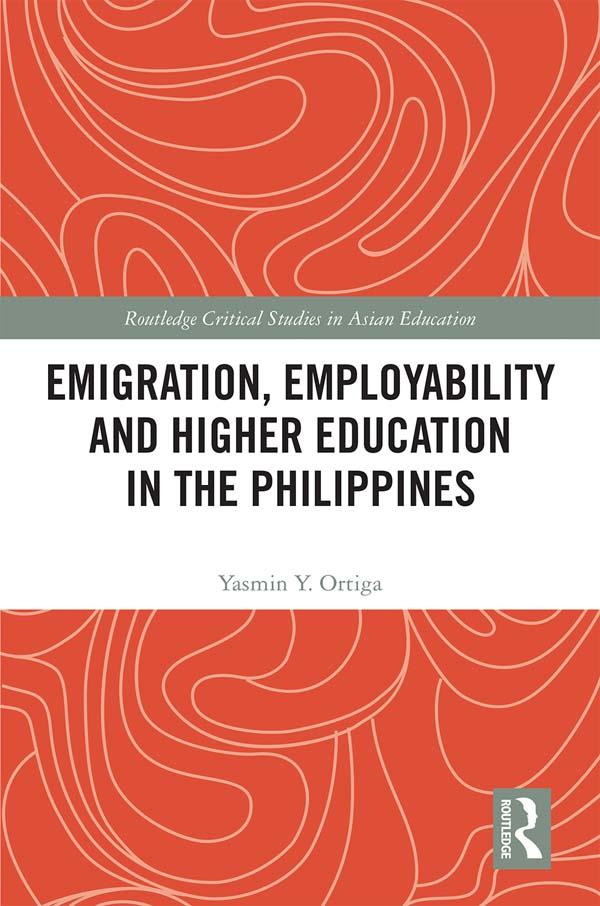
This book investigates the dilemma of educating students for future work in the context of the Philippines, one of the top sources of migrant labor in the world. Here, colleges and universities are expected to not only educate students for jobs within the country, but for potential employers beyond national borders. It demonstrates how human capital ideology reinforces such export-oriented education, creating an assumed relationship among academic credentials, overseas opportunity, and future migrant remittances. Findings indicate that attempts to produce migrant workers undermine the job security of college instructors, skew local curriculum towards foreign requirements, and challenge efforts to develop academic programs in line with local needs. As more developing nations turn to migration as a development strategy, colleges and universities face increasing pressures to produce future migrant workers who will have an advantage over other nationalities. This book emphasises the importance of understanding how this global phenomenon affects colleges and universities, as well as the teachers and students within these institutions. This book raises important questions on the role of universities in today’s global economy and the effects of contemporary migration flows on developing countries.
Paga fácilmente con tarjeta, Klarna, Apple Pay o Google Pay. ¿No estás contento? Siempre tienes 14 días de garantía de devolución. Lee más en nuestros términos. Si tienes preguntas, escríbenos a hello@memmo.org.
Memmo hace que estudiar sea más fácil, estés donde estés. Aquí tienes tus libros de texto y herramientas de estudio inteligentes en un solo lugar: resúmenes, quizzes, podcasts y flashcards. Y también a Ted, tu compañero de estudio que responde a todo lo que te preguntes. Más de 50 000 estudiantes ya estudian aquí. Está hecho para que aprendas más rápido y te estreses menos.