
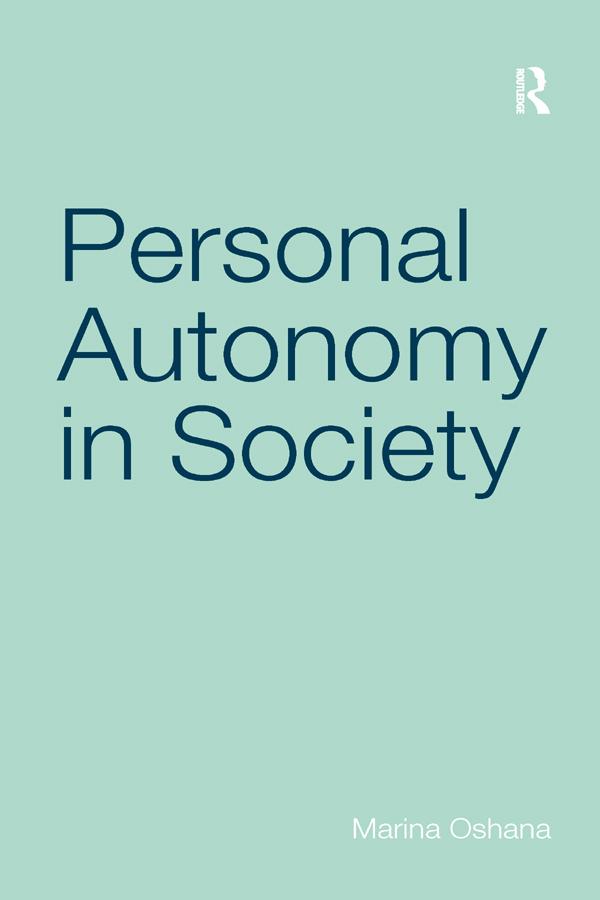
People are socially situated amid complex relations with other people and are bound by interpersonal frameworks having significant influence upon their lives. These facts have implications for their autonomy. Challenging many of the currently accepted conceptions of autonomy and of how autonomy is valued, Oshana develops a 'social-relational' account of autonomy, or self-governance, as a condition of persons that is largely constituted by a person’s relations with other people and by the absence of certain social relations. She denies that command over one's motives and the freedom to realize one's will are sufficient to secure the kind of command over one's life that autonomy requires, and argues against psychological, procedural, and content neutral accounts of autonomy. Oshana embraces the idea that her account is 'perfectionist' in a sense, and argues that ultimately our commitment to autonomy is defeasible, but she maintains that a social-relational account best captures what we value about autonomy and best serves the various ends for which the concept of autonomy is employed.
Paga fácilmente con tarjeta, Klarna, Apple Pay o Google Pay. ¿No estás contento? Siempre tienes 14 días de garantía de devolución. Lee más en nuestros términos. Si tienes preguntas, escríbenos a hello@memmo.org.
Memmo hace que estudiar sea más fácil, estés donde estés. Aquí tienes tus libros de texto y herramientas de estudio inteligentes en un solo lugar: resúmenes, quizzes, podcasts y flashcards. Y también a Ted, tu compañero de estudio que responde a todo lo que te preguntes. Más de 50 000 estudiantes ya estudian aquí. Está hecho para que aprendas más rápido y te estreses menos.
También te podría gustar
Comprar el libro0