
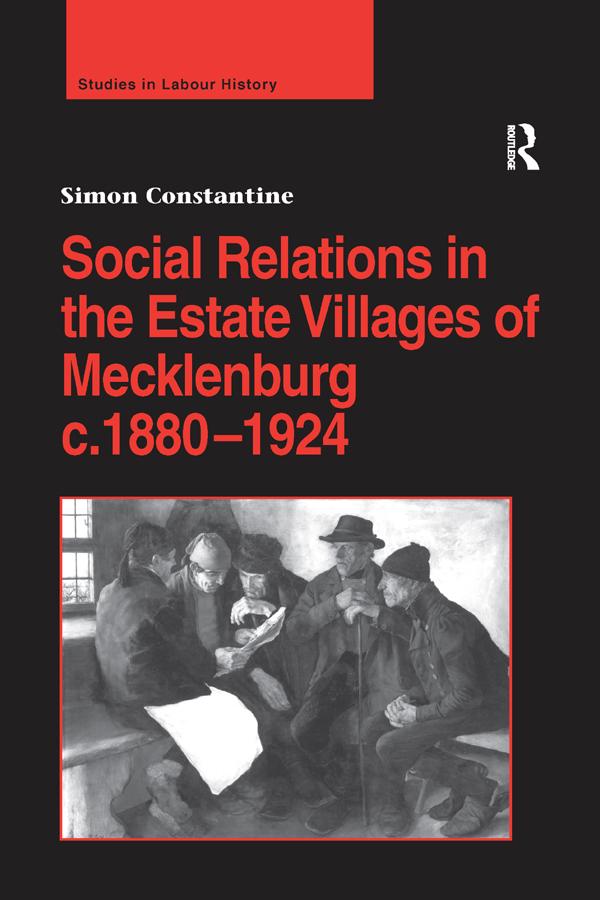
Research on late nineteenth and early twentieth century German society has concentrated overwhelmingly on life in the cities. By contrast, and despite the fact that almost one third of Germans were still working in agriculture as late as 1914, Germany's rural society remains relatively unexplored. Although historians have begun to correct this imbalance, very few full-length studies of social relations east of the Elba in this period have been published. This book concentrates on social relations in the 1,500 estate villages (Gutsdörfer) of Mecklenburg-Schwerin and Mecklenburg-Strelitz. 'Social relations' include the chains of command and obedience, the relative legal positions of owner and workers, contractual-relations, economic relations; the mutual economic dependency of estate owners and workforce, as well as the value systems of owners and labourers which informed these relationships. With its focus on both rural elites and workers, this study differs from much other work on rural Germany. For while a number of historians have examined the rural elites, few have chosen to investigate the lower strata of rural society. This book makes use of overlooked autobiographical accounts, statements given by workers at labour exchanges and before military authorities, as well as confiscated letters, jokes and anecdotes to provide greater insight into the perspective of rural workers.
Paga fácilmente con tarjeta, Klarna, Apple Pay o Google Pay. ¿No estás contento? Siempre tienes 14 días de garantía de devolución. Lee más en nuestros términos. Si tienes preguntas, escríbenos a hello@memmo.org.
Memmo hace que estudiar sea más fácil, estés donde estés. Aquí tienes tus libros de texto y herramientas de estudio inteligentes en un solo lugar: resúmenes, quizzes, podcasts y flashcards. Y también a Ted, tu compañero de estudio que responde a todo lo que te preguntes. Más de 50 000 estudiantes ya estudian aquí. Está hecho para que aprendas más rápido y te estreses menos.
También te podría gustar
Comprar el libro0