
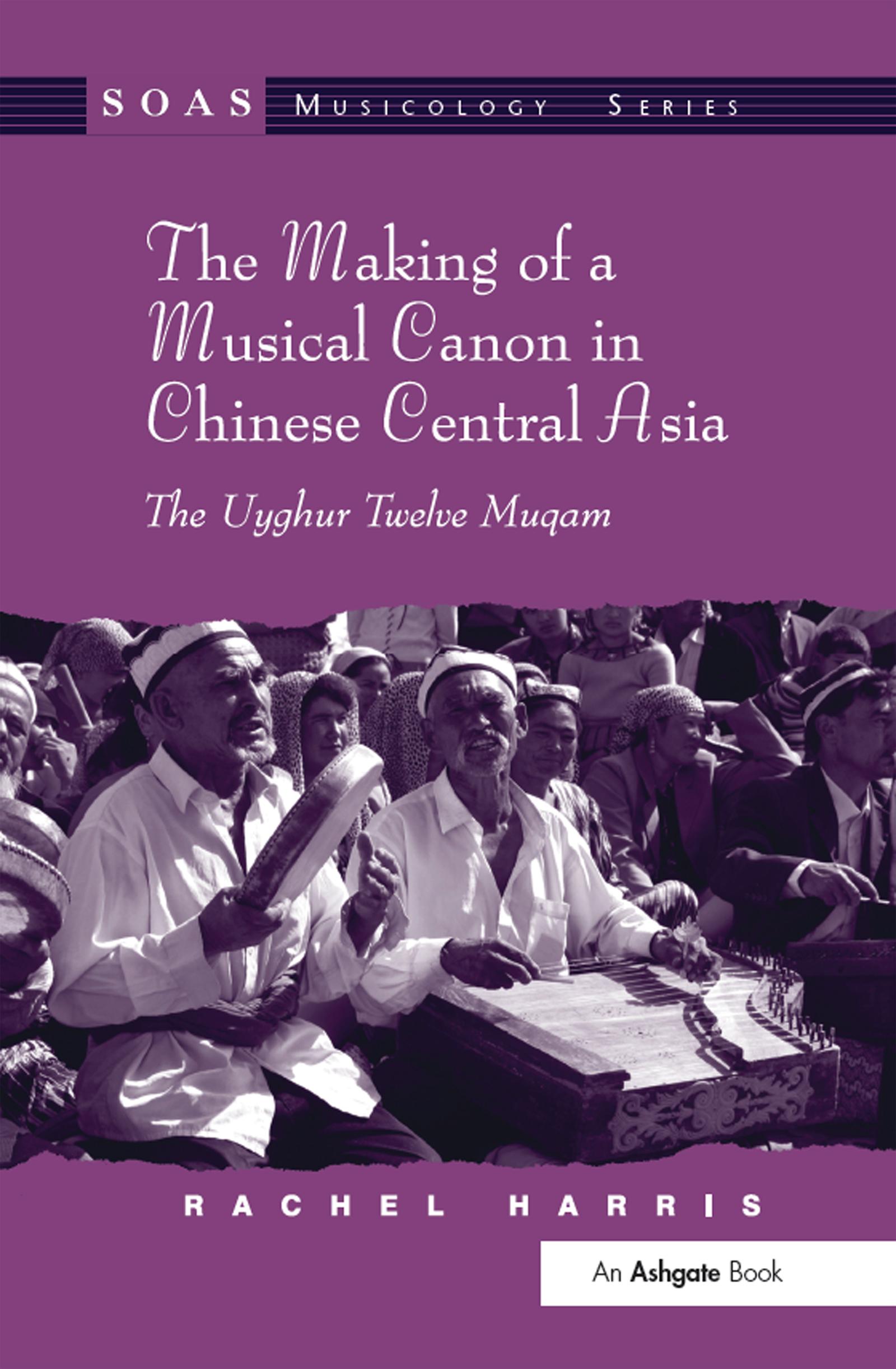
Throughout the course of the twentieth century, as newly formed nations sought ways to develop and formalise their national identity and acquire a range of identifiable national assets, we find new musical canons springing up across the world. But these canons are not arbitrary collections of works imposed on the public by the authorities. Rather they acquire deep resonance and meaning, both as national symbols and as musical repertoires imbued with aesthetic value. This book traces the formation of one such musical canon: the Twelve Muqam, a set of musical suites linked to the Uyghurs, who are one of China's minority nationalities, and culturally Central Asian Muslims. The book draws on Uyghur and Chinese language publications; interviews with musicians and musicologists; field, archive and commercial recordings, and aims towards an understanding of the Twelve Muqam as musical repertoire, juxtaposed with an understanding of the Twelve Muqam as a field of discourse. The book brings together several years' work in this field, but its core arises from a research project under the auspices of the AHRC Centre for Music Performance and Dance.
Paga fácilmente con tarjeta, Klarna, Apple Pay o Google Pay. ¿No estás contento? Siempre tienes 14 días de garantía de devolución. Lee más en nuestros términos. Si tienes preguntas, escríbenos a hello@memmo.org.
Memmo hace que estudiar sea más fácil, estés donde estés. Aquí tienes tus libros de texto y herramientas de estudio inteligentes en un solo lugar: resúmenes, quizzes, podcasts y flashcards. Y también a Ted, tu compañero de estudio que responde a todo lo que te preguntes. Más de 50 000 estudiantes ya estudian aquí. Está hecho para que aprendas más rápido y te estreses menos.
También te podría gustar
Comprar el libro0