
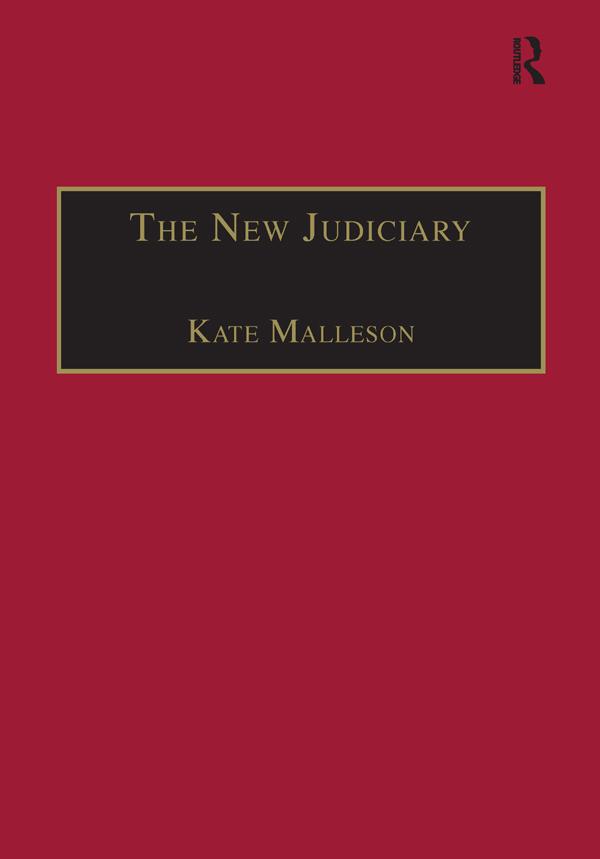
During the last thirty years, the judiciary has undergone an unprecedented expansion in its size and power. Judges now have more influence over our private and public lives than ever before. The effect of this change has been to transform the judiciary from an inward-looking elite into an increasingly heterogeneous professional body. 'The New Judiciary' examines the developments which have taken place in the appointment, training and scrutiny of judges as a result of the expanding judicial role. It highlights the increasing tension between the requirements of judicial independence and accountability which these changes are producing. The traditional insulation of the judiciary from all external influences is being challenged by the need for greater openness and public scrutiny of the judicial process. The passing of the Human Rights Act 1998, incorporating the European Convention on Human Rights into domestic law represents another stage in this process by expanding the policy-making role of the senior judiciary still further. As a result, the continuing modernisation of the judiciary, which is the subject of this book, will be a increasingly important feature of the legal and political process in the years ahead.
Paga fácilmente con tarjeta, Klarna, Apple Pay o Google Pay. ¿No estás contento? Siempre tienes 14 días de garantía de devolución. Lee más en nuestros términos. Si tienes preguntas, escríbenos a hello@memmo.org.
Memmo hace que estudiar sea más fácil, estés donde estés. Aquí tienes tus libros de texto y herramientas de estudio inteligentes en un solo lugar: resúmenes, quizzes, podcasts y flashcards. Y también a Ted, tu compañero de estudio que responde a todo lo que te preguntes. Más de 50 000 estudiantes ya estudian aquí. Está hecho para que aprendas más rápido y te estreses menos.
También te podría gustar
Comprar el libro0