
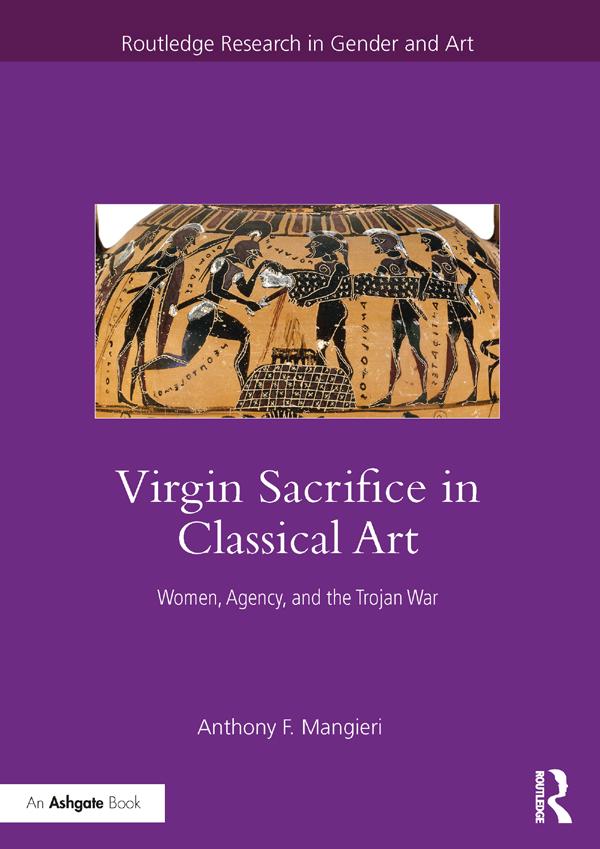
The Trojan War begins and ends with the sacrifice of a virgin princess. The gruesome killing of a woman must have captivated ancient people because the myth of the sacrificial virgin resonates powerfully in the arts of ancient Greece and Rome. Most scholars agree that the Greeks and Romans did not practice human sacrifice, so why then do the myths of virgin sacrifice appear persistently in art and literature for over a millennium? Virgin Sacrifice in Classical Art: Women, Agency, and the Trojan War seeks to answer this question.
This book tells the stories of the sacrificial maidens in order to help the reader discover the meanings bound up in these myths for historical people. In exploring the representations of Iphigeneia and Polyxena in Greek, Etruscan, and Roman art, this book offers a broader cultural history that reveals what people in the ancient world were seeking in these stories. The result is an interdisciplinary study that offers new interpretations on the meaning of the sacrificial virgin as a cultural and ideological construction. This is the first book-length study of virgin sacrifice in ancient art and the first to provide an interpretive framework within which to understand its imagery.
Paga fácilmente con tarjeta, Klarna, Apple Pay o Google Pay. ¿No estás contento? Siempre tienes 14 días de garantía de devolución. Lee más en nuestros términos. Si tienes preguntas, escríbenos a hello@memmo.org.
Memmo hace que estudiar sea más fácil, estés donde estés. Aquí tienes tus libros de texto y herramientas de estudio inteligentes en un solo lugar: resúmenes, quizzes, podcasts y flashcards. Y también a Ted, tu compañero de estudio que responde a todo lo que te preguntes. Más de 50 000 estudiantes ya estudian aquí. Está hecho para que aprendas más rápido y te estreses menos.