
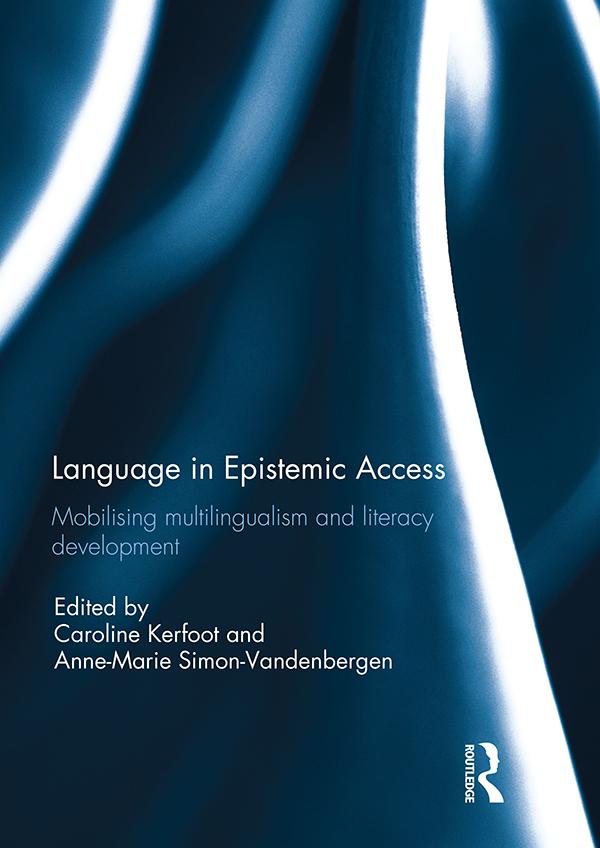
This book focuses on how to address persistent linguistically structured inequalities in education, primarily in relation to South African schools, but also in conversation with Australian work and with resonances for other multilingual contexts around the world. The book as a whole lays bare the tension between the commitment to multilingualism enshrined in the South African Constitution and language-in-education policy, and the realities of the dominance of English and the virtual absence of indigenous African languages in current educational practices. It suggests that dynamic plurilingual pedagogies can be allied with the explicit scaffolding of genre-based pedagogies to help redress asymmetries in epistemic access and to re-imagine policies, pedagogies, and practices more in tune with the realities of multilingual classrooms.
The contributions to this book offer complementary insights on routes to improving access to school knowledge, especially for learners whose home language or language variety is different to that of teaching and learning at school. All subscribe to similar ideologies which include the view that multilingualism should be seen as a resource rather than a 'problem' in education. Commentaries on these chapters highlight evidence-based high-impact educational responses, and suggest that translanguaging and genre may well offer opportunities for students to expand their linguistic repertoires and to bridge epistemological differences between community and school. This book was originally published as a special issue of Language and Education.
Paga fácilmente con tarjeta, Klarna, Apple Pay o Google Pay. ¿No estás contento? Siempre tienes 14 días de garantía de devolución. Lee más en nuestros términos. Si tienes preguntas, escríbenos a hello@memmo.org.
Memmo hace que estudiar sea más fácil, estés donde estés. Aquí tienes tus libros de texto y herramientas de estudio inteligentes en un solo lugar: resúmenes, quizzes, podcasts y flashcards. Y también a Ted, tu compañero de estudio que responde a todo lo que te preguntes. Más de 50 000 estudiantes ya estudian aquí. Está hecho para que aprendas más rápido y te estreses menos.