
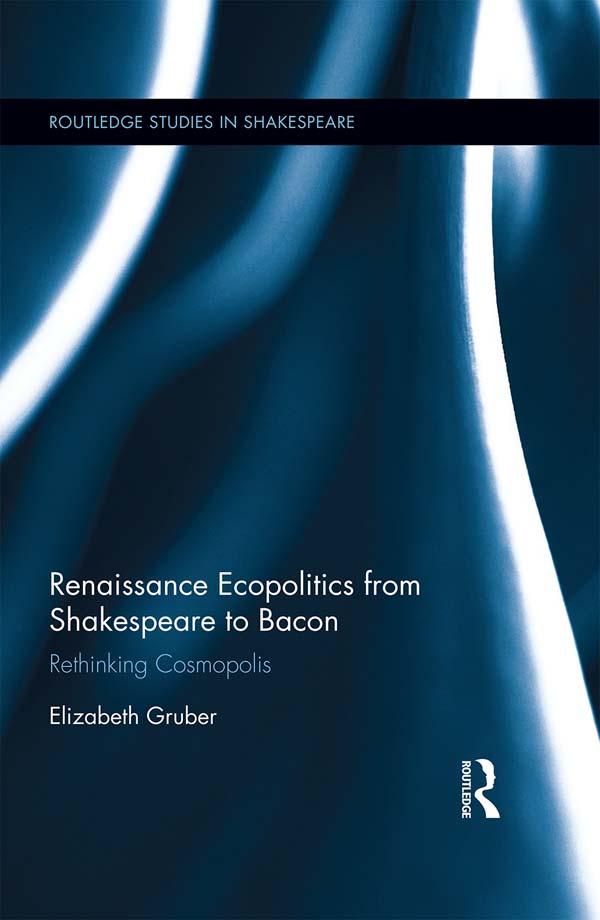
The work of Shakespeare and his contemporaries has often been the testing-ground for innovations in literary studies, but this has not been true of ecocriticism. This is partly because, until recently, most ecologically minded writers have located the origins of ecological crisis in the Enlightenment, with the legacies of the Cartesian cogito singled out as a particular cause of our current woes. Traditionally, Renaissance writers were tacitly (or, occasionally, overtly) presumed to be oblivious of environmental degradation and unaware that the episteme—the conceptual edifice of their historical moment—was beginning to crack. This perception is beginning to change, and Dr. Guber's work is poised to illuminate the burgeoning number of ecocritical studies devoted to this period, in particular, by showing how the classical concept of the cosmopolis, which posited the harmonious integration of the Order of Nature (cosmos) with the Order of Society (polis), was at once revived and also systematically dismantled in the Renaissance. Renaissance Ecopolitics from Shakespeare to Bacon: Rethinking Cosmopolis demonstrates that the Renaissance is the hinge, the crucial turning point in the human-nature relationship and examines the persisting ecological consequences of the nature-state’s demise.
Paga fácilmente con tarjeta, Klarna, Apple Pay o Google Pay. ¿No estás contento? Siempre tienes 14 días de garantía de devolución. Lee más en nuestros términos. Si tienes preguntas, escríbenos a hello@memmo.org.
Memmo hace que estudiar sea más fácil, estés donde estés. Aquí tienes tus libros de texto y herramientas de estudio inteligentes en un solo lugar: resúmenes, quizzes, podcasts y flashcards. Y también a Ted, tu compañero de estudio que responde a todo lo que te preguntes. Más de 50 000 estudiantes ya estudian aquí. Está hecho para que aprendas más rápido y te estreses menos.