
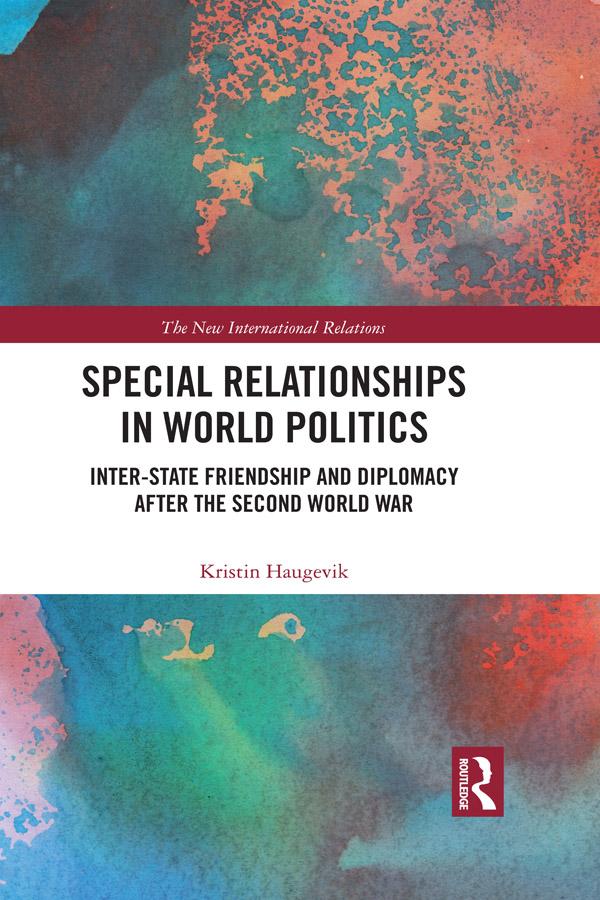
Claims of inter-state ‘specialness’ are commonplace in international politics. But how do some relationships between states come to be seen and categorized as ‘special’ in the first place? And what impact, if any, do recurring public representations of specialness have on states’ political and diplomatic interaction?
While much scholarly work exists on alleged instances of special relationships, and on inter-state cooperation and alliances more generally, little systematic and theory informed research has been conducted on how special relationships evolve and unfold in practice. This book offers such a comprehensive study. Theorizing inter-state relations as ongoing social processes, it makes the case for approaching special relationships as constituted and upheld through linguistic representations and bilateral interaction practices. Haugevik explores this claim through an in-depth study of how the bilateral relationship most frequently referred to as ‘special’ – the US-British – has unfolded over the last seventy years. This analysis is complemented with a study of Britain’s relationship with a more junior partner, Norway, during the same period.
The book offers an original take on inter-state relations and diplomacy during the Cold War and after, and develops an analytical framework for understanding why some state relationships maintain their status as ‘special’, while others end up as ‘benignly neglected’ ones.
Paga fácilmente con tarjeta, Klarna, Apple Pay o Google Pay. ¿No estás contento? Siempre tienes 14 días de garantía de devolución. Lee más en nuestros términos. Si tienes preguntas, escríbenos a hello@memmo.org.
Memmo hace que estudiar sea más fácil, estés donde estés. Aquí tienes tus libros de texto y herramientas de estudio inteligentes en un solo lugar: resúmenes, quizzes, podcasts y flashcards. Y también a Ted, tu compañero de estudio que responde a todo lo que te preguntes. Más de 50 000 estudiantes ya estudian aquí. Está hecho para que aprendas más rápido y te estreses menos.