
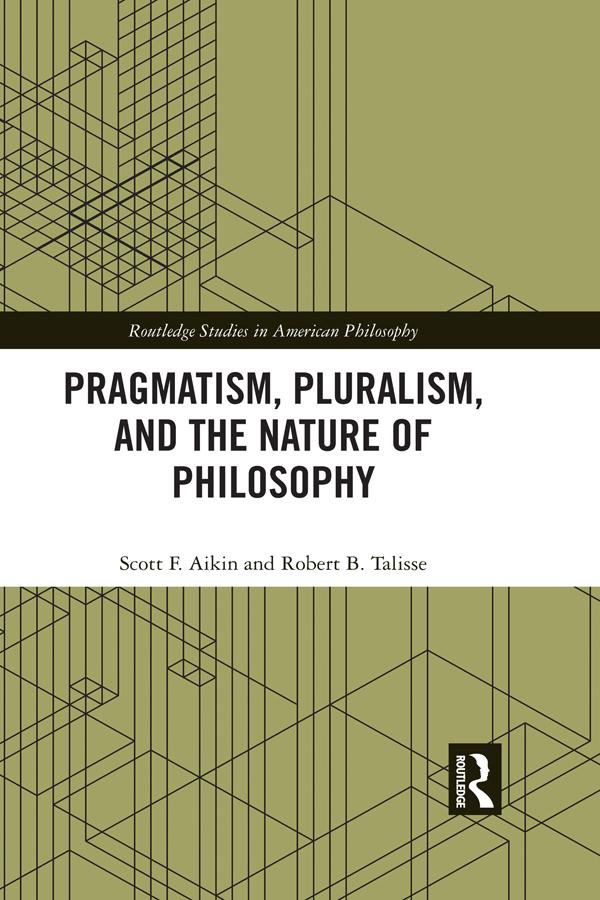
For the past fifteen years, Aikin and Talisse have been working collaboratively on a new vision of American pragmatism, one which sees pragmatism as a living and developing philosophical idiom that originates in the work of the "classical" pragmatisms of Charles Peirce, William James, and John Dewey, uninterruptedly develops through the later 20th Century pragmatists (C. I. Lewis, Wilfrid Sellars, Nelson Goodman, W. V. O. Quine), and continues through the present day. According to Aikin and Talisse, pragmatism is fundamentally a metaphilosophical proposal – a methodological suggestion for carrying inquiry forward amidst ongoing deep disagreement over the aims, limitations, and possibilities of philosophy. This conception of pragmatism not only runs contrary to the dominant self-understanding among cotemporary philosophers who identify with the classical pragmatists, it also holds important implications for pragmatist philosophy. In particular, Aikin and Talisse show that their version of pragmatism involves distinctive claims about epistemic justification, moral disagreement, democratic citizenship, and the conduct of inquiry. The chapters combine detailed engagements with the history and development of pragmatism with original argumentation aimed at a philosophical audience beyond pragmatism.
Paga fácilmente con tarjeta, Klarna, Apple Pay o Google Pay. ¿No estás contento? Siempre tienes 14 días de garantía de devolución. Lee más en nuestros términos. Si tienes preguntas, escríbenos a hello@memmo.org.
Memmo hace que estudiar sea más fácil, estés donde estés. Aquí tienes tus libros de texto y herramientas de estudio inteligentes en un solo lugar: resúmenes, quizzes, podcasts y flashcards. Y también a Ted, tu compañero de estudio que responde a todo lo que te preguntes. Más de 50 000 estudiantes ya estudian aquí. Está hecho para que aprendas más rápido y te estreses menos.