
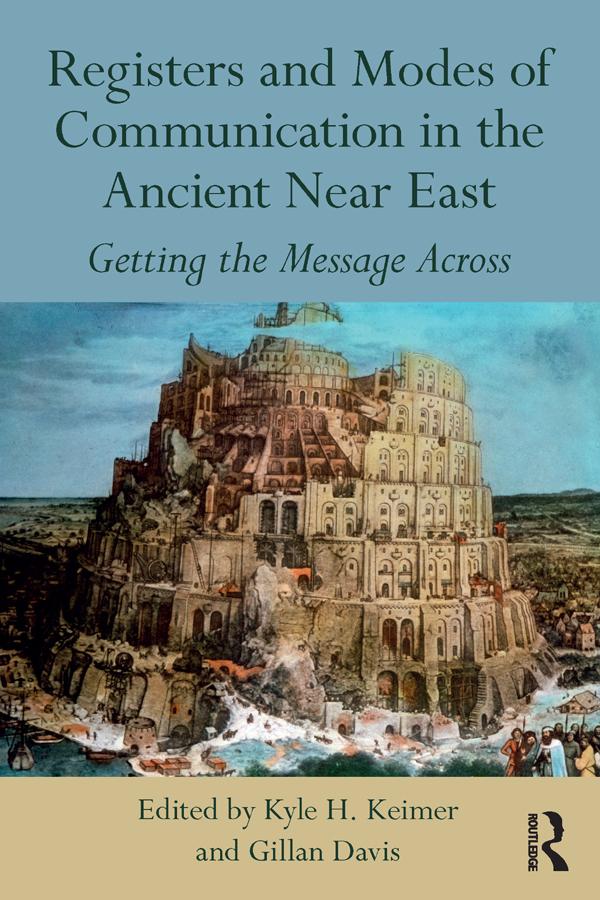
It is the quintessential nature of humans to communicate with each other. Good communications, bad communications, miscommunications, or no communications at all have driven everything from world events to the most mundane of interactions. At the broadest level, communication entails many registers and modes: verbal, iconographic, symbolic, oral, written, and performed. Relationships and identities – real and fictive – arise from communication, but how and why were they effected and how should they be understood? The chapters in this volume address some of the registers and modes of communication in the ancient Near East. Particular focuses are imperial and court communications between rulers and ruled, communications intended for a given community, and those between families and individuals. Topics cover a broad chronological period (3rd millennium BC to 1st millennium AD), and geographic range (Egypt to Israel and Mesopotamia) encapsulating the extraordinarily diverse plurality of human experience. This volume is deliberately interdisciplinary and cross-cultural, and its broad scope provides wide insights and a holistic understanding of communication applicable today. It is intended for both the scholar and readers with interests in ancient Near Eastern history and Biblical studies, communications (especially communications theory), and sociolinguistics.
Paga fácilmente con tarjeta, Klarna, Apple Pay o Google Pay. ¿No estás contento? Siempre tienes 14 días de garantía de devolución. Lee más en nuestros términos. Si tienes preguntas, escríbenos a hello@memmo.org.
Memmo hace que estudiar sea más fácil, estés donde estés. Aquí tienes tus libros de texto y herramientas de estudio inteligentes en un solo lugar: resúmenes, quizzes, podcasts y flashcards. Y también a Ted, tu compañero de estudio que responde a todo lo que te preguntes. Más de 50 000 estudiantes ya estudian aquí. Está hecho para que aprendas más rápido y te estreses menos.