
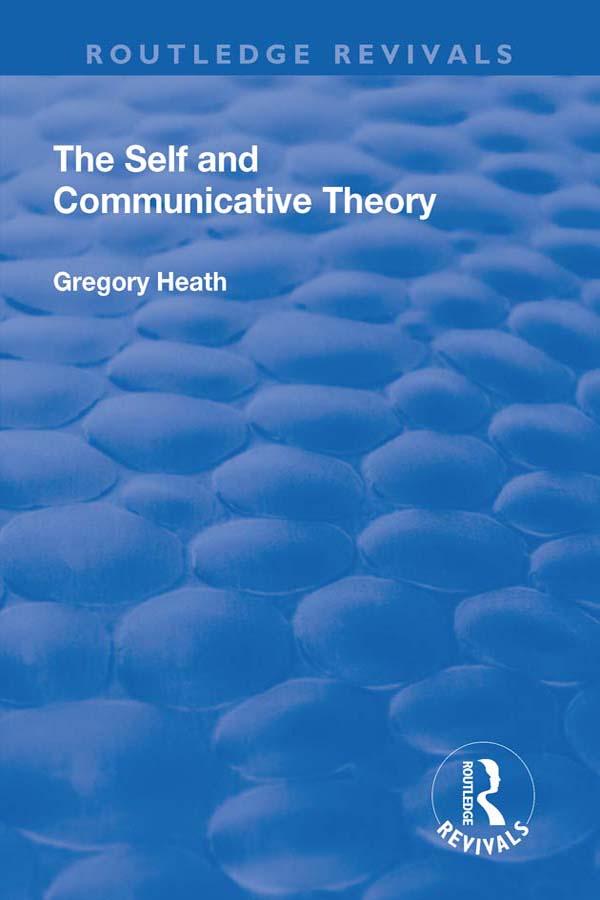
This title was first published in 2000: This text contributes to the development of communicative theory by advancing a theory of the self-sufficient to support intersubjectivity and meet the conditions required for communicative rationality and communicative reason. The conclusion supports theories advanced by Habermas, Apel and Wittgenstein, evaluated against the background of later works from Immanuel Kant. The origins of communicative theory in the writings of Kant and Charles Sanders Peirce are sketched, followed by an outline of the development of the theory by Apel and Habermas. In this discussion a central issues is identified as the failure of communicative theory to produce an adequate theory of the self as the subject of communicative transactions. It is argued that both Mead and Habermas fail to fully establish intersubjectivity as they retain elements of a Cartesian introspective subjectivity. An alternative approach, developed by Charles Taylor, is then discussed. Finally, it is argued that freedom and imagination, understood in the context of Kant and the late Wittgenstein are the key elements to a self capable of supporting the intersubjectivity required by communicative theory.
Paga fácilmente con tarjeta, Klarna, Apple Pay o Google Pay. ¿No estás contento? Siempre tienes 14 días de garantía de devolución. Lee más en nuestros términos. Si tienes preguntas, escríbenos a hello@memmo.org.
Memmo hace que estudiar sea más fácil, estés donde estés. Aquí tienes tus libros de texto y herramientas de estudio inteligentes en un solo lugar: resúmenes, quizzes, podcasts y flashcards. Y también a Ted, tu compañero de estudio que responde a todo lo que te preguntes. Más de 50 000 estudiantes ya estudian aquí. Está hecho para que aprendas más rápido y te estreses menos.