
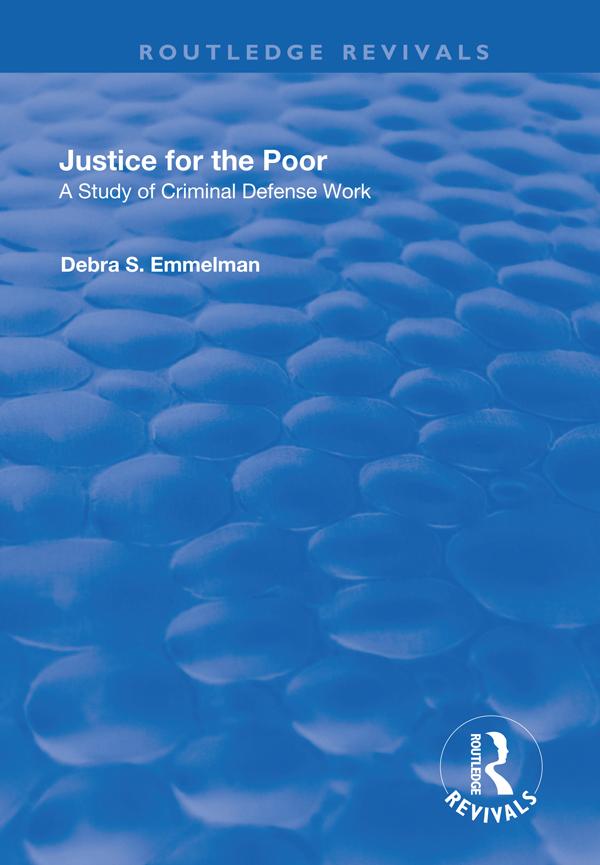
This title was first published in 2003. In this study, the author examines the behavior of one group of court-appointed defence attorneys and reaches the conclusion that although, in contrast to popular opinion, these attorneys maintain an adversarial stance against the prosecutors and behave in a legally ethical (or "procedurally just") manner, case outcomes are unduly shaped by social class and are therefore substantively unjust. This occurs because poor defendants typically lack cultural rhetoric that favourably influences those who construct and operate the criminal court system. Ironically, this indicates that, in many cases, the process of plea bargaining may be more substantively just than trials. A major contribution of the study is the detailed analysis of the manner by which oppression and substantive injustice occur in the adjudication of many cases and how the cultural practices of the powerful can frequently misconstrue, exclude and mute the voices of the poor.
Paga fácilmente con tarjeta, Klarna, Apple Pay o Google Pay. ¿No estás contento? Siempre tienes 14 días de garantía de devolución. Lee más en nuestros términos. Si tienes preguntas, escríbenos a hello@memmo.org.
Memmo hace que estudiar sea más fácil, estés donde estés. Aquí tienes tus libros de texto y herramientas de estudio inteligentes en un solo lugar: resúmenes, quizzes, podcasts y flashcards. Y también a Ted, tu compañero de estudio que responde a todo lo que te preguntes. Más de 50 000 estudiantes ya estudian aquí. Está hecho para que aprendas más rápido y te estreses menos.